

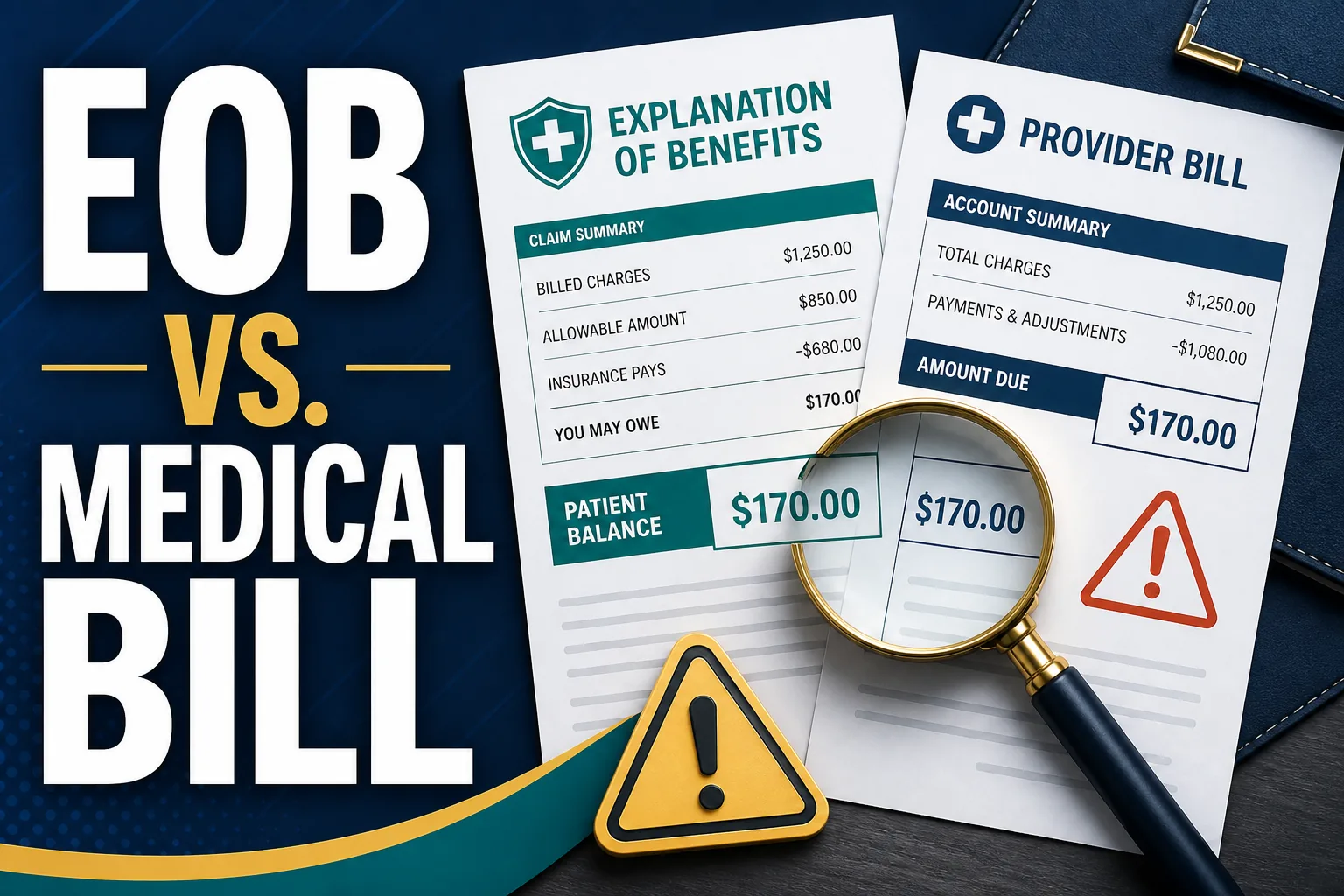
An Explanation of Benefits is not a bill. It is the insurer’s account of how a claim was processed, and the provider’s bill should be reconciled against its dates, services, allowed amount, insurer payment and patient responsibility before money leaves your account.
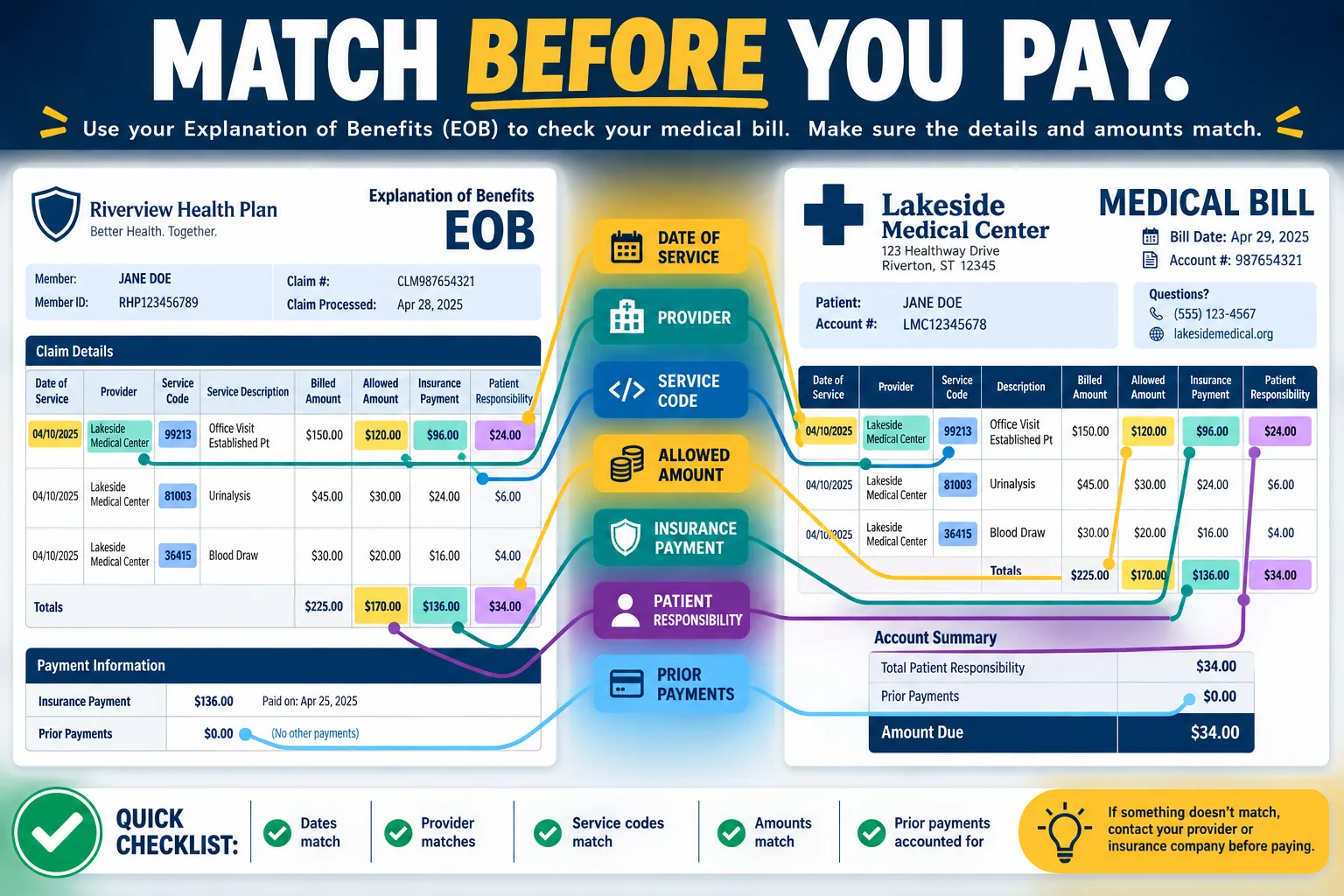
- Wait for the EOB when possible, then match claim details line by line.
- The provider bill generally should not exceed the EOB’s patient responsibility for the processed claim, though prior copays and pending claims can affect the display.
- Ask for an itemized bill and determine whether the insurer or provider owns the error before escalating.
Know which document does what
The EOB comes from the health plan and shows billed charges, negotiated or allowed amounts, plan payment and what the plan believes you may owe. CMS explicitly says an EOB is not a bill.
The provider bill requests payment and may combine multiple claims, previous balances or payments. Match by patient, provider, date of service and claim number rather than comparing only the largest dollar figure.
Match seven fields before paying
Check date of service, provider and facility, service description or code, billed charge, allowed amount, insurance payment or adjustment, and patient responsibility. Then subtract copays or deposits you already paid if the bill has not credited them.
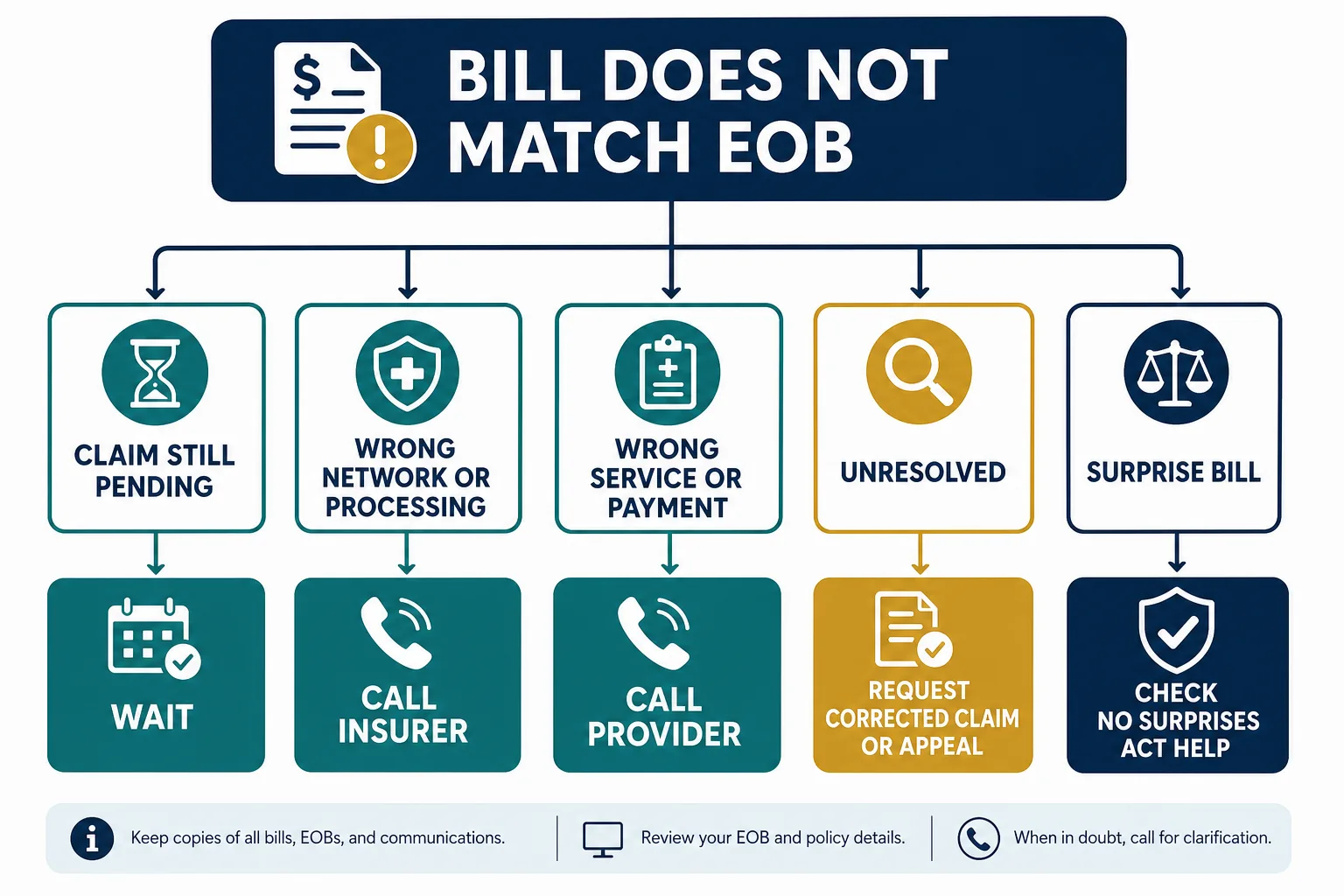
If the EOB says the claim is pending, do not treat its temporary patient amount as final. Call the plan and provider to learn what information is missing and ask the provider to pause collections while processing continues.
Understand patient responsibility
Patient responsibility can contain deductible, copay, coinsurance and noncovered amounts. A $10,000 billed charge can become a far smaller allowed amount before the deductible or coinsurance is applied.
Do not assume every “not covered” line is valid. It may involve coding, prior authorization, coordination of benefits, eligibility or network processing—each with a different correction path and deadline.
Request an itemized bill
Ask the provider for a detailed statement listing services, codes, dates, payments and adjustments. Compare it with medical records and the EOB; duplicated procedures, wrong quantities, incorrect dates, missing payments or services not received deserve a written question.
A suspicious code is not proof of fraud. Providers may need to correct documentation or submit a corrected claim, while coverage disputes may require an insurer appeal.
Call the party that owns the error
Call the insurer for allowed amounts, network status, claim processing, deductible allocation and appeal rights. Call the provider for service accuracy, coding, posted payments and whether it will submit a corrected claim.
Use a three-way call when each sends you to the other. Record names, dates, reference numbers, promised actions and the next follow-up date; request written confirmation and a collections hold.
A $1,250 claim example
Suppose the EOB shows $1,250 billed, $850 allowed, $680 paid and $170 patient responsibility. The provider bill also requests $170, but you paid a $40 copay at the visit that is missing.
Send the receipt and ask the provider to post the payment, making the remaining balance $130 if the copay applies to that claim. If the bill instead demands $570—the patient amount plus the $400 contractual adjustment—ask the provider to correct prohibited balance billing under its network agreement and verify with the insurer.
Recognize special protections
The federal No Surprises Act protects many people from certain unexpected out-of-network bills for emergency care and services at in-network facilities, with exceptions and separate state protections. CMS offers a help desk for questions and complaints.
For uninsured or self-pay care, a federal patient-provider dispute process may be available when a bill is at least $400 more than the good-faith estimate, subject to eligibility and timing rules. Do not confuse that process with an insured claim appeal.
Resolution checklist
Wait for processing; obtain EOB and itemized bill; match all fields; credit prior payments; identify insurer versus provider issue; request correction or appeal in writing; pause collections; and calendar every deadline.
Pay the verified undisputed amount when appropriate, but do not ignore notices. If a balance reaches collections or the facts are complex, seek the plan’s consumer assistance, CMS No Surprises help or qualified local advice.
Billing situations that need extra care
One visit can produce separate claims from a facility, physician, laboratory and imaging group. Build a table by provider and claim number so you do not compare a combined bill with only one EOB.
If an EOB says zero but the bill asks for payment, check whether the claim was denied to the provider, remains pending or went to another plan. Send the matching EOB and request a hold while the parties reconcile it.
Do not let a short prompt-pay discount replace verification. Ask whether accepting it changes appeal, assistance or refund rights, and obtain the terms in writing before paying.
A correct balance may still qualify for financial assistance. Request the hospital or health system’s written policy and application before using high-interest credit, and ask whether collections pause during review.
Build a record that survives follow-up
Create one page per claim with the EOB, itemized bill, receipts, call references and deadlines. When a correction posts, request a new statement showing the old balance, adjustment and remaining amount; a verbal promise is difficult to prove if billing software sends the account to collections. Never transmit full insurance or identity numbers through an address you have not independently verified.
Important: This guide is general educational information, not legal, tax, insurance or medical advice. Rules, contracts and individual facts vary; verify current official instructions before acting.
- CMS: How to read an Explanation of Benefits
- CMS: Check your medical bill for errors
- CMS No Surprises Act bill-reading guide
Reviewed August 21, 2026.