

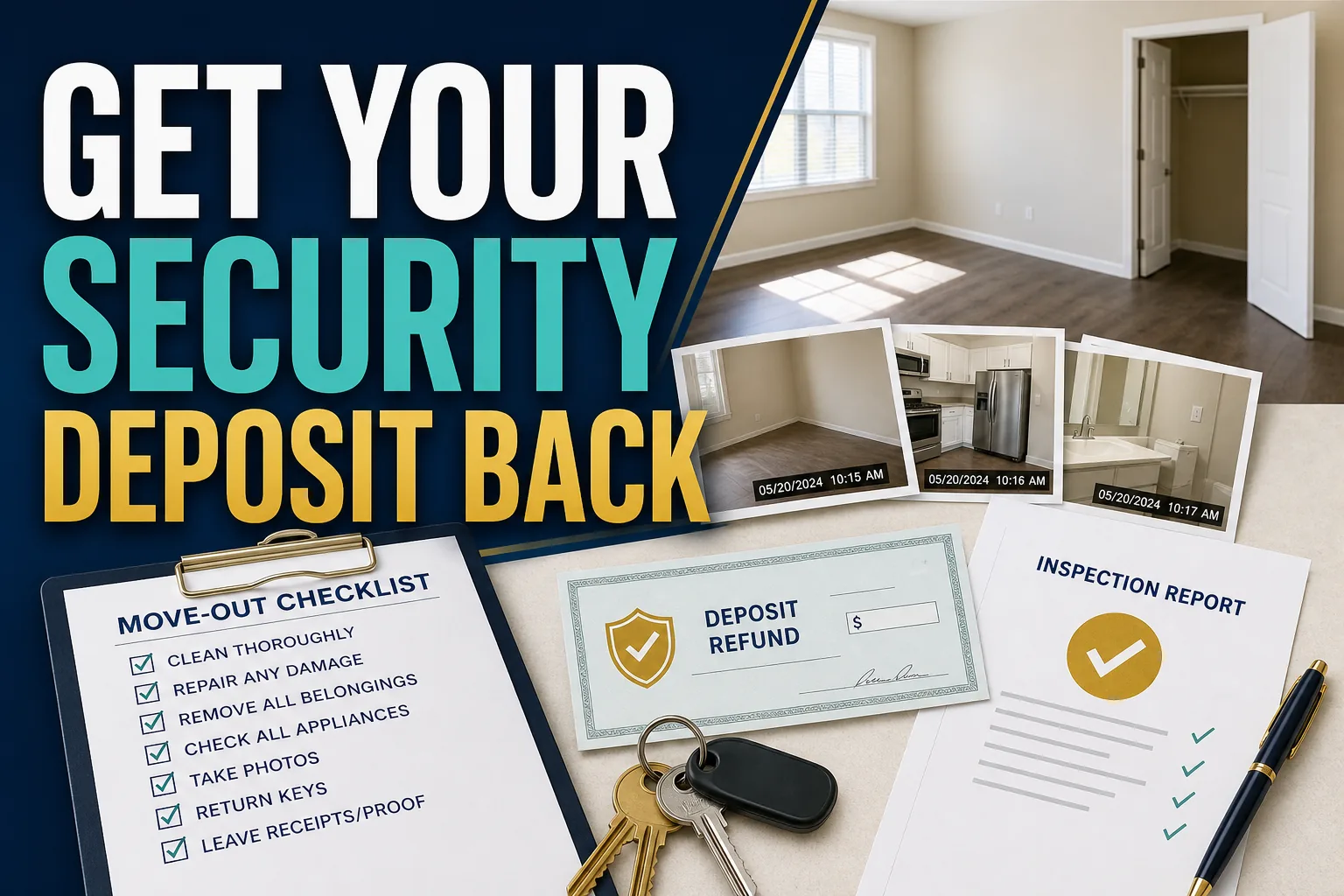
Getting a security deposit back is usually won before the keys are returned. The strongest tenant creates a dated trail from move-in condition through notice, cleaning, inspection, photographs, key surrender and a forwarding address—then checks the exact state or local deadline.
- Security-deposit deadlines and permissible deductions differ by state and sometimes city.
- Photograph every room after belongings are removed and cleaning is finished.
- Request an itemized statement and challenge unsupported damage rather than ordinary wear.
Check your lease and local law first
There is no single nationwide deadline or universal definition covering every rental deposit. USAGov directs tenants to state tenant-rights agencies and legal aid because rules on notice, inspections, interest, itemization, return dates and penalties vary.
Read the lease for move-out notice, delivery method, cleaning duties, utilities, keys and forwarding address. A lease term may be unenforceable under local law, but do not assume that without checking an authoritative state or city source.
Start with move-in evidence
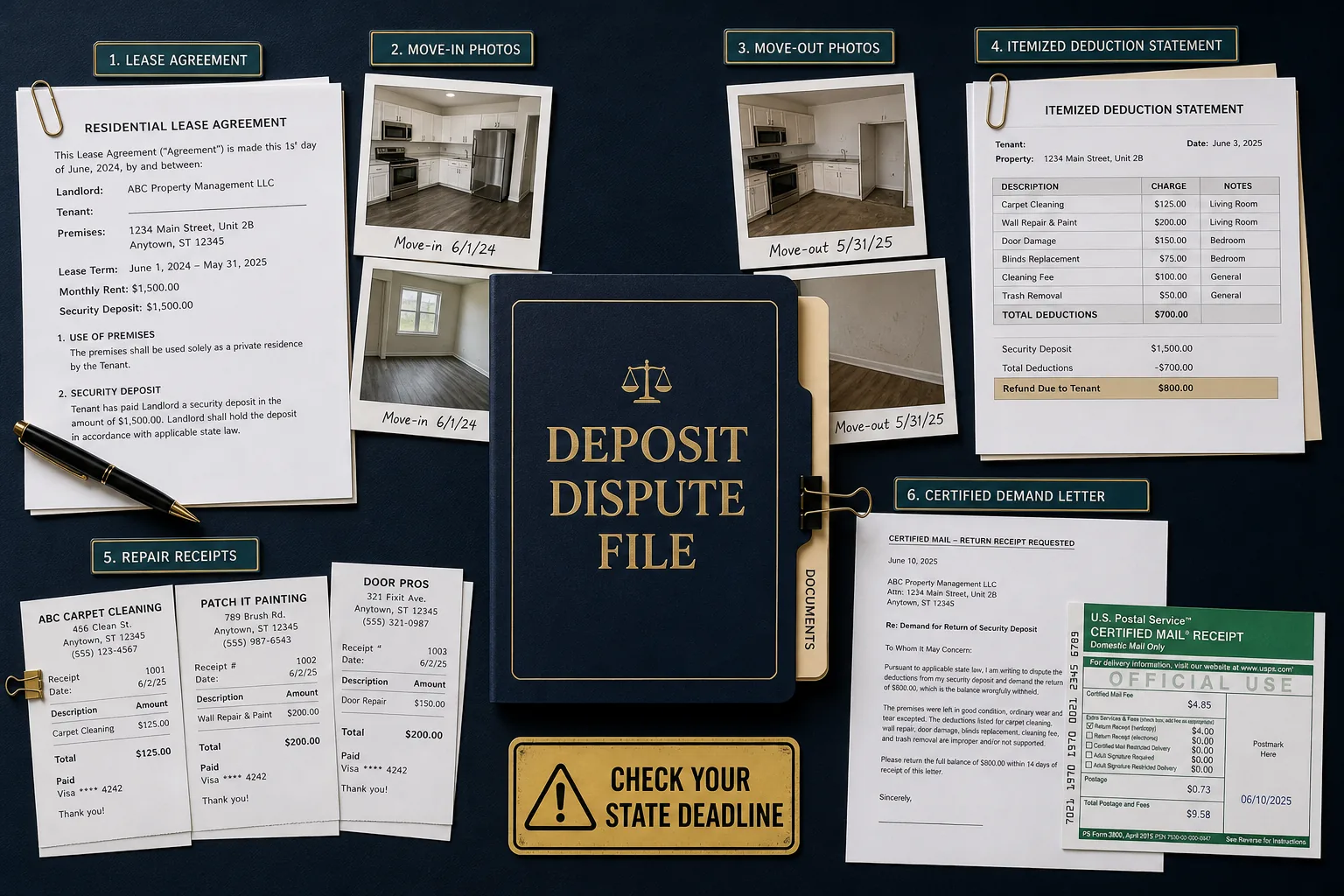
Locate the signed condition checklist, move-in photographs, maintenance requests and landlord responses. These records establish what was preexisting and whether the owner had notice of leaks, failing appliances or other problems.
If you lack move-in photos, collect dated messages, inspection reports and witnesses. Avoid altering metadata or overstating what a photo proves.
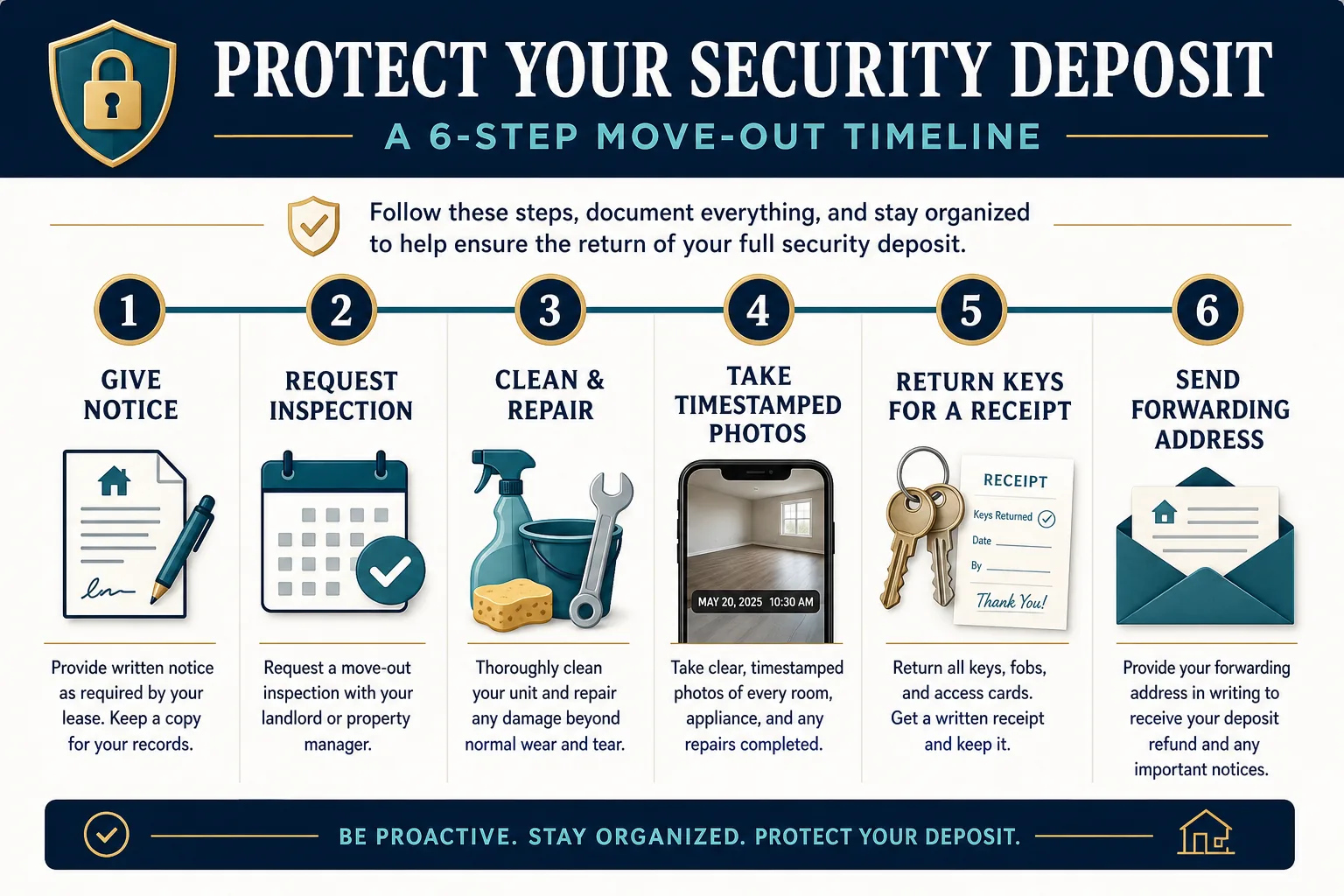
Give notice and request inspection
Deliver notice exactly as required and retain proof. Ask whether your jurisdiction provides a pre-move-out inspection or right to cure identified issues, and request written instructions for keys, parking passes and the forwarding address.
During an inspection, take notes and ask the representative to identify proposed deductions. Do not sign a statement admitting damage you dispute merely to complete the walk-through.
Clean and repair strategically
Return the home to the lease-required level without attempting unsafe or unauthorized repairs. Focus on trash removal, appliances, bathrooms, floors and patching permitted by the lease; keep receipts and before-and-after photographs.
Ordinary wear and damage are not the same, but definitions vary. Faded paint and gradual carpet wear differ from large holes or pet damage, while age and useful life can affect a reasonable charge.
Create the final evidence set
After the unit is empty and clean, record a continuous walkthrough and detailed photographs of walls, floors, appliances, fixtures, closets, windows and meter readings. Include a timestamp source when practical and back up originals.
Return every key and access device through the authorized method and obtain a dated receipt. Provide a forwarding address in writing even if you previously mentioned it verbally.
Audit the deduction statement
Compare each charge with the lease, move-in record, final photographs and local law. Ask for dates, invoices, receipts, labor calculations, photographs, item age and how depreciation was applied.
A landlord’s invoice is evidence, not automatic proof that the tenant caused the condition or owes the full replacement cost. Conversely, a tenant’s clean-looking photograph may not reveal hidden damage; keep the dispute factual.
Send a focused demand
State the property, tenancy dates, deposit paid, amount returned, disputed deductions, supporting evidence and exact refund requested. Cite the applicable state or local rule only after verifying its current text, deadline and coverage.
Send through a trackable method, preserve a complete copy and set a reasonable response date. Avoid threats or inflated statutory penalties; an accurate, organized file is more persuasive.
Escalate proportionately
If the dispute remains, consider tenant counseling, legal aid, mediation or small-claims court within the limitation period. Compare the amount, filing costs, service requirements and evidence burden.
Checklist: verify notice; request inspection; document repairs and cleaning; photograph the empty unit; obtain a key receipt; send the forwarding address; calendar the local return deadline; audit itemization; demand unsupported amounts; and preserve everything.
Hard cases tenants should anticipate
When roommates paid one deposit, the lease and local law may allow one refund and deductions for damage anywhere in the unit. Agree in writing how roommates will divide money and evidence before anyone leaves.
If ownership changes, preserve proof of the original deposit and transfer notices. Ask the current owner in writing who holds it; do not accept being sent indefinitely between management companies.
A professional-cleaning charge depends on the lease, actual condition and local law. A mandatory fee, necessary cleaning beyond ordinary use and replacement for damage are different claims; request the factual and contractual basis.
If no statement arrives, verify the legally relevant deadline and delivery rules, then send a written request stating the deposit, move-out date and forwarding address. Keep the envelope if a late statement later arrives because its postmark may matter.
Build a record that survives follow-up
Do not discard the evidence after receiving a partial check. Deposit language, negotiation emails and limitation periods may affect the next step, and the landlord may later supply receipts. Keep the lease, payment proof, complete photo originals, notices, inspection notes, key receipt, forwarding-address proof, deduction statement and envelope together until the dispute and relevant filing window are safely over. If you negotiate a compromise, state the amount, payment date and whether it resolves all claims in a signed writing; ambiguity can turn a modest deposit dispute into a second disagreement.
Important: This guide is general educational information, not legal, tax, insurance or medical advice. Rules, contracts and individual facts vary; verify current official instructions before acting.
Reviewed August 21, 2026.