


A “total loss” does not mean the car was worthless. It means the insurer concluded that repair is uneconomic or crosses a legal or policy threshold—and the settlement should reflect the vehicle’s actual value immediately before the crash, subject to coverage and deductible.
- Audit the valuation report before arguing about the final number.
- Use nearby same-year, same-trim comparable vehicles and make transparent adjustments.
- Keep loan payoff, gap coverage and salvage decisions separate from the vehicle’s pre-loss value.
Start with actual cash value, not your loan balance
The National Association of Insurance Commissioners describes a total-loss payment as the vehicle’s actual worth immediately before the crash. The amount you owe the lender does not establish market value; if payoff exceeds the settlement, gap coverage may matter separately.
A deductible can reduce a first-party collision or comprehensive payment. Taxes, title and transfer fees vary by state and policy, so ask the adjuster to itemize rather than quoting only a net check.
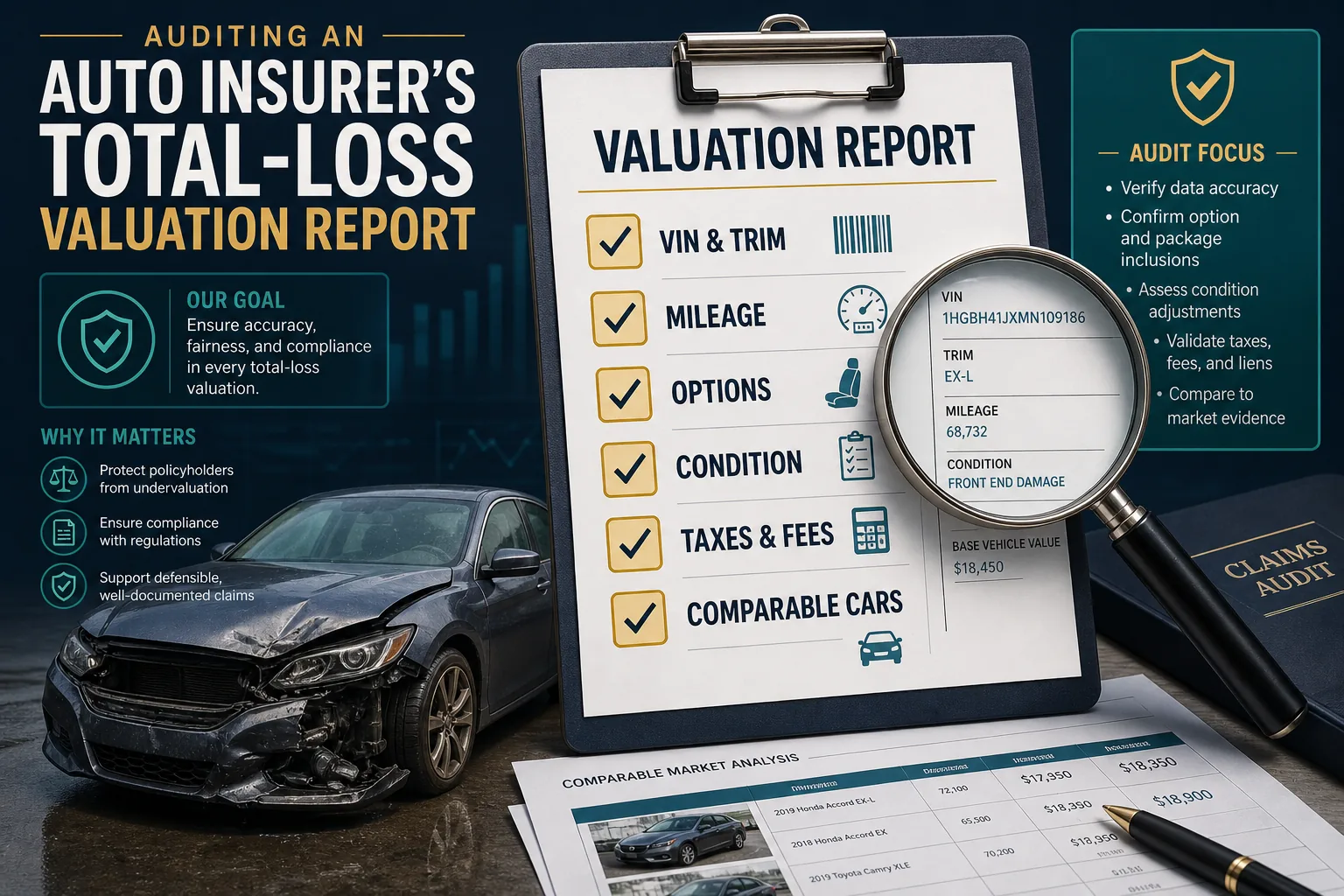
Demand the complete valuation report
Request the report, comparable list, condition adjustments, options, mileage, trim, VIN decoding, taxes, fees and deductible calculation. Ask which valuation vendor and state rule the insurer used and how to submit corrections.
Check basic facts first. A missing premium package, wrong drivetrain, extra mileage or “average” condition despite strong records can move value more than a debate about a pricing guide.
Reconstruct your exact pre-loss car
Use the window sticker, purchase contract, service records and clear pre-crash photographs to document trim, factory options, tires, major maintenance and condition. Routine maintenance preserves value but rarely adds its full cost dollar for dollar.
Separate modifications from factory equipment. Some upgrades require special coverage, while others may narrow the buyer market; support any requested adjustment with local evidence rather than receipts alone.
Build stronger comparable vehicles
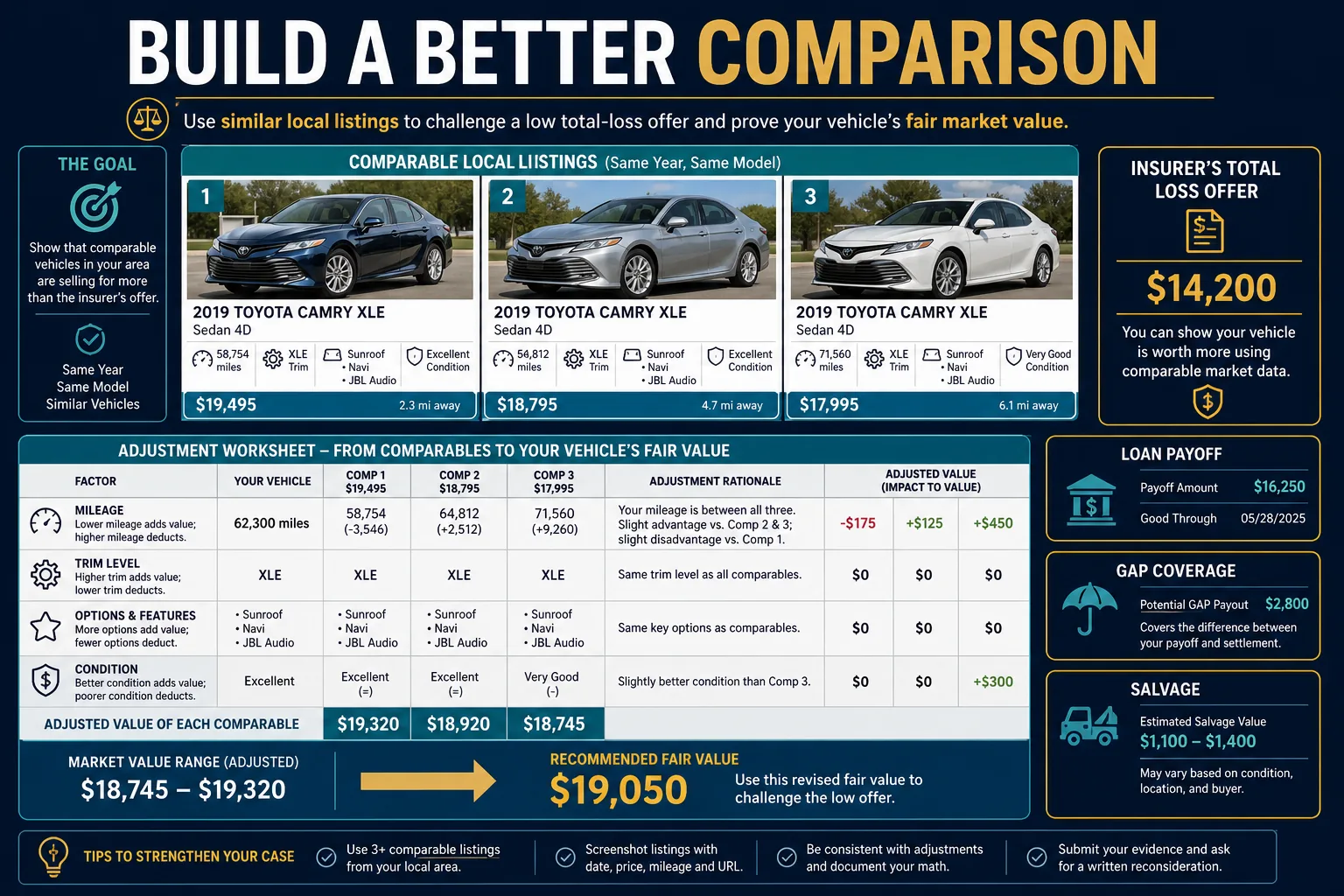
Search nearby dealer listings and recent sales for the same model year, trim, body style, drivetrain and similar mileage. Save full pages with VIN, price, location, date and equipment because listings disappear.
Do not simply submit the three highest prices. Explain differences in mileage, options and condition and show reasonable adjustments. Book values are useful guides, but NAIC notes that comparable local cars can support negotiation.
Write a numbered counteroffer
Lead with the insurer’s offer, your requested pre-deductible value and a short calculation. Then list factual corrections and three to five comps, attach proof, and ask for a written response to every adjustment.
Example: if the report uses a base trim at $18,900 but your verified higher trim and local adjusted comps cluster at $21,200–$22,000, request a supported number inside that range. Do not add the deductible back twice or count a loan payoff as vehicle value.
Keep salvage, lien and gap separate
If you keep the damaged car, the insurer may subtract salvage value and the state may brand the title; repairability, inspection, financing and insurance can become difficult. Get the exact retention deduction and title consequences before agreeing.
The insurer normally pays a lienholder first. Gap insurance may cover some remaining loan balance, subject to exclusions, but it does not prove the auto insurer undervalued the car.
Escalate with evidence, not anger
Ask for a supervisor review, appraisal clause or formal dispute route under the policy. A licensed independent appraiser may help when the dollar gap justifies the fee; state insurance departments accept complaints but do not automatically set a vehicle price for you.
Continue protecting the damaged vehicle and ask who pays storage while the dispute runs. Confirm rental-car cutoff dates in writing because coverage may end shortly after the total-loss offer.
Settlement checklist
Verify VIN, trim, mileage, options and condition; capture local comps; calculate a defensible value; separate taxes, fees and deductible; check payoff and gap; ask about rental cutoff and salvage; counter in writing; and retain every report.
Before signing a title or release, confirm the gross value, every subtraction, payee, delivery timing and whether accepting payment closes property-damage claims.
Questions that change the settlement
Recent repairs rarely increase value dollar for dollar. New tires or major mechanical work may support above-average condition or prevent a deduction, but show how the work affects the local market rather than adding invoices to the price.
Ordinary policies generally settle using actual cash value, not the cost of any replacement you choose. New-car replacement endorsements and agreed-value policies are different; read the declarations and endorsements.
When no identical local car exists, expand geography or model year carefully, disclose the difference and adjust it. A transparent near-match is stronger than an unexplained high-priced listing far away.
Before cashing a check, ask whether it is partial or conditioned on a release. State law and check language matter, so do not sign terms you do not understand merely because storage or loan payments create pressure.
Build a record that survives follow-up
Time matters while the vehicle sits in storage and rental coverage approaches its cutoff. Ask the insurer for those dates in writing, move the car only with authorization, and continue making required loan payments until the lender confirms payoff. A careful challenge protects value without accidentally creating new storage, title or credit problems that exceed the disputed amount.
Important: This guide is general educational information, not legal, tax, insurance or medical advice. Rules, contracts and individual facts vary; verify current official instructions before acting.
Reviewed August 21, 2026.