

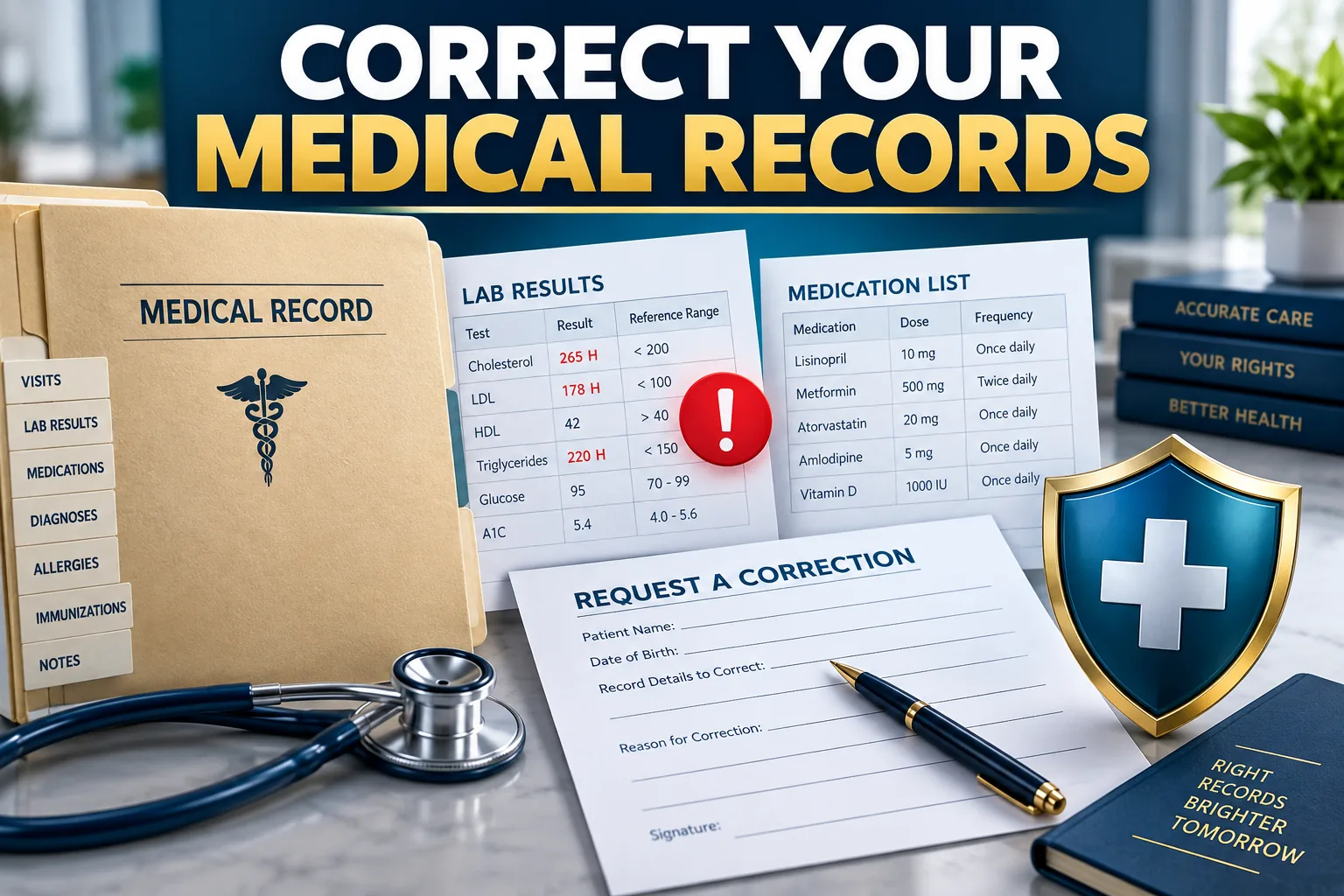
A wrong allergy, diagnosis, medication or procedure can travel from one visit to referrals, insurance reviews and future treatment. HIPAA gives many patients broad rights to obtain records and request amendments, but “delete this” is rarely the correct or complete instruction.
- Request the designated record set, not only the portal summary.
- Identify the exact entry, explain why it is inaccurate or incomplete and attach reliable proof.
- If an amendment is denied, use the statement-of-disagreement process and correct downstream copies separately.
Know what you can request
HHS says the HIPAA access right generally covers protected health information in a designated record set: medical and billing records, lab reports, images, claims, enrollment and other material used to make decisions. It is broader than a portal visit summary.
Exceptions exist, including separately maintained psychotherapy notes and information prepared for legal proceedings. A provider is not required to create a new analysis that does not already exist.
Request a usable copy
Ask for a date range and specific categories such as medication history, allergies, problem list, operative notes, pathology, imaging and billing. Request the electronic format you can actually open and ask how large images will be delivered.
HIPAA generally requires action within 30 calendar days, with a possible written 30-day extension in permitted circumstances. Reasonable cost-based copying and postage fees may apply, but HHS says providers cannot charge a search or retrieval fee or deny records because a medical bill is unpaid.
Audit clinically important fields first
Compare active medications, dose, allergies, implanted devices, diagnoses, past procedures, family history and recent results with source documents. Mark whether an entry is factually wrong, outdated, duplicated, attributed to the wrong patient or merely a clinician opinion you dislike.
Check billing and insurance data too. A wrong service date or code may require the billing office or insurer rather than a clinical amendment.
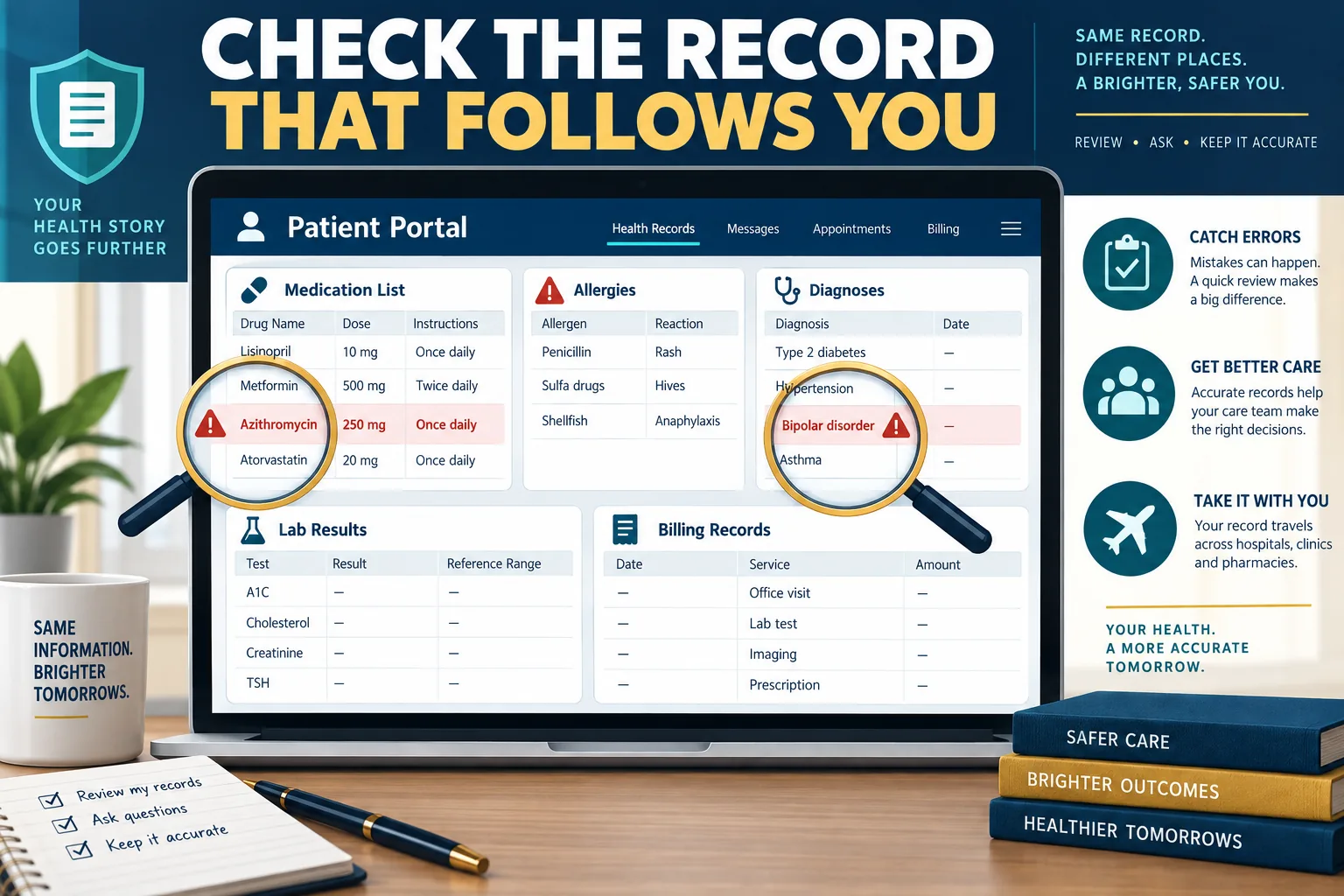
Write a precise amendment request
Identify the exact record, author, date and disputed language; state the corrected fact and why the existing entry is inaccurate or incomplete. Attach pharmacy history, discharge papers, test reports or another reliable source while keeping originals.
Ask the privacy officer for the organization’s amendment form and submission address. A short table—current entry, requested amendment, evidence—makes the request easier to evaluate.
Understand the response
HHS guidance says a covered entity generally acts on an amendment request within 60 days and may use one written extension of up to 30 days. It can deny on limited grounds, including a conclusion that the information is accurate and complete or that it did not create the record and the originator remains available.
An accepted amendment may be appended rather than erasing history. The organization must make reasonable efforts to inform identified people and business associates that may rely on the corrected information.
If the correction is denied
Request the written denial and follow its instructions. You may submit a concise statement of disagreement for the record; the organization may prepare a rebuttal, and the disputed material should be linked according to HIPAA procedures.
A disagreement statement is not the same as winning a clinical judgment dispute, but it makes the patient’s position visible. If access or amendment rights were mishandled, the notice should explain complaint options, including the HHS Office for Civil Rights.
Correct the copies that already traveled
A correction at one hospital does not automatically rewrite every specialist, pharmacy, health app or insurer database. List where the error may have been sent and provide the accepted amendment or disagreement through each organization’s process.
Before urgent care, carry a current medication and allergy list. For a dangerous error, ask the treating clinician how to place an immediate safety alert while the formal amendment proceeds.
Medical-record correction checklist
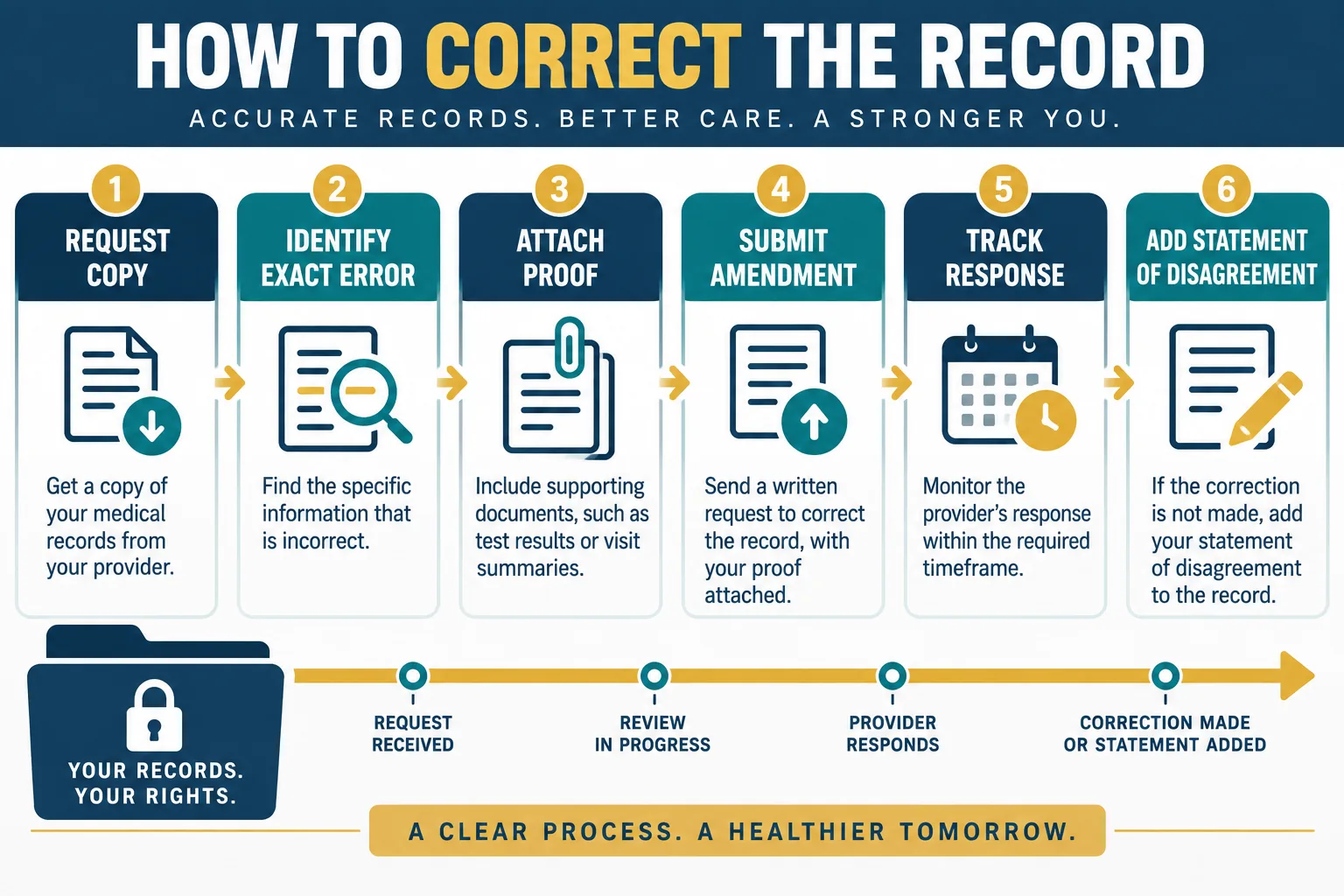
Request the full relevant record; download originals; prioritize safety-critical errors; gather proof; submit a line-specific amendment; calendar 60 days; preserve delivery; follow up on downstream copies; and save the final response.
This guide is educational, not medical or legal advice. HIPAA applies to covered entities and does not cover every app or organization; state law may provide additional rights.
High-impact situations and safer wording
A diagnosis can be historically accurate yet no longer active. Instead of demanding deletion, ask the clinician to clarify status, context and resolution—for example, “ruled out,” “history of,” or “entered in error.” Preserving an audit trail can be clinically safer than making a past event disappear.
Medication errors deserve urgency. If the chart lists a drug you never took, a wrong dose or a missing severe allergy, contact the treating office immediately and ask how to flag the chart while the written amendment is pending. Do not change medication based only on a portal entry.
Records imported from another provider may have to be corrected at the source. Ask the current organization to identify the origin and to add a local safety clarification; then send the formal request to the creator if it remains available.
Keep the request factual and narrow. “I disagree with the doctor” is less actionable than “The note dated May 4 says left knee surgery; the attached operative report identifies the right knee.” Precise evidence reduces the chance that a legitimate correction is treated as a dispute over clinical opinion.
Final verification before closing the file
After resolution, download the corrected entry and the organization’s response, then compare the next visit summary. Patient portals sometimes display a simplified problem list while the underlying note remains unchanged, so ask which part of the designated record set was amended and where the clarification will appear to future clinicians.
Important: This guide provides general educational information. Verify current rules, deadlines, contracts and professional advice for your facts.
Reviewed September 20, 2026.