

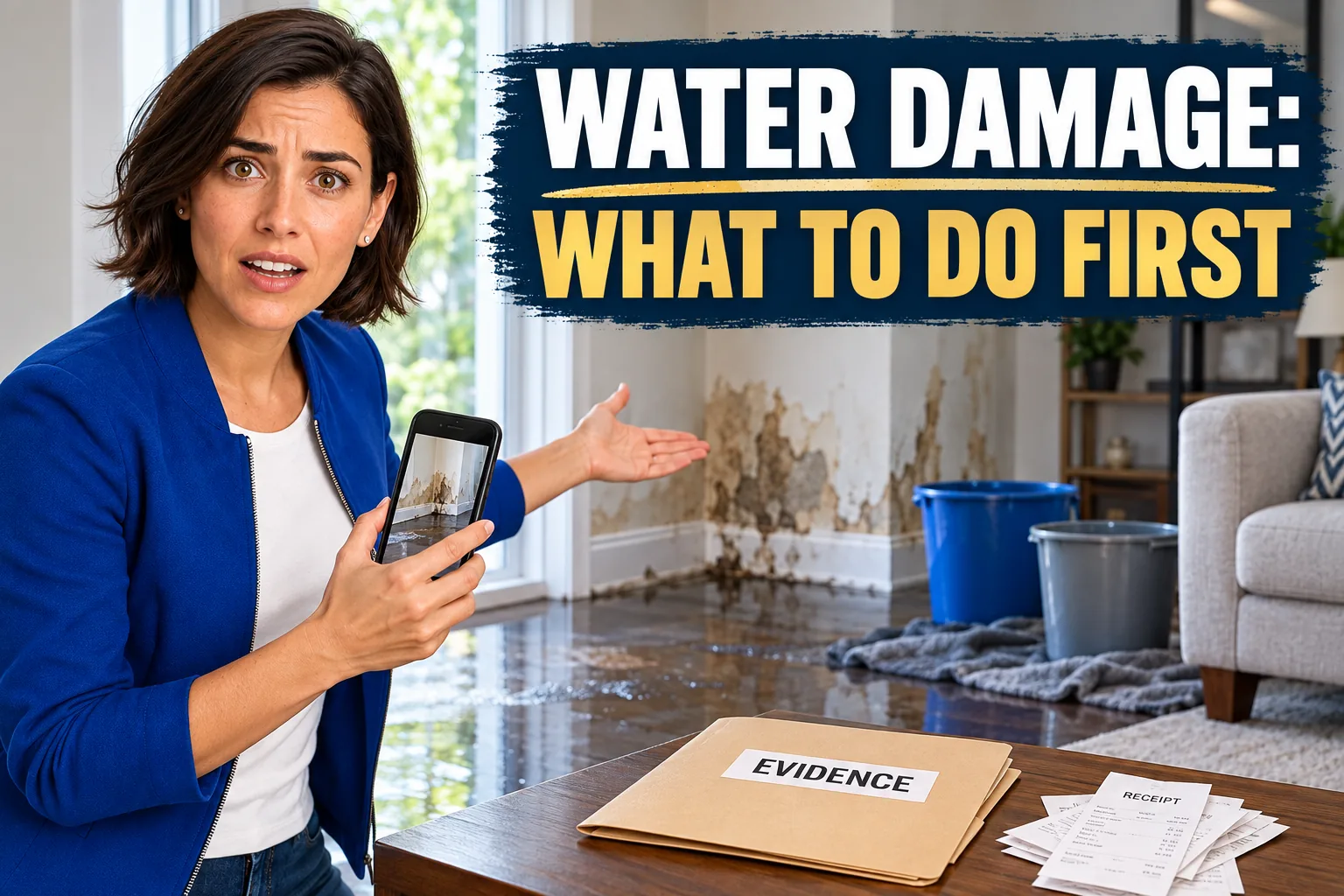
The first hour after water damage creates two competing duties: stay safe and stop additional loss, while preserving enough evidence to show what happened and what was damaged. Acting too slowly can worsen mold and structural harm; acting too aggressively can erase the claim story.
- Do not enter unsafe water, energized rooms or structurally damaged areas.
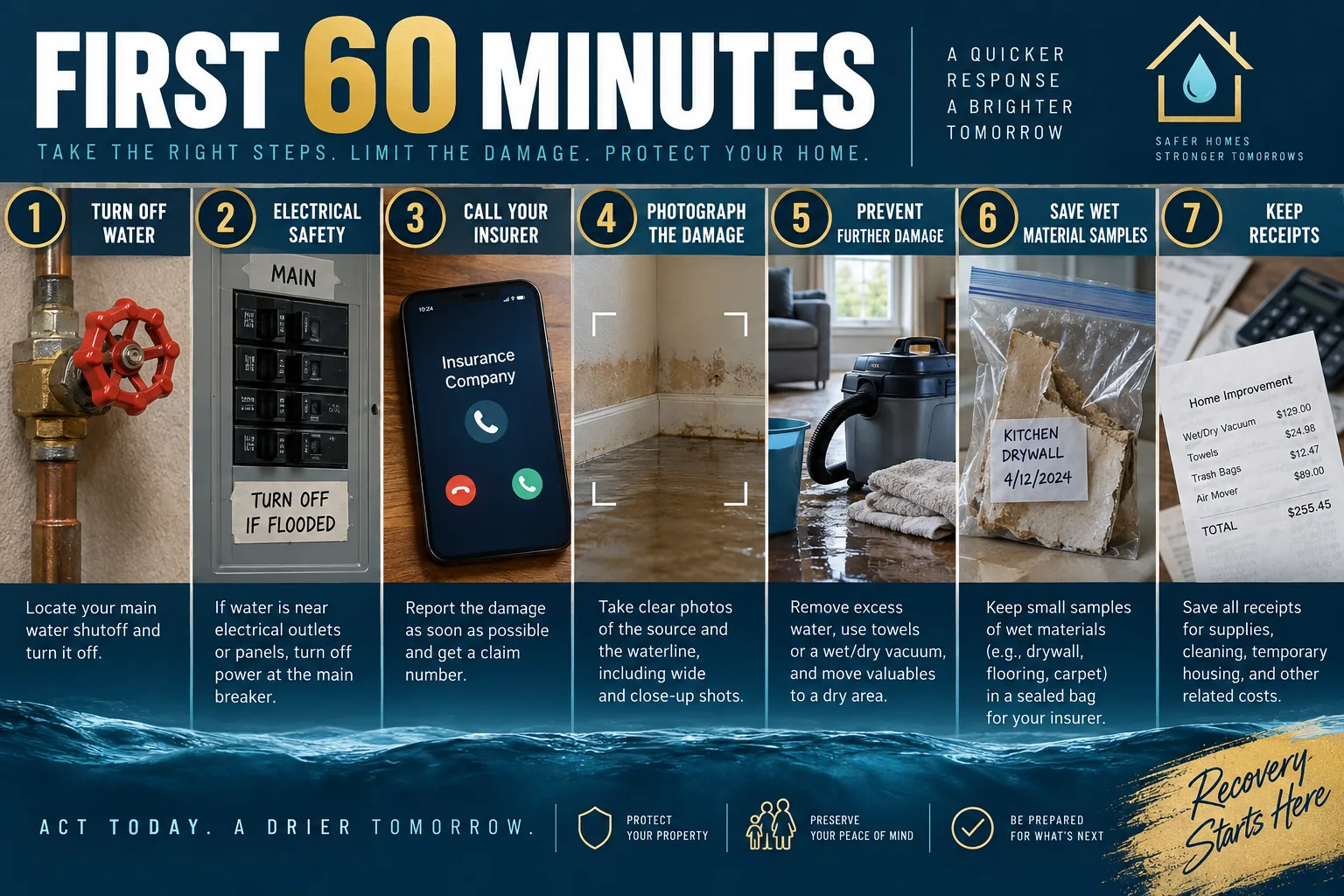
- Photograph the source, waterline, every room and damaged contents before disposal when safe.
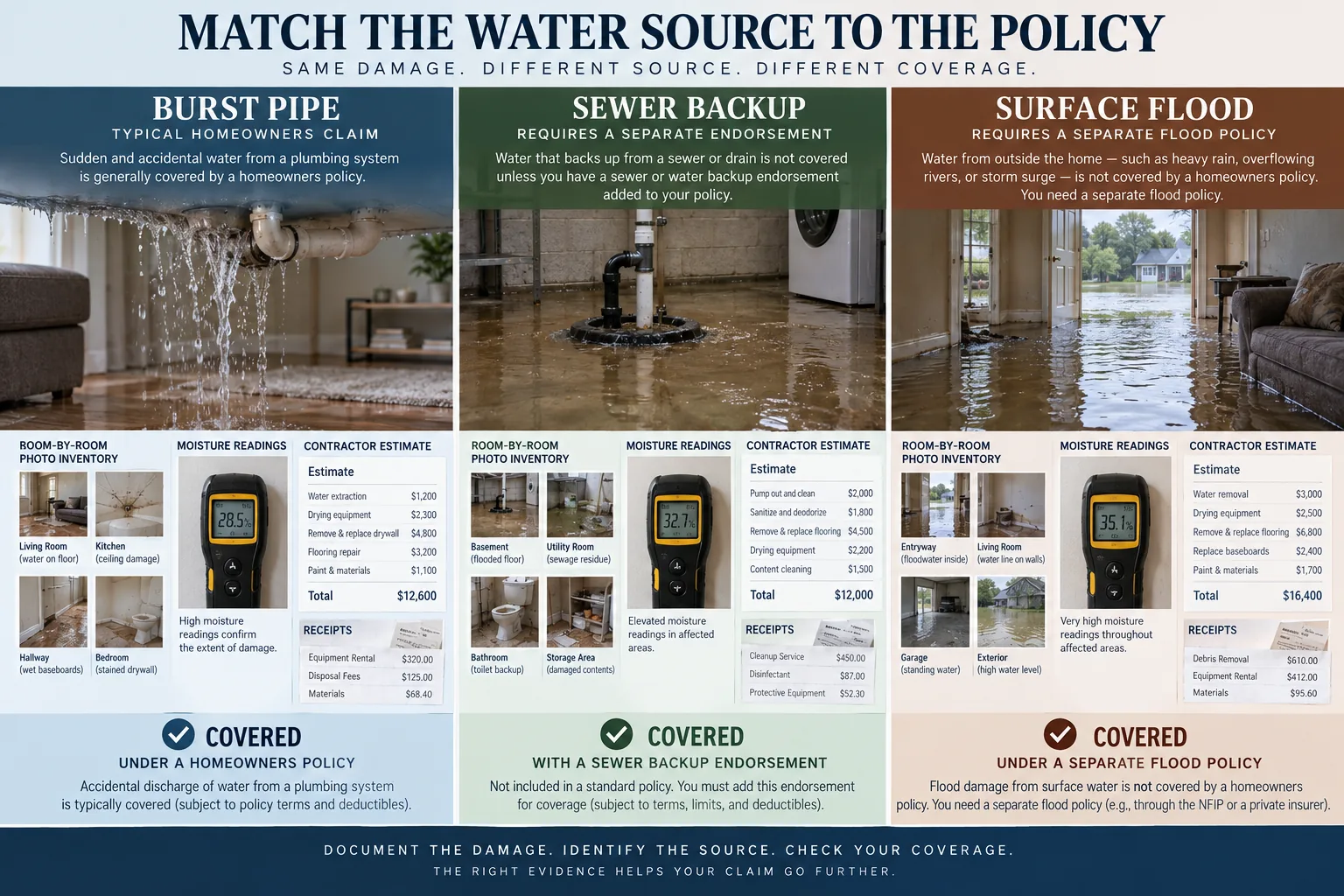
- Match the source—burst pipe, backup or surface flood—to the policy before assuming coverage.
Safety comes before evidence
Follow emergency officials and do not enter where electricity, gas, contaminated water or structural instability creates danger. FEMA advises confirming electricity and gas are off and using qualified checks before systems are restored.
Stop the water at a safe shutoff if the source is inside the home. For sewage or floodwater, keep children and pets away and use qualified remediation rather than treating it like a clean spill.
Notify the right insurers promptly
Call the homeowners or renters insurer and ask for a claim number, emergency-mitigation instructions, preferred documentation and adjuster timing. If rising surface water caused the loss, notify the flood insurer separately; ordinary homeowners policies generally exclude flood.
Ask when additional-living-expense coverage starts, whether emergency vendors are approved and what requires advance authorization. Record every representative, time and instruction.
Photograph the loss before changing it
Take wide room photos, midrange views and close-ups of the source, waterline, materials and contents. Include closets, cabinets, lower walls, flooring, ceilings below the leak, appliance serial numbers and undamaged areas for context.
FEMA’s flood guidance emphasizes measured waterline photographs and documentation of quantity, quality and extent. Narrate a slow video and keep original files with timestamps rather than sending your only copy.
Mitigate without destroying proof
Policies commonly require reasonable steps to protect property from further damage. Extract standing water when safe, move dry property away, cover openings and begin professional drying—but document conditions first and follow insurer instructions.
Do not sign a broad assignment of benefits, repair contract or financing agreement under pressure. Ask who sets price, who receives insurance checks, how cancellation works and whether the vendor guarantees coverage.
Save samples, receipts and damaged items
Keep representative samples of flooring, carpet pad, wallpaper, cabinet material or upholstery when safe; their quality can affect valuation. Do not keep contaminated food or dangerous porous goods solely for an adjuster—photograph them thoroughly and follow health guidance.
Track emergency labor, equipment rental, hotel, meals, laundry, pet boarding and materials separately. A receipt proves spending, not necessarily coverage, but without it reimbursement becomes harder.
Match the source to the policy
A sudden burst pipe may produce covered resulting damage while repair of the worn pipe itself may be excluded. Sewer or drain backup often requires an endorsement, and surface-water flooding generally requires separate flood insurance.
Long-term seepage, maintenance problems and mold limits can create disputes. Preserve the failed part when practical and obtain a plumber or engineer’s description of source, duration and resulting damage without coaching them toward a conclusion.
Audit the adjuster’s estimate
Compare rooms, measurements, material grades, labor, taxes, drying equipment, code upgrades, depreciation and contents line by line. Ask how replacement-cost holdback works and what proof releases it.
Have contractors explain differences in scope instead of submitting only a higher total. Supplemental claims often need photographs, measurements and invoices connecting added work to the covered loss.
First-day checklist
Secure people; stop the source safely; notify insurer; document source and waterline; inventory by room; start authorized mitigation; save samples and receipts; protect original files; and calendar proof-of-loss or appeal deadlines.
Coverage depends on cause, policy, endorsements and state law. This guide is educational and does not replace emergency, environmental, legal or insurance advice.
Decisions that prevent a second loss
Create two inventories: damaged building materials and personal property. For contents, record room, item, brand, model, age, quantity, condition and replacement reference. Group photographs can document ordinary clothing or kitchenware, while valuable items need individual detail.
Drying data matters. Ask the remediation company for initial and daily moisture readings, equipment logs, affected-material maps and photographs before demolition. A large invoice without documented conditions may be difficult for both the insurer and homeowner to evaluate.
Do not discard the failed hose, valve, appliance or pipe section when it can be safely preserved. The part may help determine source, manufacturer responsibility or whether another party caused the loss; label it and ask the insurer before destructive testing.
Watch the difference between emergency mitigation and permanent repair. Removing dangerous wet drywall may be urgent, while rebuilding cabinets or floors before inspection can create pricing and scope disputes. Obtain written authorization when practical and keep a daily decision log when immediate action is necessary.
Final verification before closing the file
Back up evidence outside the damaged home and share only copies. Photograph receipts before thermal paper fades, export text messages with vendors, and reconcile every insurer payment with the estimate. If the home becomes uninhabitable, ask what documentation is required for temporary housing and whether spending limits are daily, category-based or time-limited.
Important: This guide provides general educational information. Verify current rules, deadlines, contracts and professional advice for your facts.
- FEMA: Document damage after severe weather
- NAIC homeowners claim guidance
- NAIC water-damage coverage guide
Reviewed September 20, 2026.