


A fixed-rate mortgage can still produce a sharply higher monthly bill because only principal and interest are fixed. Property taxes, homeowners insurance and a temporary escrow-shortage repayment can all change at once—and the annual escrow statement should show which one did.
- Separate the new ongoing escrow amount from the temporary shortage repayment.
- Compare the servicer’s projection with actual tax and insurance bills.
- Use the servicer’s designated address for a written notice of error or information request.
Split the payment into five parts
Start with principal, interest, property tax, homeowners insurance and shortage or deficiency repayment. Mortgage insurance, flood insurance or other escrowed charges may add more lines.
A fixed interest rate stabilizes principal and interest, not local taxes or insurance premiums. If the statement bundles everything into one new payment, rebuild the components in a simple table.
Understand shortage, deficiency and surplus
CFPB defines a shortage as the amount by which the current escrow balance is below the target balance at analysis. A deficiency is a negative balance, while a surplus is money above the target.
Federal Regulation X allows a cushion generally up to two months of estimated disbursements for many covered loans. The annual analysis projects the account forward, so a shortage can exist even while the account currently shows cash.
Identify why the payment jumped
Obtain the annual statement, latest property-tax bill, insurance renewal declaration and prior year statement. Check whether the servicer used the correct parcel, exemption, premium, payment frequency and anticipated disbursement date.
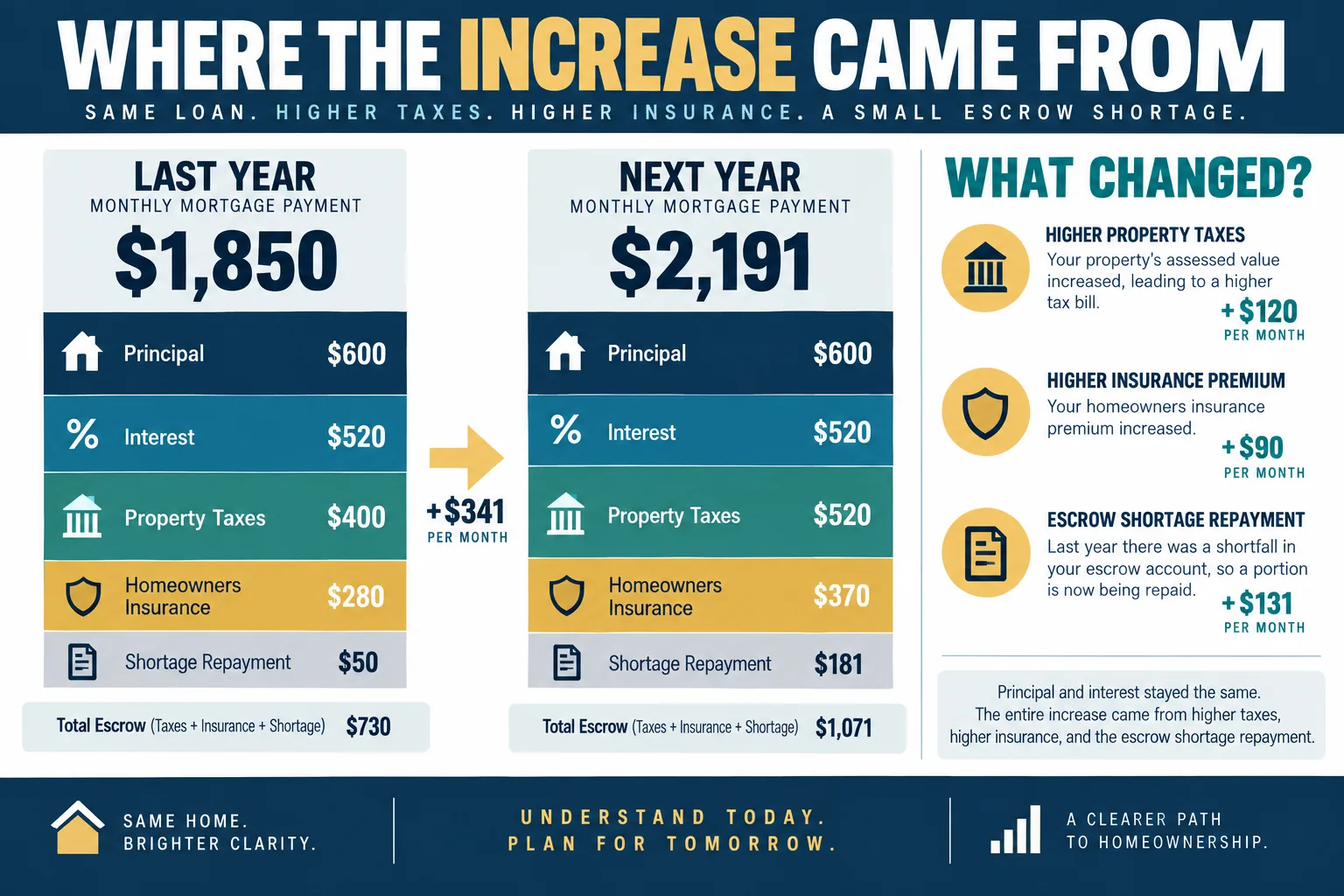
The increase often has two layers: one-twelfth of higher future bills plus repayment of last year’s shortage. Paying the shortage may remove the temporary layer but does not undo the ongoing tax or premium increase.
Read the repayment option carefully
CFPB guidance says a servicer may require many shortages to be repaid in equal monthly payments over at least 12 months, depending on size and account status. Do not assume a demanded lump sum is your only option.
Ask what the payment will be with the shortage spread, voluntarily paid in full if permitted, or recalculated after corrected tax or insurance data. Get the answer in writing before sending extra money.
Audit the projection with real bills
Add the projected annual tax, insurance and other escrow disbursements, divide by 12, then compare with the new regular escrow collection. Next identify the separate shortage installment and allowed cushion.
Example: annual bills rise from $6,000 to $7,200, adding $100 monthly. A $1,200 shortage repaid over 12 months adds another $100, so the payment can jump $200 even though only half is permanent.
Challenge a servicing error correctly
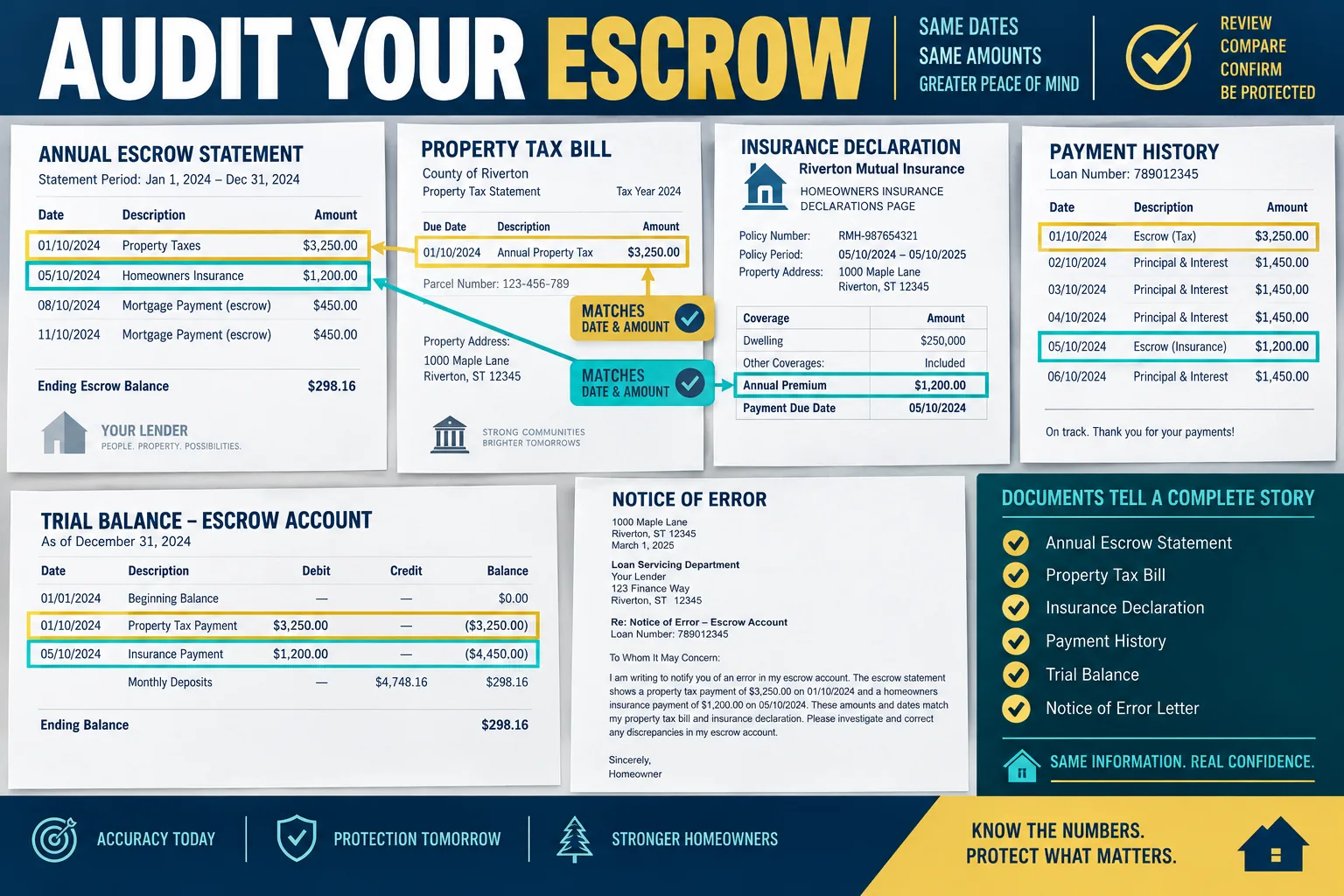
Call first for an explanation, but preserve formal rights with a written notice of error or request for information when needed. CFPB advises sending it to the special address shown on the statement, website or servicer notice—not on a payment coupon.
State the loan number, disputed amount, dates, evidence and requested correction without including sensitive originals. Continue making required payments while the dispute is reviewed unless qualified advice says otherwise; an escrow dispute does not automatically suspend the mortgage obligation.
Fix the underlying bill too
If the tax authority removed a homestead or senior exemption, address that office directly and observe its appeal deadline. If an insurance renewal is wrong or unaffordable, correct rating facts or shop coverage without allowing a lapse.
Send any corrected bill or declaration to the servicer and request a new escrow analysis. A refund from the tax authority or insurer may not automatically be credited to the mortgage account.
Escrow review checklist
Save both annual statements; mark every disbursement; verify parcel and policy numbers; separate ongoing escrow from shortage repayment; calculate the expected monthly amount; ask about repayment options; dispute errors in writing; and confirm the next analysis.
Rules and loan exemptions vary. HUD, VA, USDA, state programs, bankruptcy or delinquency can change the process, so use CFPB housing-counselor resources or qualified advice for high-stakes cases.
Questions to ask before choosing a fix
Ask whether the servicer’s projected tax includes an expired exemption, supplemental assessment or one-time bill. New construction, reassessment after purchase and insurance replacement can create a steep first-year change that is mathematically correct even though the original closing estimate looked reasonable.
A lower monthly option is not always a lower total cost. Spreading a shortage eases cash flow; paying it voluntarily may remove the temporary installment, but neither choice reduces a valid future tax or premium. Request both payment illustrations and check for fees or restrictions.
If insurance changed, confirm the servicer paid the correct carrier and did not project both old and new policies. Force-placed insurance, duplicate disbursements or a refund mailed to the borrower can distort the analysis and demand separate correction steps.
When sending a notice of error, use trackable delivery and retain the complete packet. A general customer-service mailing address may not trigger the formal process, and vague language such as “my payment is wrong” is weaker than listing the exact disbursement, date and supporting bill.
Final verification before closing the file
After a correction or voluntary payment, check the next two monthly statements instead of assuming the system updated. Verify the extra amount was applied to escrow rather than principal, the shortage installment changed as promised, and taxes and insurance remain scheduled before their due dates.
Important: This guide provides general educational information. Verify current rules, deadlines, contracts and professional advice for your facts.
- CFPB mortgage servicing rules
- CFPB mortgage error and information requests
- CFPB mortgage servicing escrow FAQs
Reviewed September 20, 2026.