

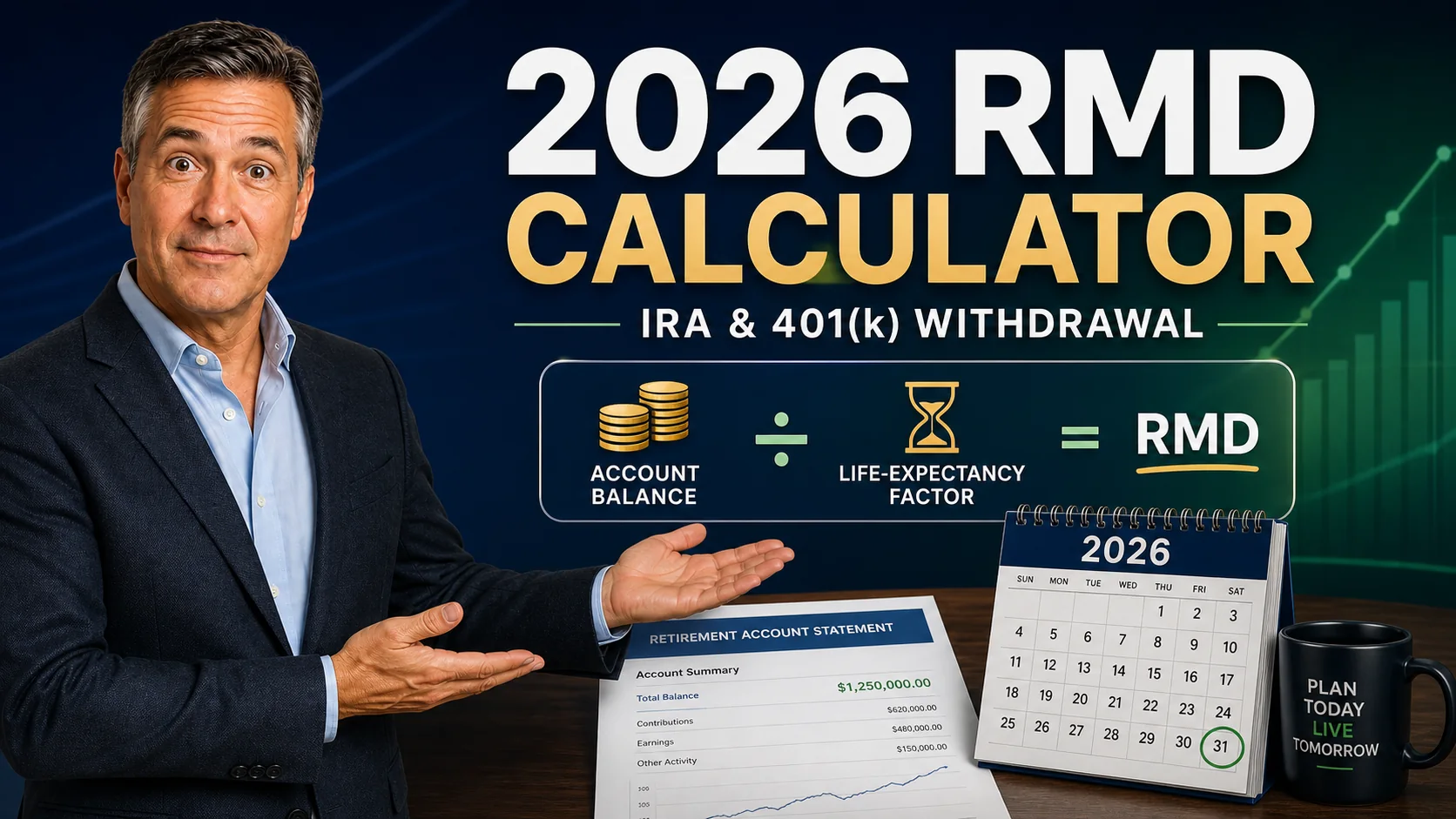
Estimate your 2026 required minimum distribution using your December 31, 2025 retirement-account balance and the IRS Uniform Lifetime Table.
2026 RMD Calculator
For traditional IRAs and most defined-contribution retirement plans
How the 2026 RMD estimate is calculated
For most owners, divide the retirement account's December 31, 2025 balance by the distribution period for your age in the IRS Uniform Lifetime Table. For example, the 2026 factor at age 73 is 26.5. Traditional IRA owners generally begin RMDs at the applicable starting age even if still working. Some workplace-plan participants can delay distributions until retirement.
Who should not rely on the standard result?
Use a different IRS table if your spouse is your sole beneficiary and more than 10 years younger. Inherited accounts follow different rules. Roth IRAs and designated Roth workplace accounts generally do not require lifetime RMDs for the original owner. Always confirm your situation with the custodian, plan administrator, or tax professional.
Deadlines and practical cautions
Your first RMD may generally be delayed until April 1 of the following year, but doing so can place two taxable distributions in that following calendar year. Later RMDs are generally due by December 31. Missing an RMD can trigger an excise tax, although a lower rate may apply after timely correction.
Check the IRS RMD FAQs and IRS Publication 590-B before acting.