

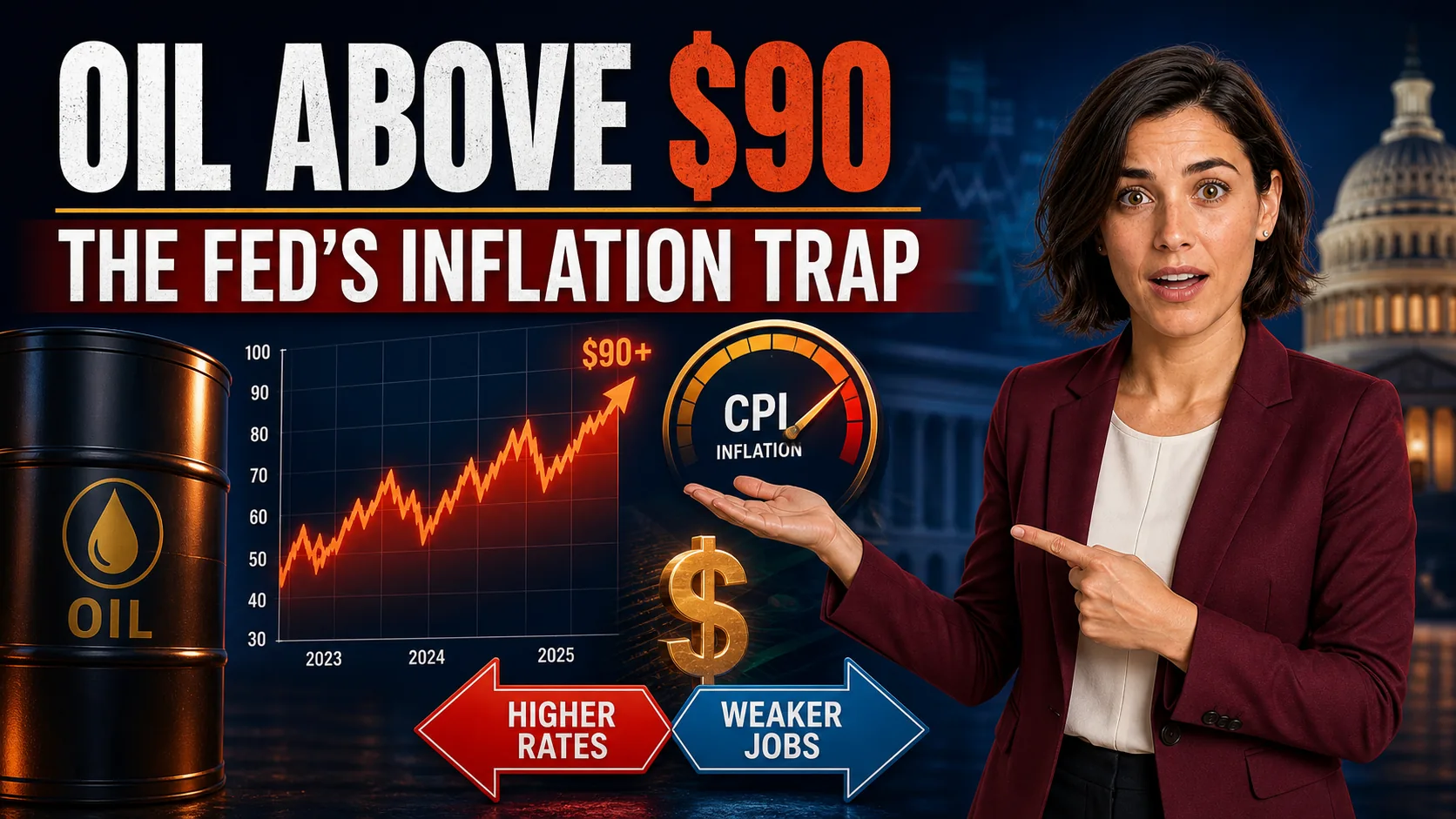
Oil briefly pushed above $90 a barrel just as the United States approached its most important inflation reading of the month. That combination matters far beyond the gas pump. It threatens to keep borrowing costs high while an already softer labor market makes higher rates more painful.
Wall Street's immediate question is whether the next Consumer Price Index report will be cool enough to reassure the Federal Reserve. The deeper question is harder: can inflation keep easing when energy is once again raising the cost of moving people, food and goods?
This is not simply an oil story
Crude oil is both a consumer product and an industrial input. A price shock first appears in gasoline, diesel and jet fuel. It then moves into freight bills, airline fares, packaging, farming and manufacturing. Businesses can absorb part of the increase, but sustained costs eventually reach customers or reduce profit margins.
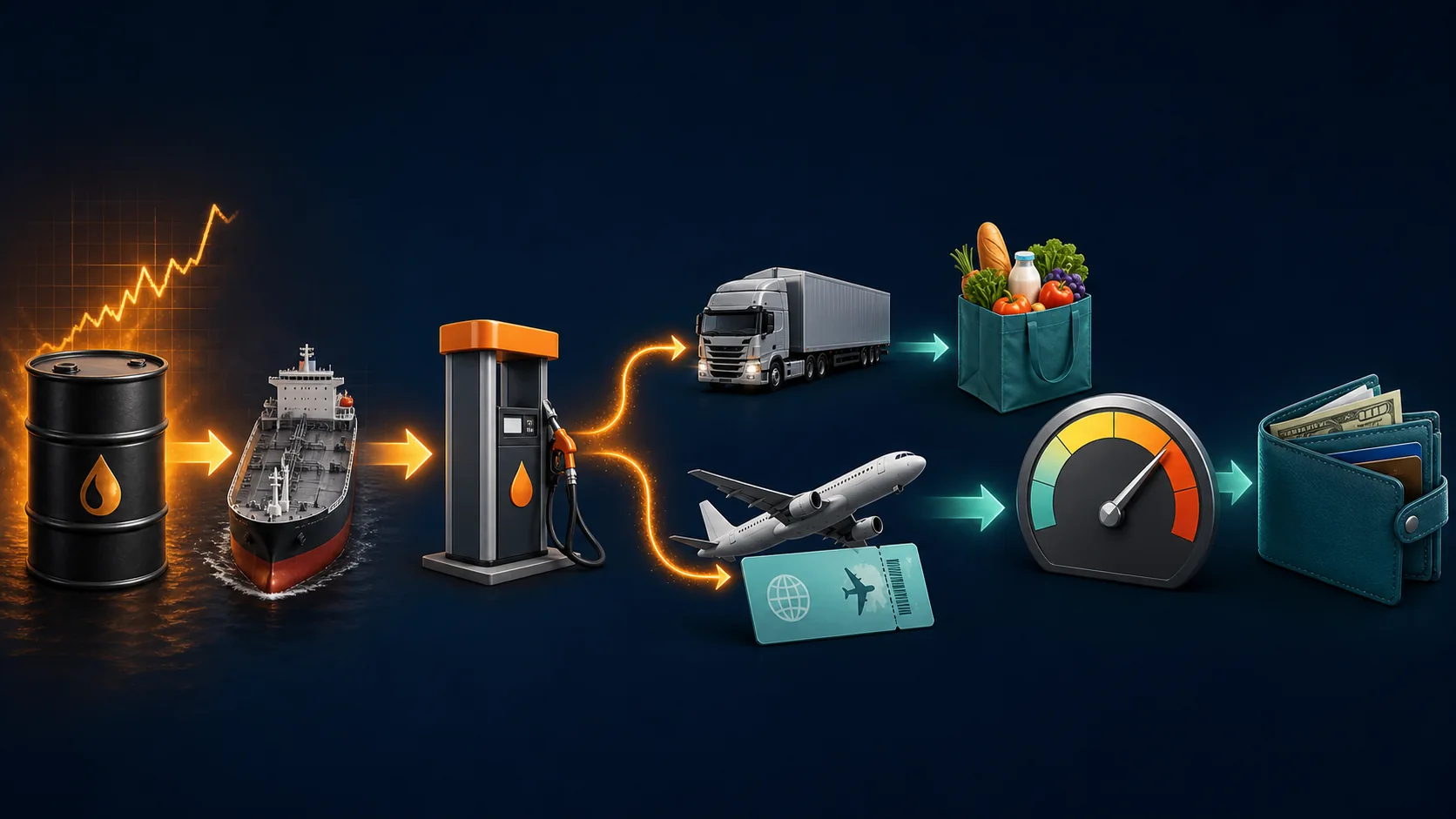
This transmission does not happen all at once. Gasoline can react within days, freight contracts more slowly, and service companies may adjust prices only after several months. That lag is why one favorable inflation report cannot completely settle the debate. Today's oil price may become tomorrow's delivery surcharge and next quarter's menu price.
The Federal Reserve faces the wrong kind of trade-off
The labor market has weakened sharply, which normally argues for easier monetary policy. But higher energy prices can lift headline inflation and, if they persist, influence what households and businesses expect inflation to be. The Fed cannot pump more oil or repair a disrupted shipping route. Its interest-rate tool works by suppressing demand elsewhere in the economy.
That creates an unpleasant choice. Raising rates may not lower the price of crude, but it can slow housing, business investment and hiring enough to stop energy inflation from spreading. Holding rates steady protects employment better, but risks allowing a temporary oil shock to become broader inflation. Cutting rates would be difficult to justify unless the labor market deteriorates much faster or underlying inflation cools decisively.
My view: investors are focusing too heavily on the next CPI headline. The more important signal is whether energy costs begin appearing in services and inflation expectations. A one-month decline in core inflation could produce a rally, but it would not remove the Fed's medium-term problem.
Three CPI outcomes—and what markets may hear

1. Inflation is cooler than expected
Treasury yields could fall and rate-sensitive stocks could rally. Smaller companies, homebuilders and long-duration technology shares would likely benefit most. But the rally may fade if oil remains elevated, because markets will question whether the improvement can last.
2. Headline inflation is hot but core inflation improves
This is the most ambiguous result. Investors may initially blame energy and look through the headline number. Bond markets, however, will watch inflation expectations and transportation-sensitive categories. The Fed could stay on hold while keeping a tightening bias.
3. Both headline and core inflation are hot
This would be the most dangerous outcome. Treasury yields could rise, the dollar could strengthen and highly valued growth stocks could fall. A rate increase would become more plausible even with weaker employment, because persistent core inflation would suggest the pressure has spread beyond oil.
Why record stock prices do not mean the economy is safe
Strong corporate earnings have helped major indexes remain near records. But index strength can conceal fragility. A handful of highly profitable companies can lift the market while households face higher fuel bills and smaller businesses pay more for credit and transportation.
Oil producers may benefit from higher prices, while airlines, delivery companies, chemical producers and consumer businesses with weak pricing power can suffer. Banks face a mixed picture: higher rates can support lending margins, but weaker borrowers and slower loan growth raise credit risk. The correct question is not whether “stocks” win or lose, but which balance sheets can absorb a longer period of expensive energy and money.
What households should watch
- Gasoline and utility bills: these reduce discretionary spending immediately.
- Credit-card and auto-loan rates: sticky inflation can delay meaningful borrowing-cost relief.
- Mortgage yields: they respond more to the bond market than to a single Fed decision.
- Airfares and delivery fees: these can reveal whether the oil shock is spreading.
- Job security: weaker hiring matters more to most households than a one-day stock-market rally.
What long-term investors should do
A single inflation report is a poor reason to rebuild an entire portfolio. Instead, test whether your holdings depend on falling rates, cheap energy or uninterrupted consumer spending. Companies with strong cash flow, manageable debt and genuine pricing power are better equipped for this environment than businesses whose valuation requires perfect conditions.
Keep enough cash for near-term needs so market volatility does not force a sale. Rebalance concentrated winners rather than trying to predict the CPI decimal. And remember that an oil-driven inflation scare can reverse quickly if supply conditions improve—another reason not to make an all-or-nothing bet.
The bottom line
Oil above $90 does not guarantee a new inflation spiral, and one soft CPI report would not guarantee rate relief. The real danger is duration: the longer energy stays expensive, the greater the chance that transportation costs spread into services, inflation expectations rise and the Fed keeps financial conditions tight while employment weakens.
For investors and households, the next CPI release is a checkpoint rather than a verdict. Watch core services, bond yields, inflation expectations and the breadth of labor-market weakness. Together, they will tell us whether this is a temporary oil shock—or the beginning of a much more difficult economic regime.