


The federal Homeowner Assistance Fund is approaching its September 30, 2026 end date, but the practical deadline may be earlier: many state programs have already closed, suspended intake or begun waitlists as money runs out. If your program is open, an incomplete application can lose precious time.
What HAF is—and what it is not
Congress created HAF to prevent mortgage delinquency, foreclosure, utility loss and displacement among homeowners financially affected by the pandemic. Roughly $10 billion was allocated through states, territories, tribes, the District of Columbia and the Department of Hawaiian Home Lands. It is not a new nationwide stimulus check, and there is no single federal application.
Who may qualify
Core federal parameters generally require a financial hardship associated with COVID-19, assistance for a primary residence, and household income within the local program’s limit. The CFPB notes that most state programs use an income cap below 150% of area median income or $79,900, whichever is higher, but states may set lower limits and additional rules. A job loss, reduced income, higher health costs or caregiving expenses can be relevant hardship examples. Your state decides what documentation is enough.
It may cover more than a mortgage
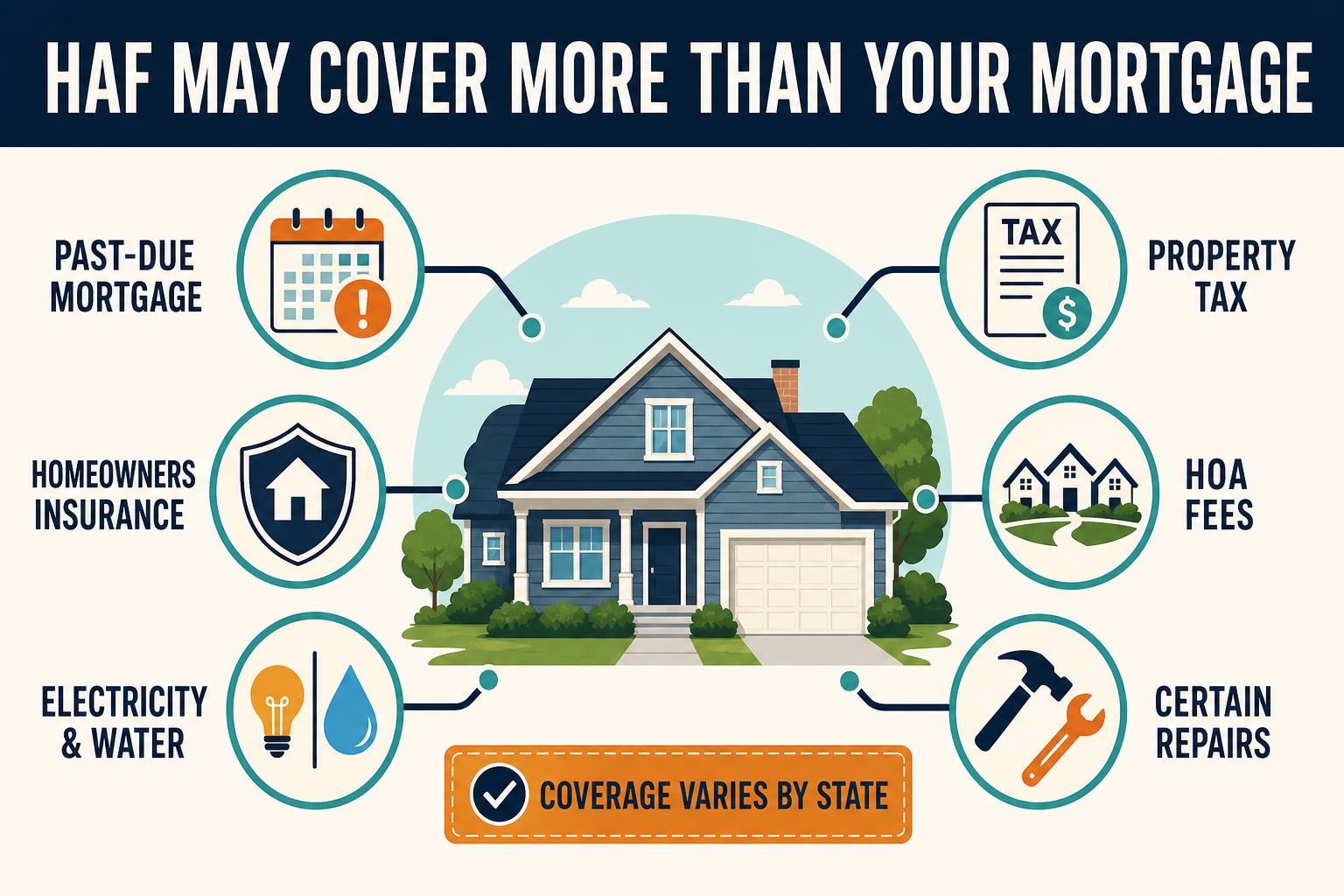
Depending on the local design, assistance may cover past-due mortgage payments, property tax, homeowners or flood insurance, HOA or condominium charges, electricity, gas, water, wastewater, internet, manufactured-home lot rent and certain repairs that prevent displacement. Not every state covers every category.
The application strategy that prevents avoidable delays
1. Check live program status
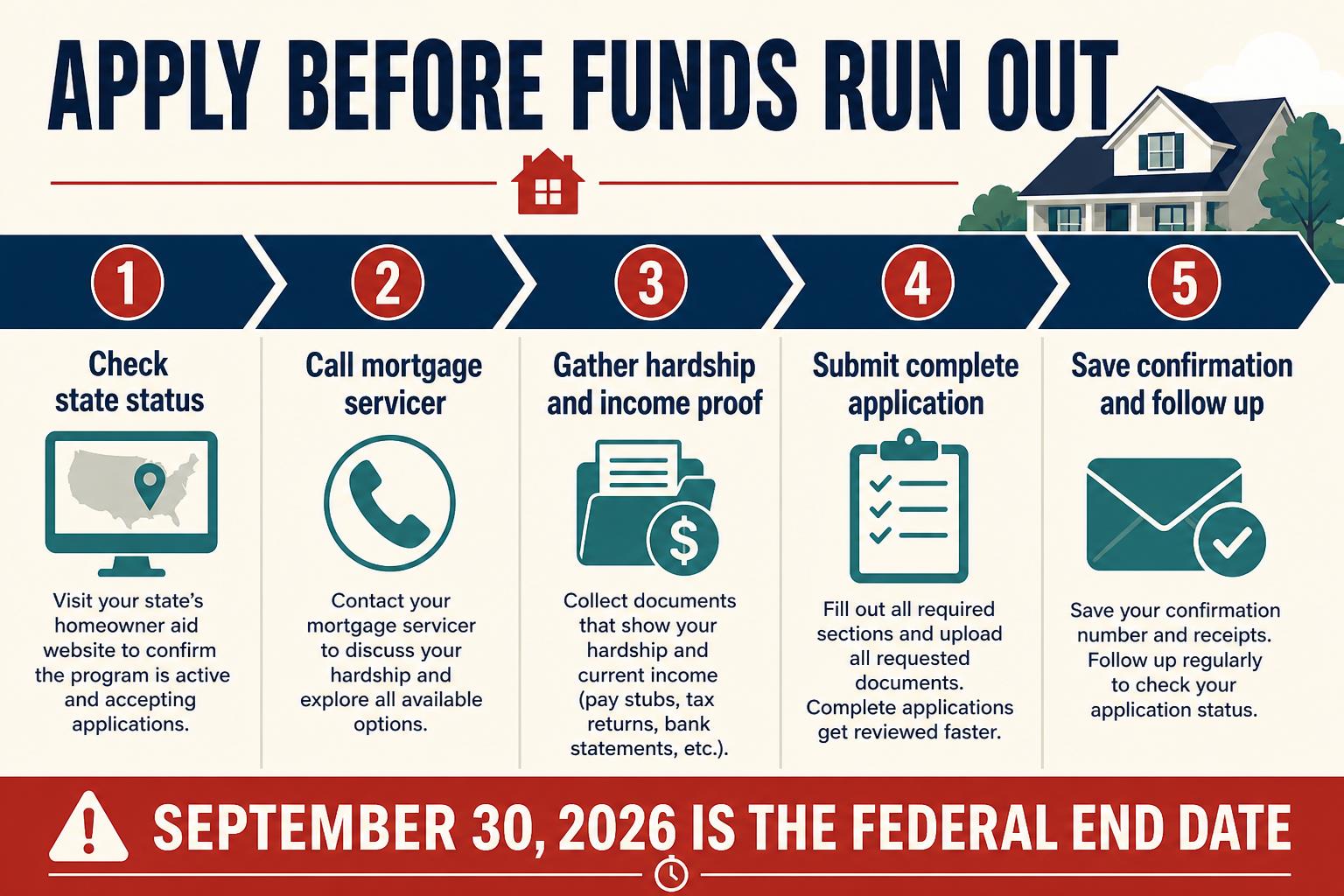
Start with the CFPB HAF page and select your state, territory or tribal resource. Confirm whether applications are open, waitlisted or closed on the program’s own official site. Status can change faster than articles are updated.
2. Call your mortgage servicer anyway
Tell the company that sends your statement that you are applying for HAF. Ask about loss-mitigation options, a foreclosure hold, required documents and whether it participates in the state program. Do not stop payments merely because an application is pending unless the servicer gives documented instructions.
3. Build one complete evidence folder
- Government identification and proof the property is your primary residence
- Recent mortgage statement and delinquency or foreclosure notices
- Property-tax, insurance, HOA and utility statements being requested
- Income proof for all required household members
- A dated hardship explanation connecting the financial impact to your inability to pay
- Any program-specific authorization allowing contact with the servicer
What happens if approved?
Funds are commonly sent directly to the mortgage servicer, utility or contractor rather than to the homeowner. Many programs structure assistance as a grant, but some impose repayment or resale conditions. Read the award agreement and ask whether the assistance creates a lien, forgivable loan or future repayment obligation.
If foreclosure has started
You may still apply if the local program is open and you otherwise qualify. But an application does not automatically stop a sale. Contact the servicer’s loss-mitigation department, a HUD-approved housing counselor and, when necessary, legal aid immediately. Foreclosure timelines vary by state.
| Problem | Next move |
|---|---|
| Program closed | Ask a HUD counselor about servicer modification, repayment, state/local aid and legal assistance. |
| Application denied | Request the written reason and appeal/review deadline; correct income, occupancy or missing-document errors promptly. |
| Servicer mismatch | Keep payment histories, names, dates and screenshots; use the CFPB complaint process if unresolved. |
| Sale date approaching | Tell every agency the exact date; seek housing counseling and legal help rather than waiting for routine processing. |
Scams that target desperate homeowners
- No legitimate HAF application requires an upfront fee.
- Do not sign over your deed or redirect payments to an unfamiliar company.
- Do not trust promises of guaranteed approval.
- Verify domains and phone numbers independently through .gov pages.
- Never share a one-time bank or email security code.
FAQ
Must the hardship still be happening?
Rules vary. The federal framework covers qualifying pandemic-associated hardships, but the state defines required timing and evidence.
Can a condominium or manufactured home qualify?
Many programs include condos, one-to-four-unit homes and manufactured housing, but check local property rules.
Is September 30 my guaranteed application deadline?
No. It is the federal performance end date; a state can close earlier when funds are committed or processing time requires it.
What if I receive no HAF money?
Continue working with the servicer and a HUD counselor. Modification, repayment, forbearance, legal aid and other local programs may still be available.
See the Treasury’s HAF program page. This article is educational and does not guarantee eligibility, funding or a foreclosure pause.