

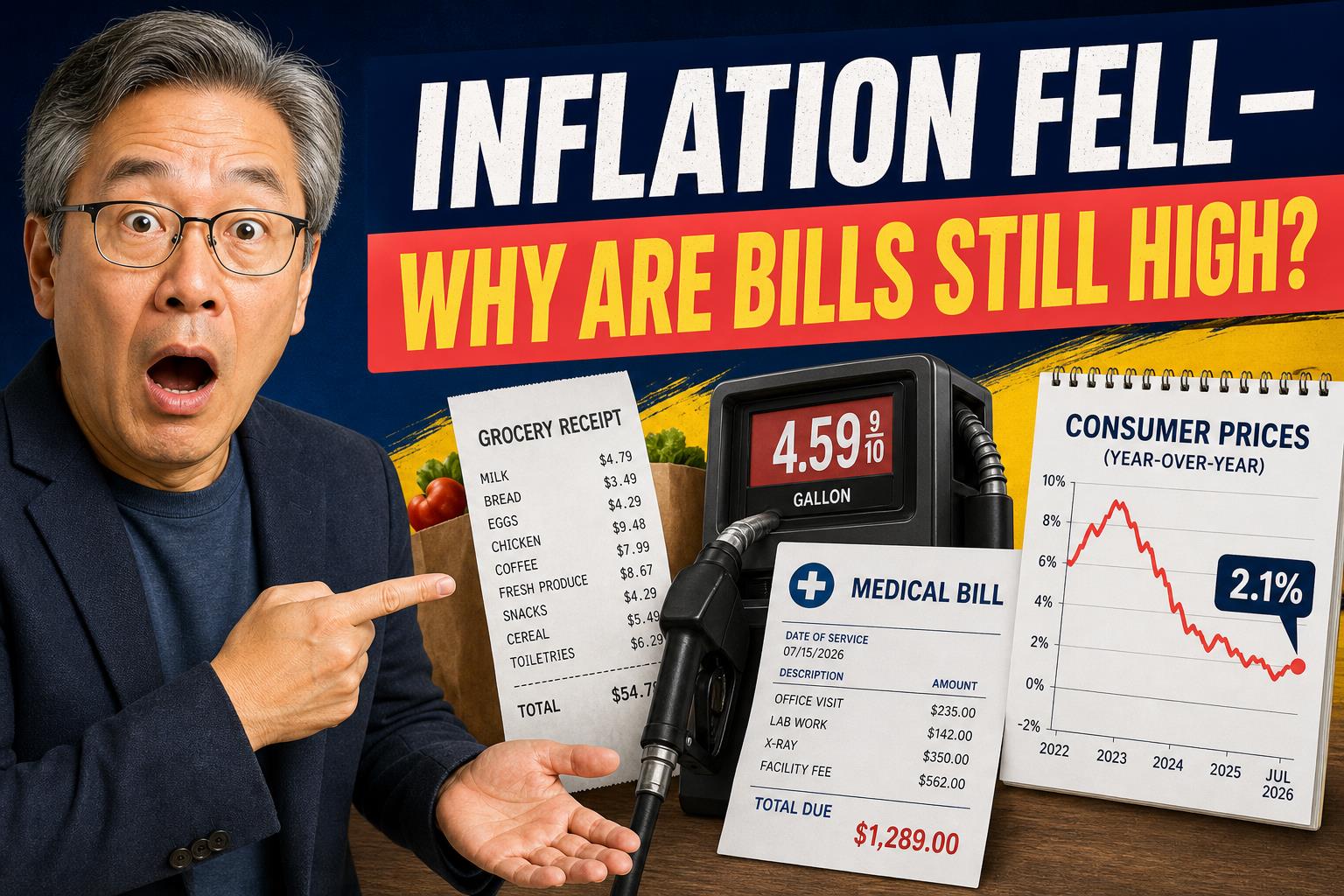
U.S. consumer prices rose 3.4% over the year through July, slightly slower than June. Yet many families feel no relief. That is not a contradiction: inflation measures how fast prices change, not whether the price level has returned to where it started.
Slower inflation is not deflation
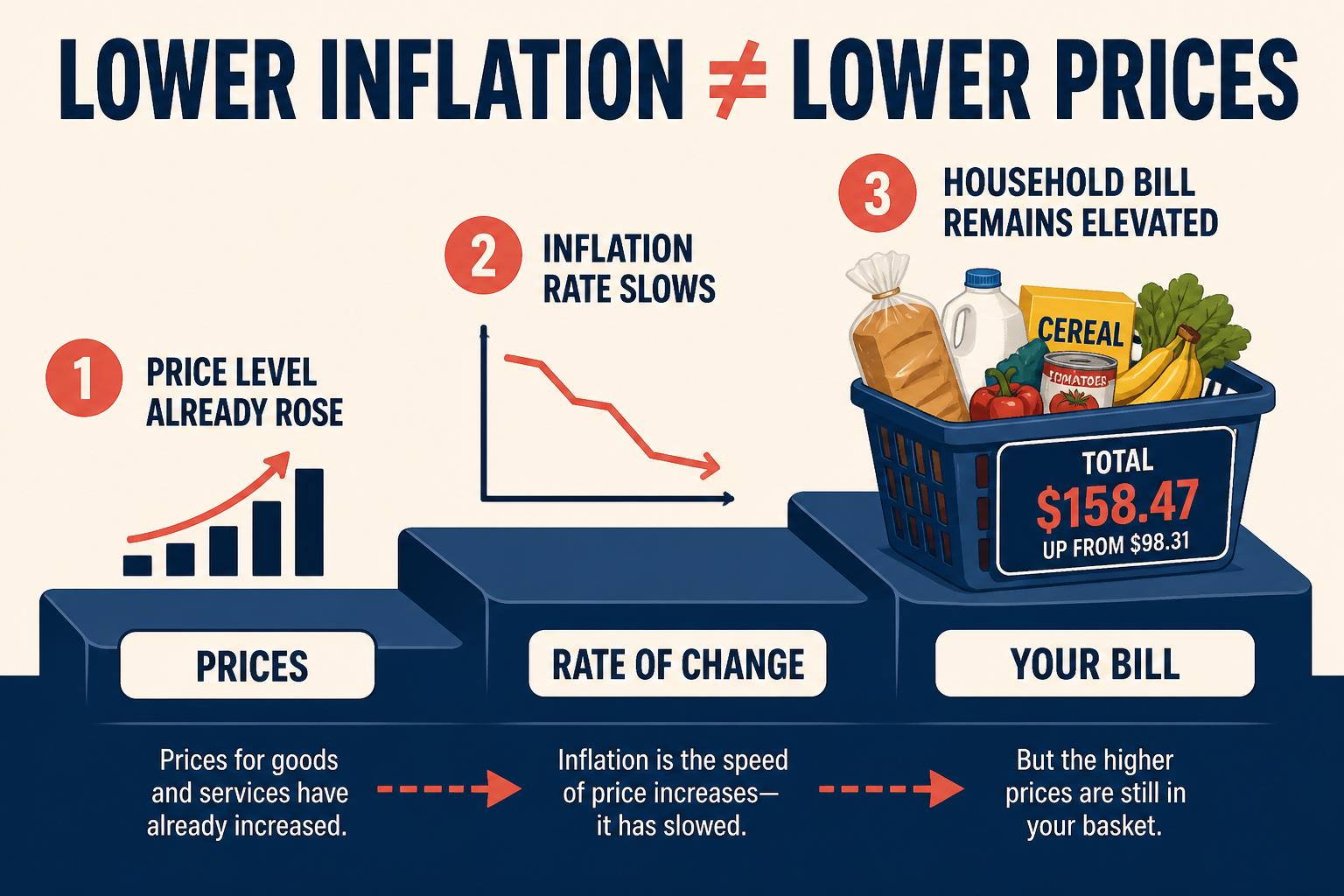
Imagine a grocery basket rising from $100 to $115, then increasing only 1% the next year. Inflation has slowed sharply, but the basket still costs more than $116. The Federal Reserve reported in July that food prices were almost 30% above their pre-pandemic level. That accumulated price level is why a modest monthly improvement does not restore old purchasing power.
Why your household can feel worse than the headline
Your spending weights are different
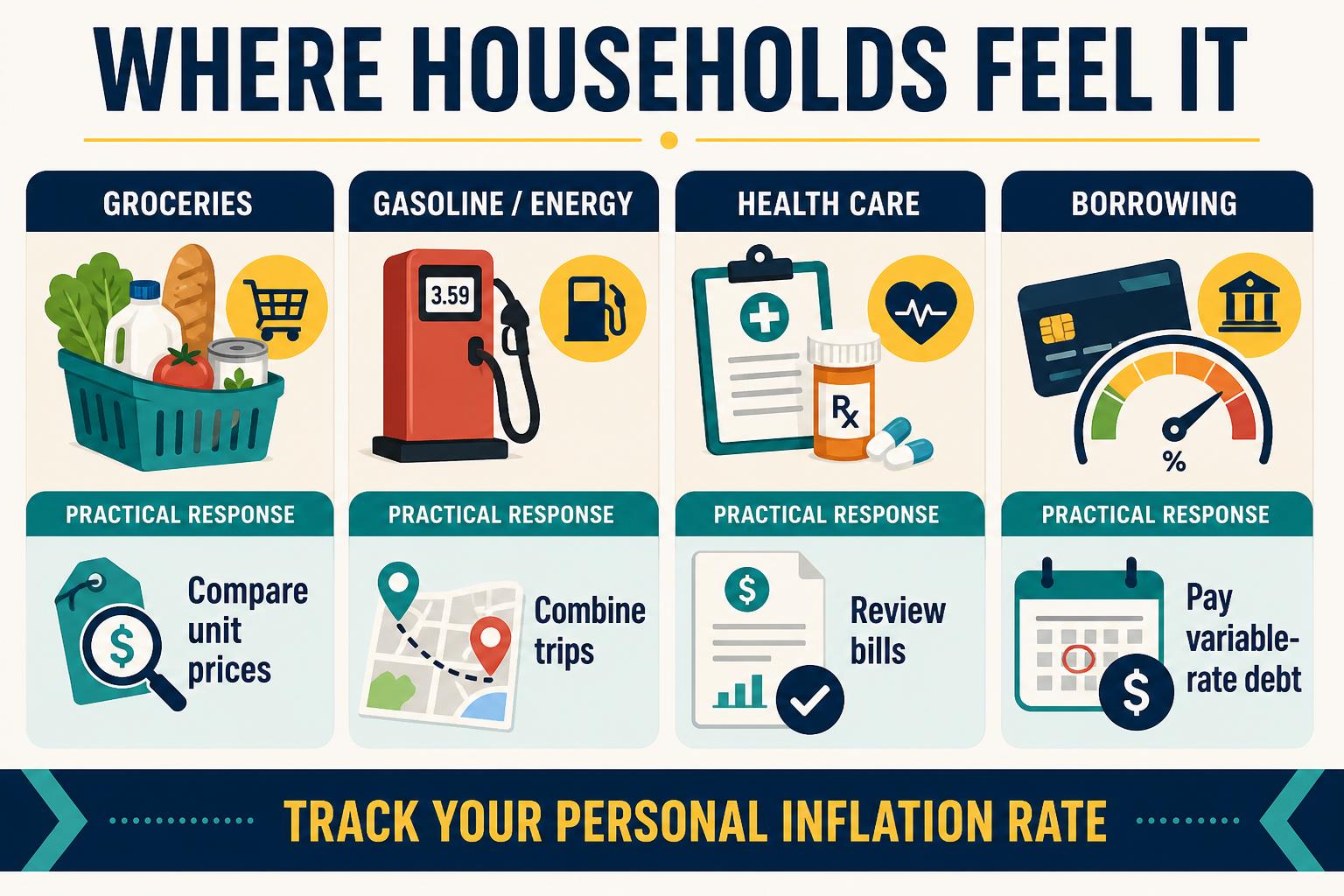
CPI represents an average urban consumer basket. A lower-income household generally devotes more of its budget to food, rent and energy. A retiree may spend more on health care. A commuter is exposed to gasoline. If your largest categories rise faster, the headline understates your experience.
Interest is not experienced like a shelf price
Higher rates raise the cost of carrying credit-card balances, financing cars and buying homes. CPI does not simply add your credit-card interest bill to the basket. Thus household cash flow can tighten even while reported inflation moderates.
Insurance and local costs are uneven
Auto and home premiums, utility rates, rent renewals and property taxes vary by location and can reset in large jumps. National averages smooth over those shocks.
Calculate your personal inflation rate
- Download the last three months of bank and card transactions.
- Group essentials into housing, groceries, transportation, health, utilities, insurance and debt payments.
- Compare each category with the same months a year earlier; avoid comparing a vacation month with a normal month.
- Calculate: (current essential spending − prior spending) ÷ prior spending × 100.
- Separate price changes from lifestyle changes, such as a new car or larger apartment.
| Finding | Useful response |
|---|---|
| Groceries rising fastest | Compare unit prices, redesign five repeat meals, and change the store—not merely the brand. |
| Insurance jump | Requote identical coverage and deductibles; ask why the premium changed before reducing protection. |
| Variable-rate debt | Direct savings toward the highest after-tax interest cost while preserving a basic emergency cushion. |
| Medical bills | Request an itemized bill, compare it with the insurer’s explanation of benefits, and ask about assistance. |
What the report means for rates
A single softer month does not determine Federal Reserve policy. Officials watch whether inflation is moving sustainably toward 2%, the labor market, expectations and the breadth of price increases. Elevated energy costs can also feed transportation and production expenses later. Consumers should not make a home or car purchase solely on a forecast of an immediate rate cut.
A better 30-day response than panic-cutting
- Freeze new recurring subscriptions for one month.
- Move one variable bill—insurance, phone, internet or electricity plan—to competitive quotes.
- Create a weekly grocery ceiling based on actual transactions.
- Pay more than the minimum on the highest-rate revolving balance.
- Keep necessary insurance and medications; false economy can create a larger future bill.
FAQ
Will prices return to 2019 levels?
That would require widespread deflation, which is neither implied by slower inflation nor generally expected. Household relief more often comes from wages catching up and specific prices stabilizing.
Why did groceries feel high if they fell in July?
A small one-month decline occurs from an already elevated level, and individual food categories move differently.
Should I delay borrowing?
Compare the necessity, total interest and alternatives. Do not rely on a predicted rate cut; refinance only if later savings exceed fees and you still qualify.
Verify releases at the Bureau of Labor Statistics, review the Federal Reserve’s July report, and track food forecasts through USDA. This article is educational information.