

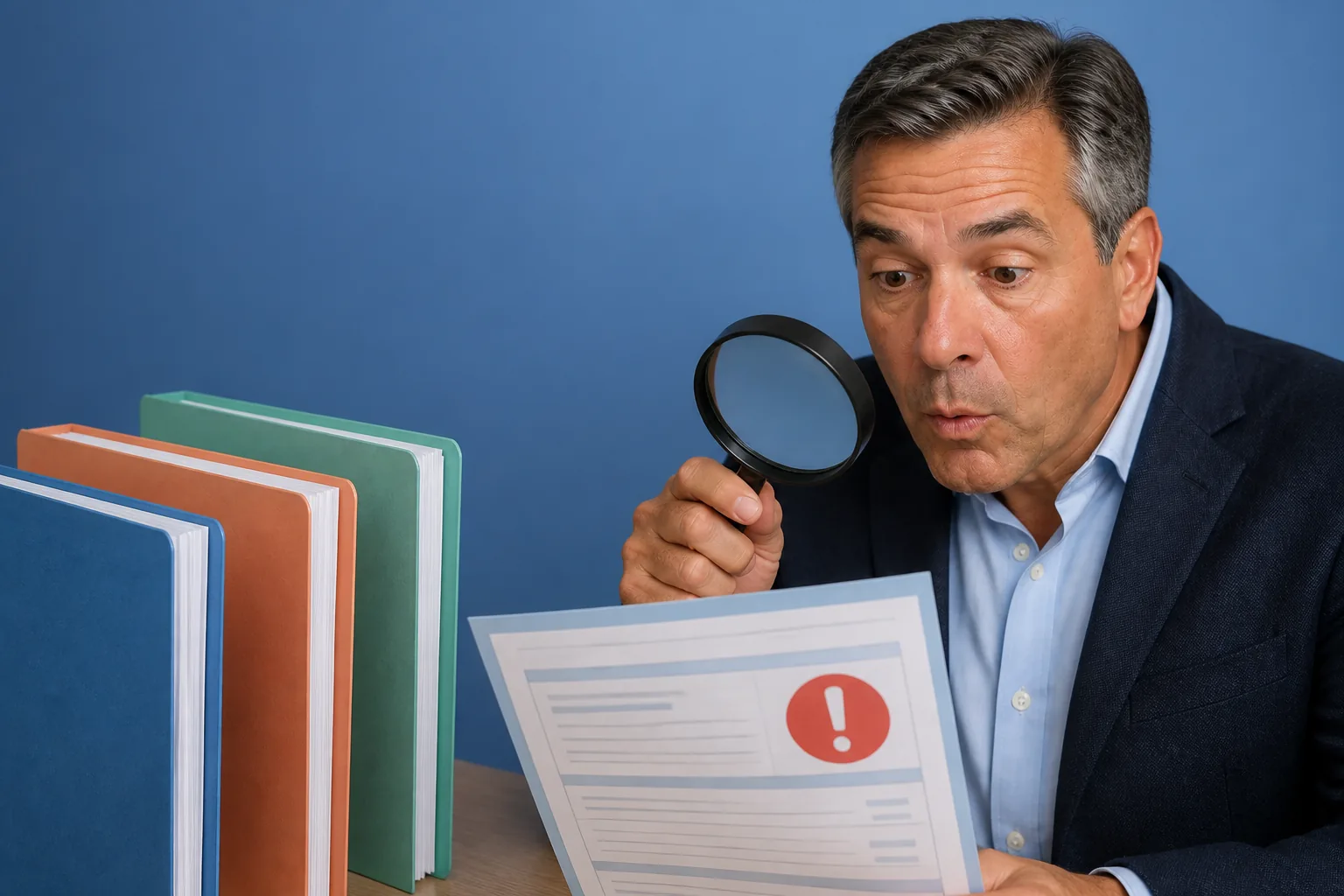
A credit report is a data file, not a verdict. Reading it in the right order makes costly errors easier to spot and document.
- Verify identity data, then accounts, then inquiries and public records.
- Dispute with both the bureau and the company that supplied the data.
- Describe the exact field that is wrong and attach proof.
Read it like an auditor
Begin with personal identifiers and addresses; unfamiliar data can signal a mixed file or fraud. For every account, inspect ownership, open date, balance, credit limit, payment status, late-payment months, and whether a closed account is correctly marked closed. Next review hard inquiries and any collection or public-record information. One account may appear on multiple bureau reports with different update dates, so compare fields rather than assuming the reports will look identical.
Know what actually matters
Credit scores are calculated from report data, but a report does not have one universal score. Payment history, revolving utilization, age and mix of accounts, and new credit commonly matter, while formulas vary. A high card balance reported before you pay can raise utilization temporarily even if you never carry interest. A factual negative item usually cannot be removed merely because it is inconvenient; focus on information that is inaccurate, incomplete, duplicated, too old, or not yours.

Build a precise dispute
Circle or highlight the error on a copy and write: what the report says, why it is wrong, and what correction you want. Include identification, the relevant account page, and supporting records such as statements, cancellation letters, court documents, or identity-theft materials. Redact unrelated sensitive numbers. Submit separately to the credit bureau and the furnisher—the lender, collector, or other company that reported it—and preserve confirmation or certified-mail proof.
Track the investigation
Credit reporting companies generally must conduct a reasonable investigation, commonly within 30 days, though timing can vary. Calendar the deadline and review every result, not merely “completed.” If corrected, check all three reports because a fix at one bureau may not propagate. If rejected, ask what information was verified and by whom, supply stronger evidence, complain to the CFPB when appropriate, and consider adding a brief consumer statement while the dispute continues.

Avoid credit-repair traps
No company can legally erase accurate current negative information on demand. You can dispute errors yourself for free. Be skeptical of guaranteed score increases, demands to create a new credit identity, instructions to dispute everything regardless of truth, or large upfront fees. A legitimate strategy improves underlying data and habits; it does not manufacture a new file.
Documents worth saving
- Account numbers, dates, case numbers, and names of representatives
- Copies of forms, letters, reports, screenshots, and delivery confirmations
- A one-page timeline showing what happened and what you requested
Important: This guide provides general educational information, not legal, tax, credit, medical, or financial advice. Rules and eligibility can depend on your state and circumstances. Act promptly when a notice gives a deadline.
Official next steps
Bottom line
The person who gets the best result is usually not the loudest caller; it is the person who identifies the correct process, supplies organized evidence, and follows every deadline. Save this checklist now, because the details are hardest to reconstruct after an account is closed, transferred, or deleted.