

The first day is about containment, evidence, and preventing a second wave—not trying to solve every consequence at once.
- Call the affected company using a number you independently verify.
- Freeze all three credit files and secure your email first.
- Create an official recovery plan at IdentityTheft.gov.
First hour: protect the control center
Start with the email account tied to banking and password resets. From a clean device, change its password to a unique one, sign out other sessions, review forwarding rules and recovery options, and enable app- or hardware-key-based multifactor authentication. Then secure your mobile carrier account with a port-out PIN. If a thief controls email or phone service, changing bank passwords alone may not hold.
Call affected companies safely
Use the number on the back of your card, a statement, or the company’s official website—not a number in a suspicious text. Ask the fraud department to close or restrict compromised accounts, reverse unauthorized transactions, replace cards, and give you a case number. Ask what affidavit or documentation it needs and where to send it. Take notes with dates and names.
Freeze, then review
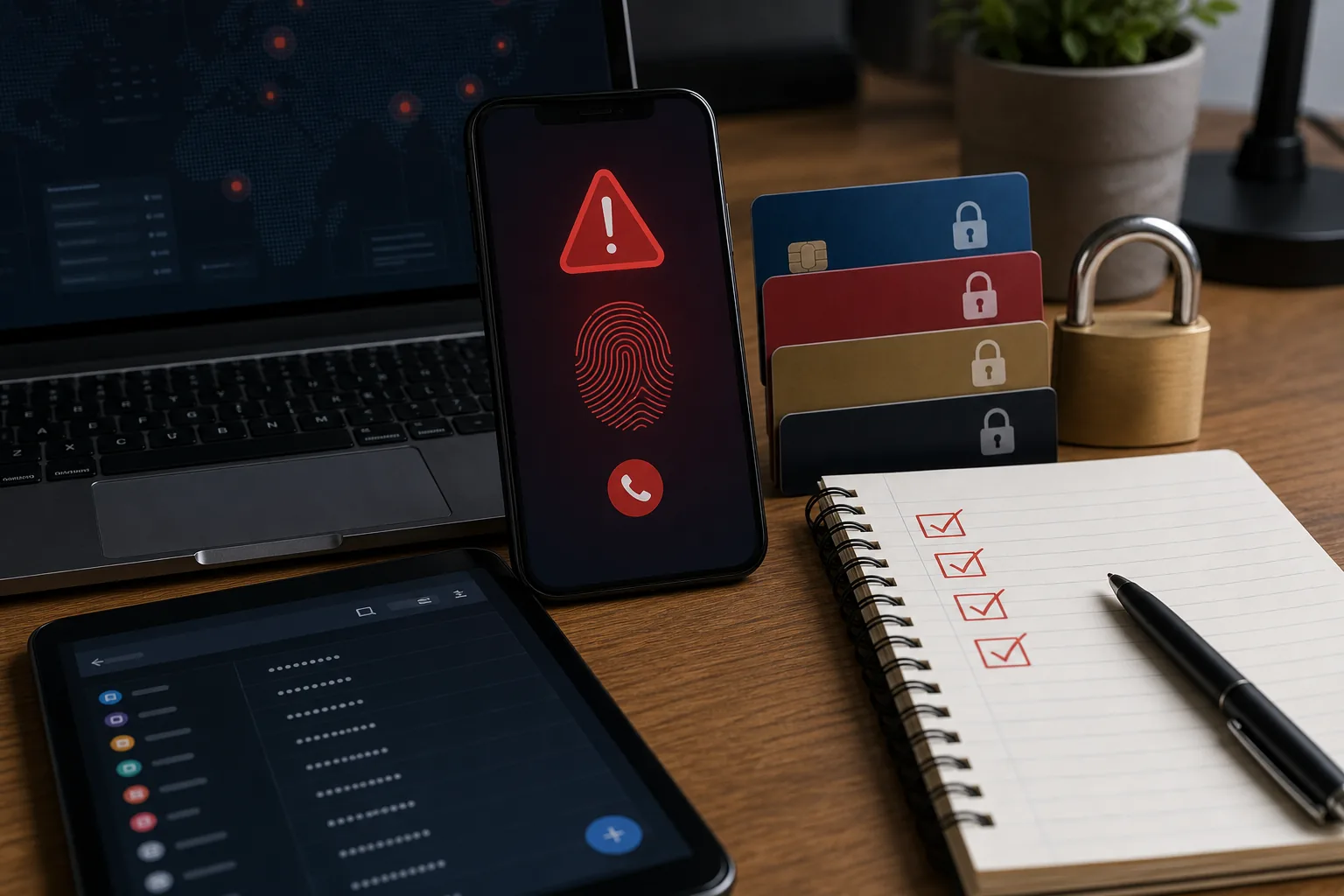
Place a free security freeze separately with Equifax, Experian, and TransUnion. A freeze is stronger than a fraud alert because it restricts access to your credit file for most new-account decisions; it does not affect your score or stop misuse of an existing account. Then obtain reports through AnnualCreditReport.com and mark every unfamiliar inquiry, account, address, and employer.
Create the official record
Report the theft at IdentityTheft.gov to generate an FTC Identity Theft Report and personalized plan. A police report can also help when a creditor requests one or when local crimes, physical theft, or a known suspect are involved. Store confirmation numbers, screenshots, letters, and mailing proof in one folder. Never alter original evidence.
Watch beyond credit cards
Identity theft can surface as tax returns, unemployment claims, utility accounts, medical records, or government benefits. Consider an IRS Identity Protection PIN, review health-insurance explanations of benefits, check bank-account screening records when relevant, and monitor mail. Repeat credit-report checks; fraud sometimes appears weeks later.
Documents worth saving
- Account numbers, dates, case numbers, and names of representatives
- Copies of forms, letters, reports, screenshots, and delivery confirmations
- A one-page timeline showing what happened and what you requested
Important: This guide provides general educational information, not legal, tax, credit, medical, or financial advice. Rules and eligibility can depend on your state and circumstances. Act promptly when a notice gives a deadline.
Official next steps
Bottom line
The person who gets the best result is usually not the loudest caller; it is the person who identifies the correct process, supplies organized evidence, and follows every deadline. Save this checklist now, because the details are hardest to reconstruct after an account is closed, transferred, or deleted.