

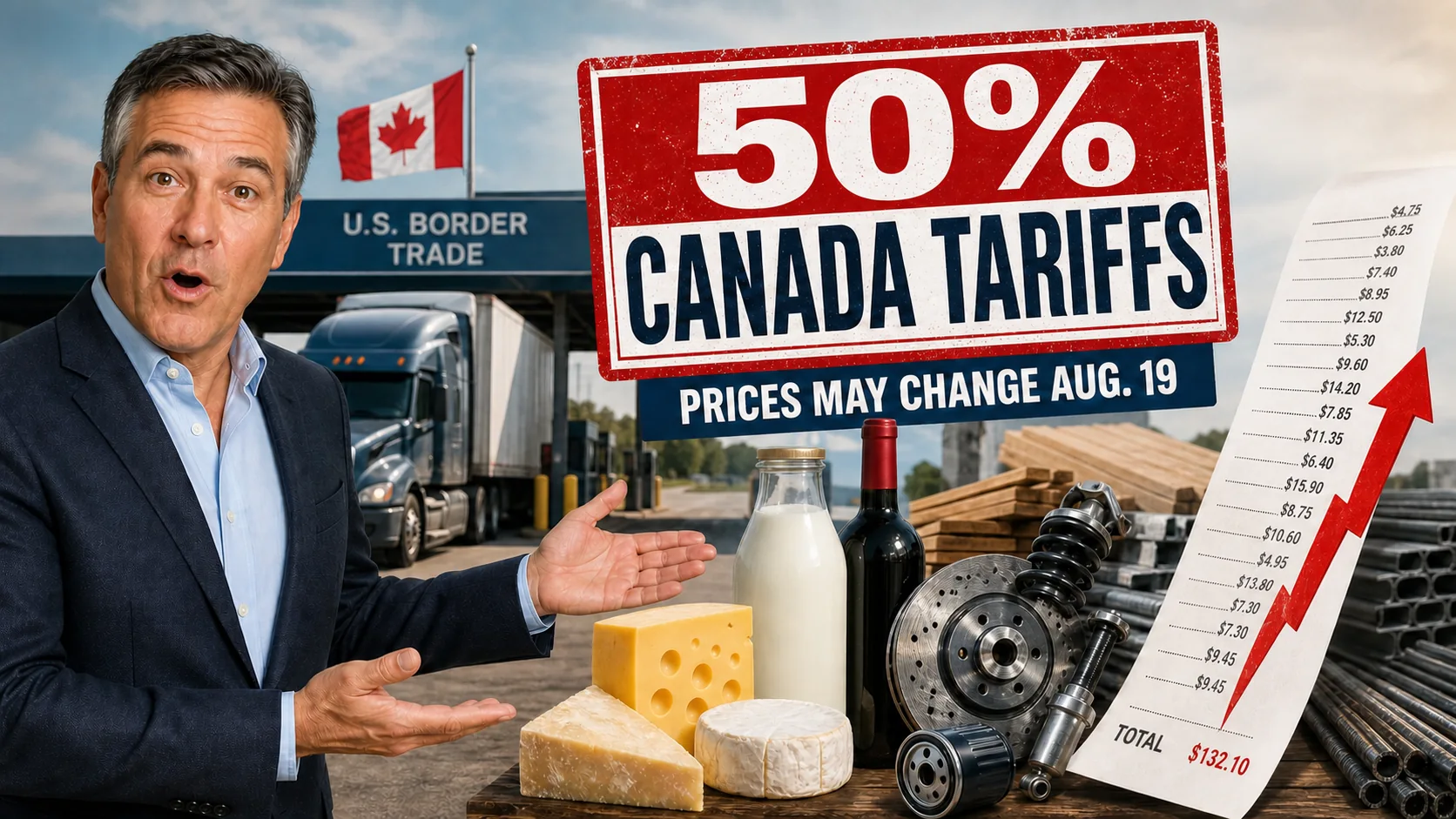
A new 50% U.S. tariff on selected Canadian goods is scheduled to take effect on August 19, 2026. The headline number is dramatic, but shoppers should not assume every Canadian product will suddenly cost 50% more. The real effect will depend on which goods are covered, how much inventory retailers already hold, and how importers, suppliers and stores divide the added cost.
The measure reaches beyond one grocery aisle. Covered categories include selected dairy products, alcoholic beverages, automotive goods and a wider collection of materials and consumer products. Energy, potash, fish and specified critical minerals are among the major exclusions. That distinction matters because a broad tax on Canadian energy would have created a much larger and faster shock for U.S. households.
What a 50% tariff actually means
A tariff is collected from the U.S. importer when covered merchandise enters the country. It is not a bill sent directly to Canada, and it is not automatically added to the shelf price at the same rate. If an imported item has a customs value of $100, an additional 50% duty can add $50 before domestic transportation, wholesaling and retail expenses.
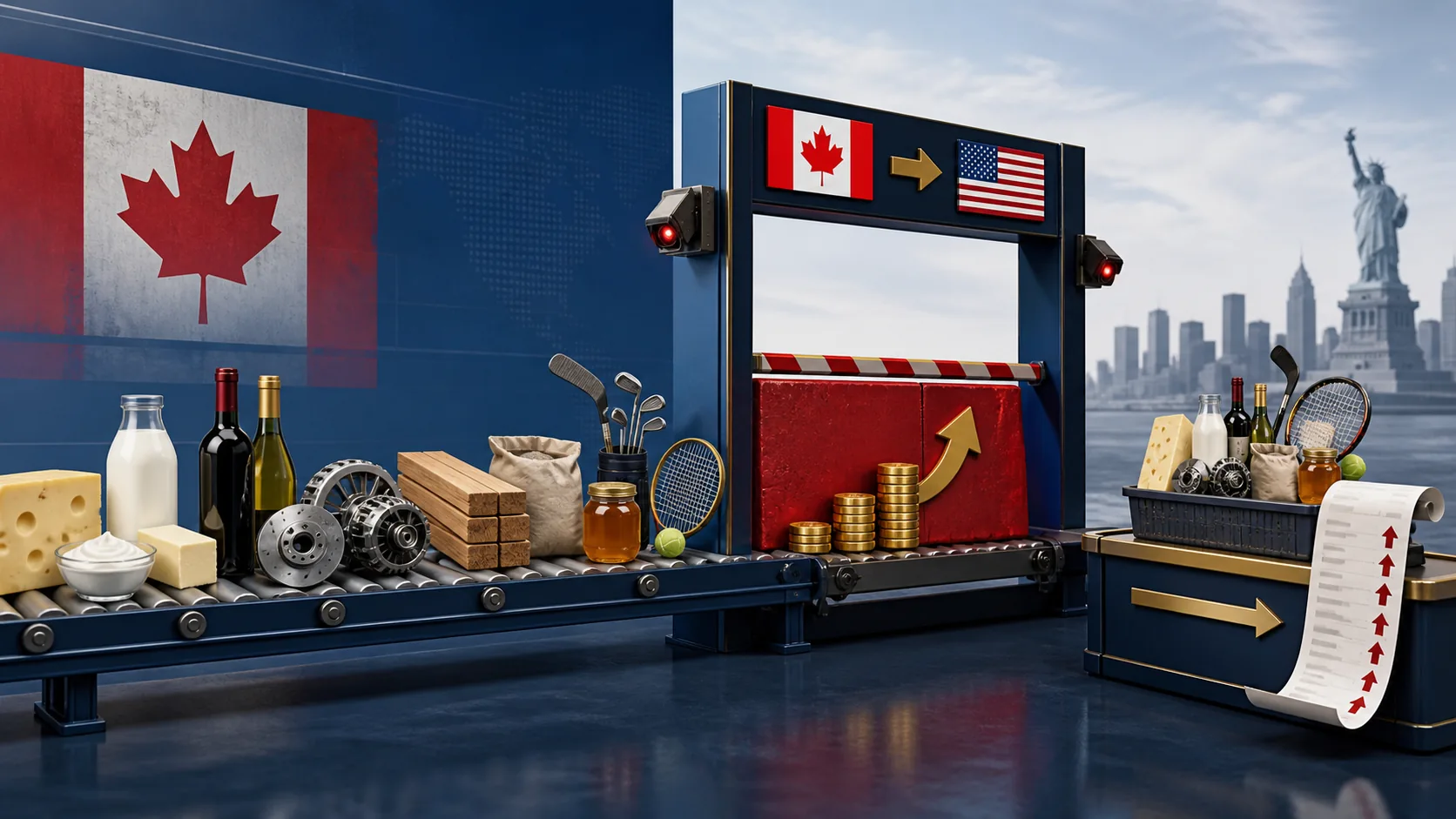
The importer then chooses among several imperfect options: raise the wholesale price, accept a smaller margin, demand a discount from the Canadian supplier, switch suppliers, or stop carrying the product. Most companies will use a mixture of these responses.
Why prices will not change everywhere on August 19
Goods already entered into U.S. commerce before the effective time generally will not acquire the new duty retroactively. Retailers may also have weeks or months of existing inventory. This creates a staggered effect: one store may keep its old price while another raises it after receiving a new shipment.
Products with easy U.S. or third-country substitutes are less likely to pass the full tariff to shoppers. Specialized cheese, particular wines, replacement auto components and construction inputs with limited alternatives may face more pressure. Contract terms and purchasing volume will also matter; a national chain has more leverage than an independent shop.
Where consumers may notice the impact first
- Imported cheese and specialty dairy: niche Canadian brands are more exposed than ordinary milk sourced locally.
- Wine and spirits: distributors may reduce selection, renegotiate contracts or promote alternatives.
- Vehicle repairs: covered Canadian parts could raise repair estimates when substitutes are unavailable.
- Home improvement and construction: selected wood products, cement and related materials can affect project bids and housing costs.
- Smaller consumer categories: honey, sporting goods and other covered merchandise may show uneven price changes depending on origin.
Who absorbs the cost?
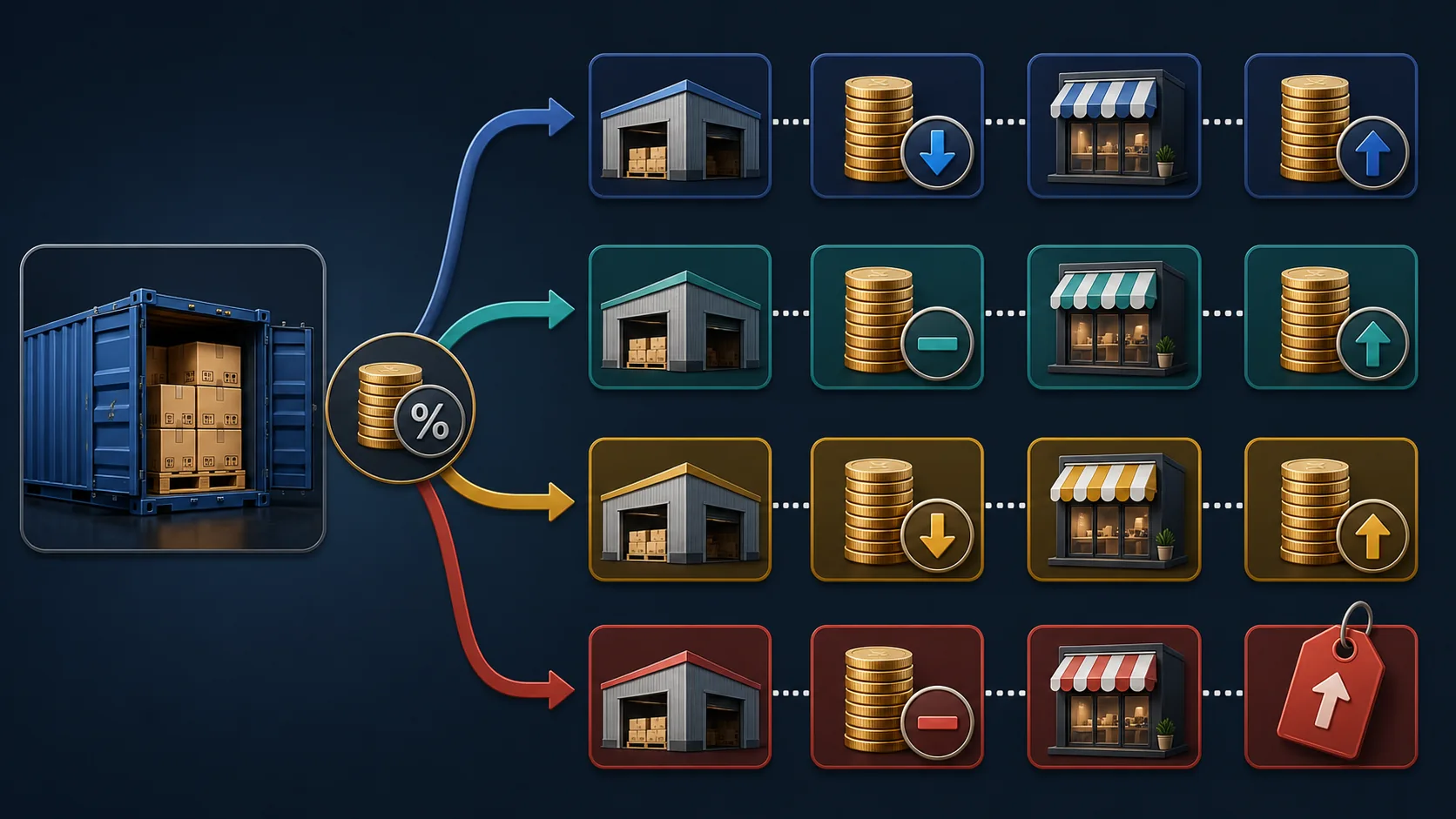
Price pass-through depends on bargaining power. A Canadian supplier may cut its price to preserve a major customer. A U.S. importer may temporarily sacrifice margin. A retailer may keep a highly visible product cheap while raising prices elsewhere. When demand is strong and alternatives are scarce, the consumer typically bears more of the cost.
My assessment: the largest near-term effect may be reduced choice rather than a uniform 50% jump in prices. Importers can quietly drop marginal products, delay orders or replace Canadian brands. The inflation effect becomes more serious if retaliation and supply-chain changes spread beyond the original list.
The bigger risk is uncertainty
Companies make inventory and investment decisions months in advance. A tariff that may be modified through negotiation still changes behavior today. Importers may rush shipments, hold more inventory or postpone commitments. Each response ties up cash and adds costs even before a shopper sees a new price tag.
The tariffs also arrive while U.S. consumers are already sensitive to grocery, fuel, housing and borrowing costs. Even a modest direct contribution to overall inflation can complicate the Federal Reserve's job if businesses begin expecting repeated trade-related price shocks.
What shoppers and small businesses should do
- Check country of origin, not just the brand name. A Canadian company may manufacture a particular product elsewhere, while a U.S. brand may import Canadian components.
- Do not panic-buy ordinary perishables. Local substitutes and existing inventory can limit immediate changes.
- Get written quotes for repairs and construction. Ask how long the price is valid and whether tariffs are included.
- Compare exact models and sizes. A substitute may avoid the tariff but offer different quality or specifications.
- Watch final implementation details. Customs classifications and negotiations can change which individual products are affected.
Bottom line
August 19 is the start of the new cost structure, not a single nationwide repricing day. The products most vulnerable to visible increases are those with limited substitutes, fresh post-deadline inventory and supply chains that cannot absorb the duty.
Consumers should expect selective price increases and changing product availability rather than a blanket 50% increase. Businesses should map the customs classification and origin of every exposed item instead of relying on broad labels such as “Canadian” or “USMCA eligible.” The most important question is not the tariff's headline rate—it is how much of that rate survives negotiation and reaches the final checkout receipt.