


When money is tight, searching for “government grants” often leads to vague lists—or scams. The useful answer is less glamorous: real assistance is usually delivered through specific federal, state, tribal, and local programs. This guide shows where to apply, what to prepare, and what to do if you are denied.
Seven real programs worth checking
1. SNAP: help buying groceries
SNAP provides food benefits through an EBT card. Income limits, asset rules, deductions, and interview procedures vary by state. The federal agency does not accept individual applications; use the official state SNAP directory to reach the correct office. Ask whether your state offers expedited processing if your household has extremely little income or cash.
2. WIC and SUN Bucks: extra help for families with children
WIC supports eligible pregnant, recently pregnant, and breastfeeding people, infants, and children under five. A local WIC agency will explain the income and nutrition screening and the documents required. Start with the USDA’s WIC application instructions.
SUN Bucks provides a summer grocery benefit—generally $120 for each eligible school-age child. Many children receiving SNAP, TANF, or FDPIR are enrolled automatically, while some families must apply. Check your state or tribal agency through the official SUN Bucks page; participation and dates can differ by location.
3. LIHEAP: assistance with energy bills
LIHEAP can help eligible households with heating or cooling costs, energy crises, weatherization, and some minor energy-related repairs. Funding and benefit amounts are local, so apply early rather than waiting for a shutoff notice. Find your office through the LIHEAP Clearinghouse, or call the National Energy Assistance Referral line at 1-866-674-6327 (7 a.m.–7 p.m. Eastern). If denied, request the reason in writing and ask about the appeal process.
4. TANF: temporary cash and work-related support
Temporary Assistance for Needy Families is administered by states and may provide cash assistance and related employment services to qualifying families. Rules, benefit levels, and program names vary widely. Use the official USA.gov TANF guide to locate your state program. Ask the caseworker whether one-time emergency or diversion assistance is available in addition to ongoing benefits.
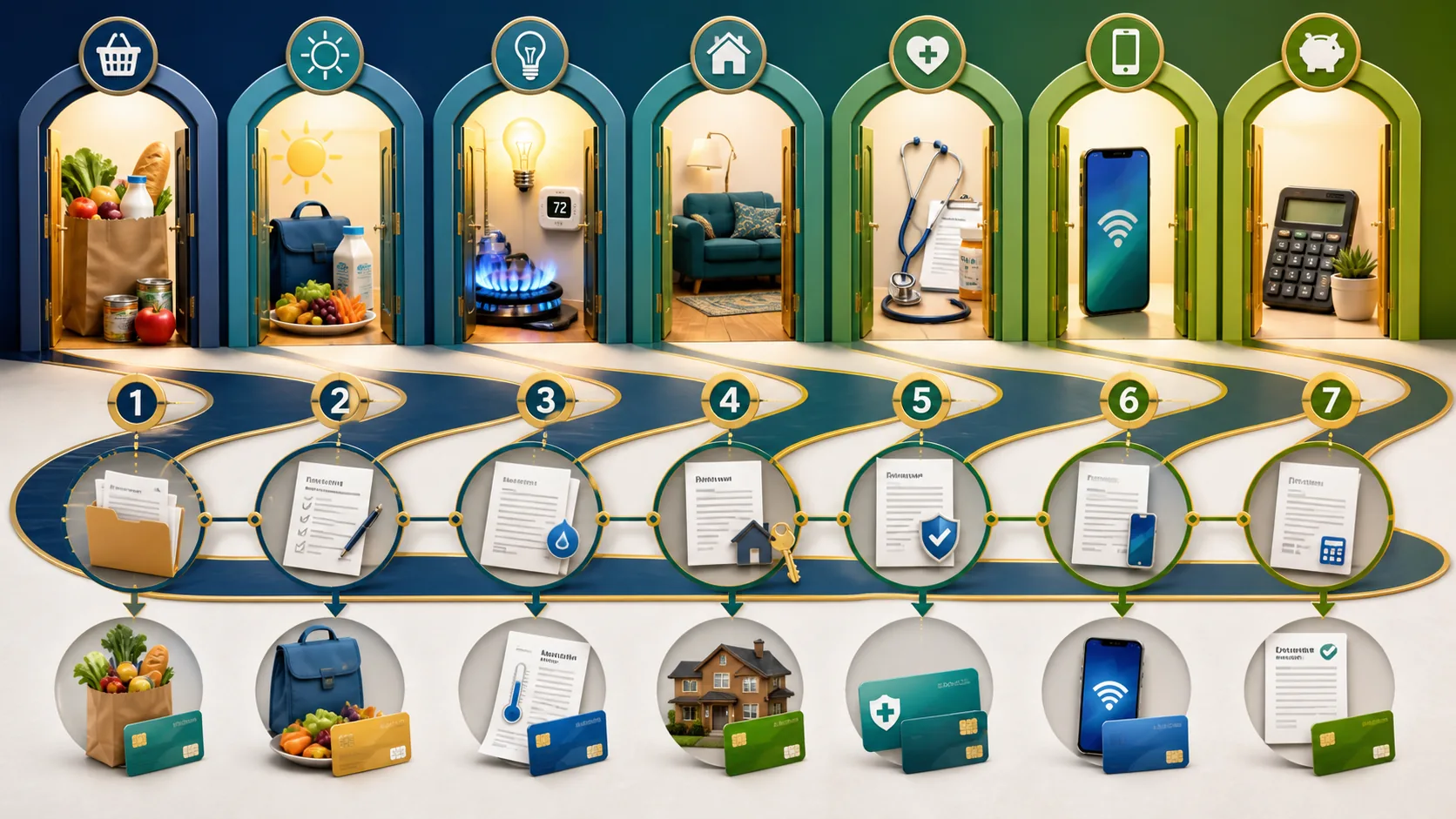
5. Housing and rent help
Housing Choice Vouchers, public housing, and local emergency rent programs are generally administered locally. Waiting lists may be long or temporarily closed, but different housing authorities can have different lists. Use HUD’s housing counseling service or call 800-569-4287. Counseling for eviction, foreclosure, and homelessness is always free. If you need immediate shelter, use HUD’s Find Shelter tool.
6. Medicaid and CHIP: low-cost or free health coverage
Medicaid covers eligible low-income adults, children, pregnant people, older adults, and people with disabilities; CHIP covers eligible children in families that earn too much for Medicaid but cannot comfortably afford private insurance. Eligibility differs by state and applications are accepted year-round. Begin at HealthCare.gov’s Medicaid and CHIP page, which routes applicants to their state.
7. Refundable tax credits: money you may receive by filing
A person who normally does not have to file a federal return may still need to file to claim withheld taxes or refundable credits. The Earned Income Tax Credit and Child Tax Credit can create or increase a refund when the requirements are met. Review the IRS guide on claiming the EITC. Prior-year refunds generally have a three-year claim window, so do not assume old money is permanently lost without checking the applicable deadline.
Your application kit: gather this before you start
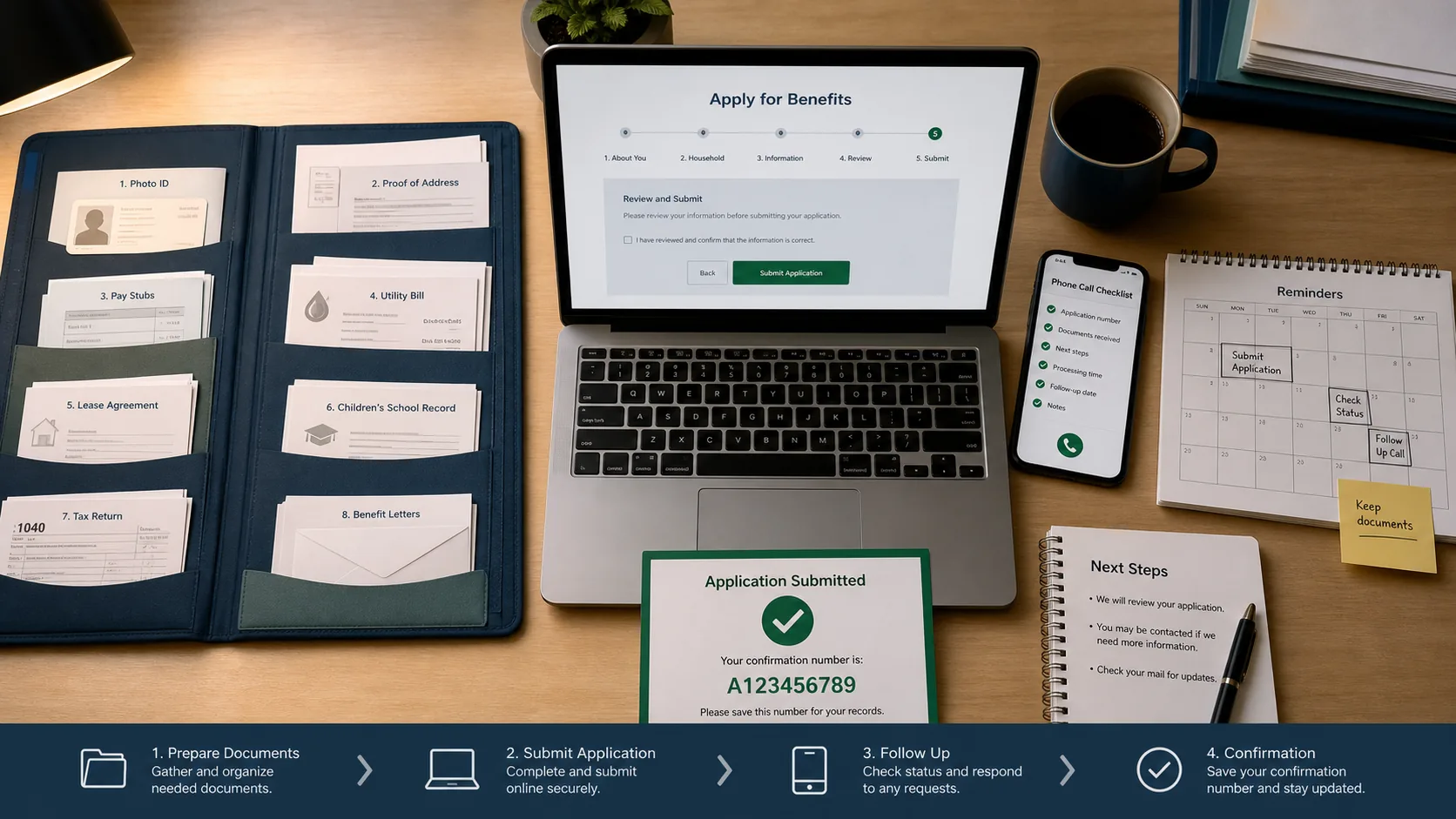
- Photo identification and proof of current address
- Names, birth dates, and household relationships for everyone applying
- Recent pay stubs and records of unemployment, Social Security, pension, or other income
- Rent or mortgage statement, lease, utility bills, and any shutoff or eviction notice
- Bank or asset information only when the application asks for it
- Social Security numbers and immigration documents only when legally required for the people applying
A practical 48-hour application plan
| When | What to do |
|---|---|
| First 30 minutes | List the three bills causing the most immediate harm. Start with food, a utility shutoff, eviction, medicine, or loss of health coverage. |
| Day 1 | Submit online applications through official .gov pages or call the agency. If you cannot finish, save the application number and deadline. |
| Day 2 | Upload requested documents, record the date, take screenshots, and write down the name of anyone you speak with. |
| After filing | Check mail, voicemail, email, and the benefits portal. Missing an interview or document deadline is a common reason an otherwise eligible application stalls. |
If you are denied
Do not treat “denied” as the end of every possible application. Read the notice carefully: it should identify the reason and the deadline for an appeal or fair hearing. A missing pay stub, an incorrect household size, or income attributed to the wrong month may be fixable. Ask the agency for the calculation it used, submit corrections in writing, and keep proof of delivery. Each program has its own rules, so denial by one does not mean you are ineligible for the others.
Frequently asked questions
Can I apply for several programs at the same time?
Yes. Programs address different needs and have different rules. Receiving one benefit can sometimes simplify verification for another, but always report information accurately.
Should I apply if I am not sure I qualify?
Use the official screening information, then let the administering agency make the determination. Avoid paying a third party that promises approval.
Will benefits be the same in every state?
No. Eligibility calculations, benefit amounts, funding availability, and application procedures can differ by state, tribe, county, and program.
What if I need help today?
For a housing emergency, start with HUD Find Shelter. For an imminent utility shutoff, call the local LIHEAP office and the utility company’s hardship department. For food, contact the state SNAP office and ask whether expedited service may apply.
This article is general educational information, not a guarantee of eligibility or payment. Program rules change and the administering agency makes the final decision.