


After a fire, flood or burglary, “everything in the room” is not a claim list. A useful home inventory converts memory into evidence: what existed, where it was, identifying details, approximate age and replacement cost—stored somewhere the same disaster cannot destroy.
- A continuous room video is the fastest first layer; item-level records make valuable property easier to identify.
- Record renters’ belongings too—the landlord’s policy generally does not inventory a tenant’s property.
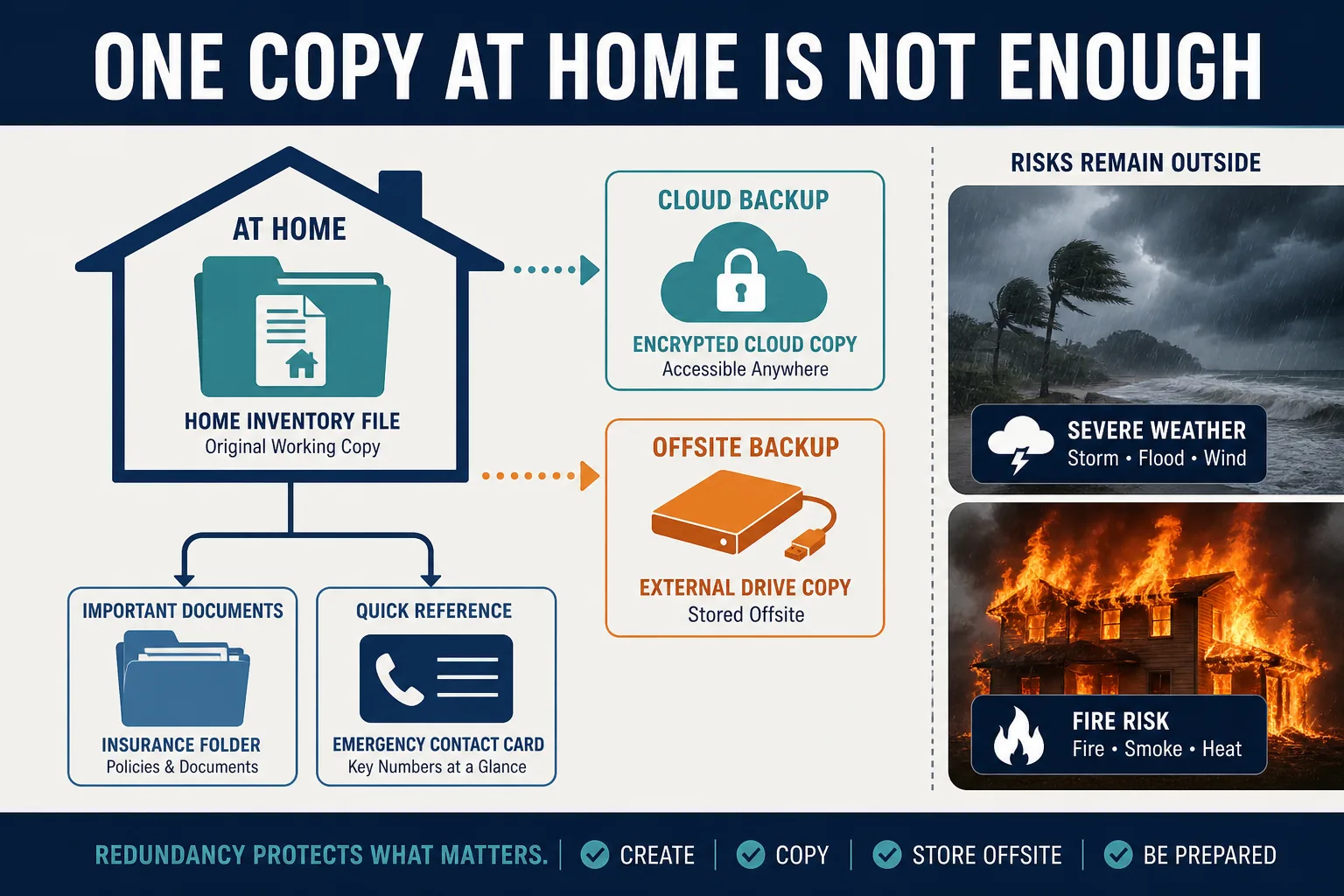
- Keep an encrypted copy offsite and review policy limits before discovering a category cap after a loss.
Prepare the inventory before pressing record
Open your policy declarations and locate coverage for personal property, deductible, replacement cost versus actual cash value, and special limits for categories such as jewelry, collectibles, firearms, business equipment or cash. The inventory documents possessions; it does not expand the policy.
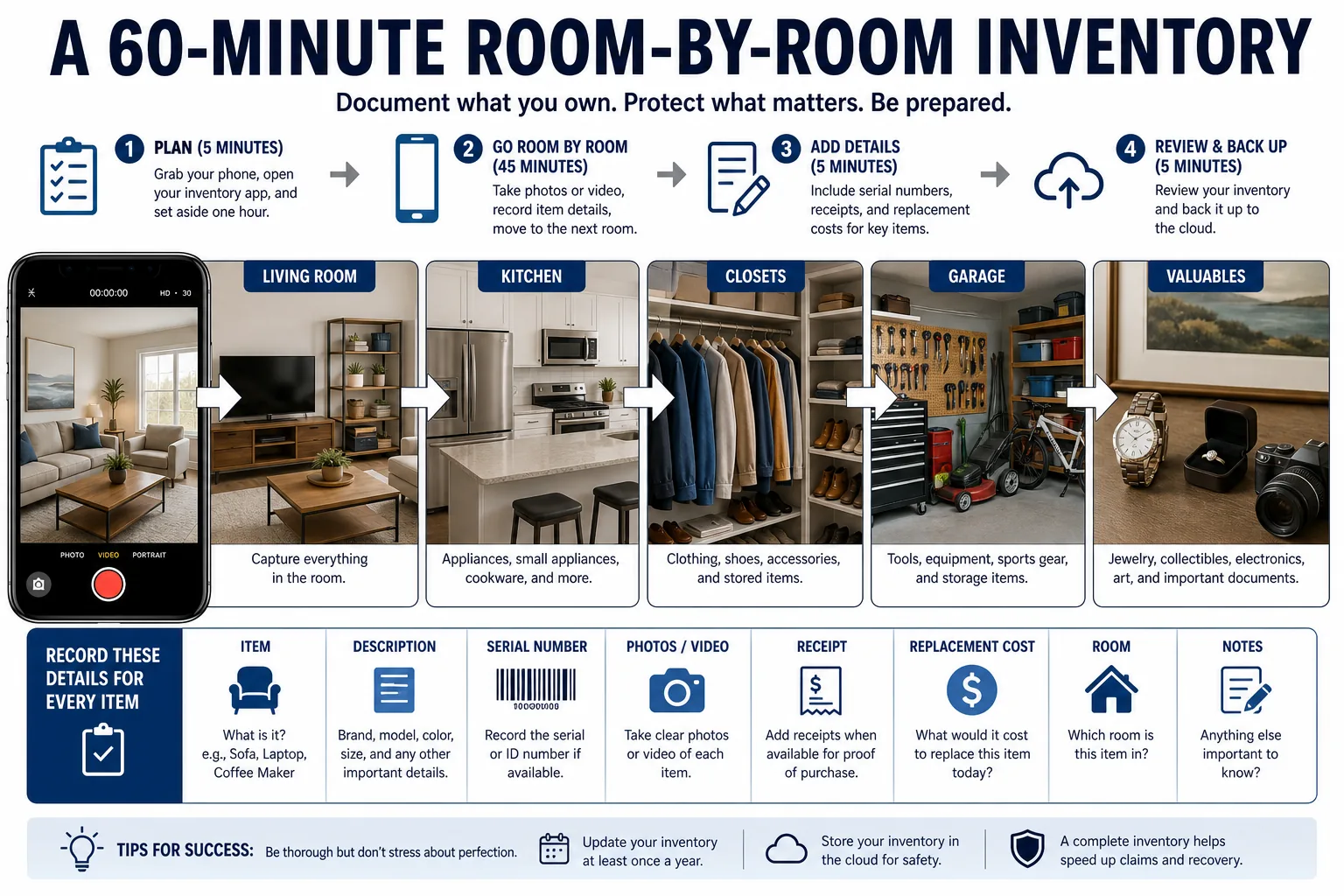
Choose a method you can maintain: the NAIC Home Inventory app, a spreadsheet with linked photos, or a secure document system. Create columns for room, item, brand, model, serial number, purchase date, price, current replacement estimate, receipt location and notes.
Renters and condo owners need the same discipline. A building owner or association policy may cover structures or common areas without replacing the resident’s furniture, electronics and clothing, while condo loss assessments and improvements can follow separate policy terms and dollar limits.
Complete a 60-minute room-by-room sweep
Spend five minutes planning, then record a slow narrated video through each room, opening cabinets and closets without exposing sensitive papers. Use the remaining time for close-up photos of appliances, electronics, tools, art, jewelry and other high-value items.
Narrate brand, model, approximate purchase date and where a receipt can be found. Photograph serial-number plates separately because a wide room video rarely captures characters sharply enough for theft reports or product identification.
Capture details that help an adjuster
Describe the item specifically: “55-inch Brand X model ABC television purchased in 2024,” not “TV.” Include quantity for repeated items such as books, clothing, cookware and tools, using group photographs when item-by-item entry would make the project impossible.
For inherited or secondhand goods without receipts, preserve family photographs, appraisals, manuals, repair records or comparable replacement prices. Do not create false receipts or inflate values; credibility across the inventory is valuable.
Understand replacement cost and depreciation
Replacement-cost coverage may pay the cost of a comparable new item subject to policy terms, while actual-cash-value treatment generally reflects depreciation. Some policies initially pay a depreciated amount and release additional replacement-cost benefits after documented replacement.
Example: a sofa bought for $2,000 years ago might cost $2,600 to replace today, yet an actual-cash-value calculation could be much lower. Record original cost and current comparable replacement price separately rather than presenting one as the other.
Protect the record from the same disaster
A spreadsheet on a home computer and photographs on a phone left inside the house can vanish together. Keep an encrypted cloud copy, plus an offline or offsite backup when practical, and protect accounts with a strong unique password and multifactor authentication.
Do not include full bank numbers, Social Security cards or unredacted identity documents in an ordinary inventory folder. Store policy numbers and insurer contact information securely but make an emergency reference card accessible.
Use the inventory correctly after a loss
Protect people first and follow fire, police or emergency instructions. Notify the insurer promptly, ask about filing deadlines and separate deductibles, prevent further damage only when safe, photograph conditions before cleanup and save receipts for temporary repairs and additional living expenses.
Provide the requested inventory while keeping an original copy. Track every adjuster conversation, claim number and submission; if records were destroyed, NAIC guidance suggests reconstructing from phone photos, family images and online purchase histories.
How a detailed inventory changes a claim
Consider a kitchen fire that damages smoke-sensitive belongings throughout the home. “Kitchen items, clothes and electronics” gives the adjuster little basis to identify quantity, quality or replacement cost, while a pre-loss video shows cabinet contents, closet volume and exact electronics.
The policyholder can pause the video, build a room-by-room list and attach model numbers, purchase histories and current comparable prices. That evidence does not guarantee coverage: the cause, deductible, limits and valuation terms still control, and the insurer may request proof or apply depreciation.
It does, however, replace an exhausted family’s memory with a reproducible record. The family should keep damaged property when safe until the insurer authorizes disposal, document every communication and ask how replacement-cost holdback works before purchasing substitutes.
Keep it useful with a light maintenance routine
Update the inventory after major purchases and perform a yearly video sweep. Check that backups open, serial numbers remain readable, rooms and policy limits match current reality, and scheduled-property appraisals remain current.
One-hour checklist: read declarations; choose the inventory system; film every room; photograph valuables and serial plates; attach key receipts; estimate replacement prices; flag special-limit categories; export the file; create encrypted offsite copies; and calendar an annual review.
Important: This guide provides general educational information. Property, travel, retirement, insurance and tenant rules can vary by location, plan, policy and individual facts; verify current official instructions before acting.
Reviewed August 18, 2026.