


A “lost” 401(k) is often not gone. The employer may have changed names, merged, terminated the plan, transferred a small balance or mailed notices to an old address; finding the money requires identifying the plan and its current administrator without giving sensitive data to an impostor.
- Start with old statements, tax forms and the employer—not a paid recovery service.
- Use the Department of Labor’s official Lost and Found and Form 5500 records as leads, not proof that a caller owns your account.
- After recovery, compare fees and protections before requesting a direct trustee-to-trustee rollover.
Rebuild the employment and plan trail
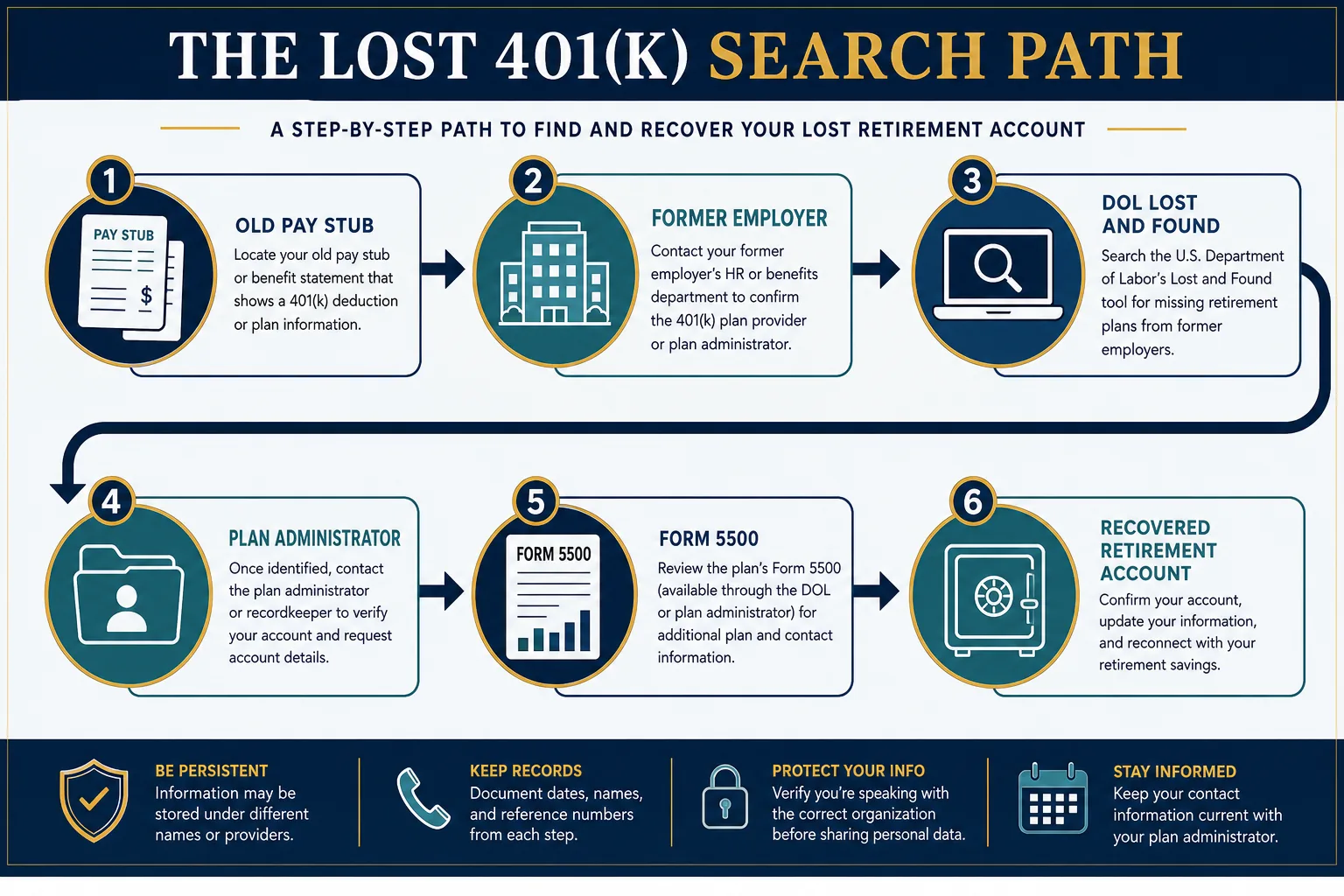
List every employer where you may have contributed, including legal company names, work locations, approximate dates, union affiliation and prior addresses. Search old email, pay stubs and W-2 records for retirement deductions, plan provider names, account numbers or annual statements.
A corporate name on a pay stub may differ from the brand on the building. Look for mergers, acquisitions and bankruptcies, then contact the successor company’s human-resources or benefits department using a phone number independently obtained from an official site.
Use the official DOL Lost and Found correctly
The Department of Labor’s Retirement Savings Lost and Found uses Login.gov identity verification and searches information connected to your Social Security number. DOL warns that some administrator contact details come from historical filings and may be outdated, so treat a result as a route to investigate.
DOL staff cannot search the private database for you, and the public tool currently limits searches for a deceased spouse. In that situation, contact former employers or unions and ask an EBSA Benefits Advisor for help locating a plan administrator.
Search filings and abandoned-plan resources
Form 5500 filings can identify a plan’s sponsor, administrator, plan number and service providers. Search using the employer’s legal names and years of employment, then compare addresses and plan identifiers across filings to follow a merger or termination.
If an employer disappeared, check DOL’s abandoned-plan resources and contact EBSA. For a terminated pension—not a 401(k)—the Pension Benefit Guaranty Corporation may be relevant; do not assume every retirement benefit is held by the same federal agency.
Verify the custodian before sharing information
A legitimate search does not require paying a stranger upfront or moving money to a “safe” cryptocurrency wallet. Call the plan or recordkeeper through a number found on an official filing or employer site, and ask what documents prove identity and former employment.
Never email a full Social Security number or account password because someone used the employer’s name. Record names, dates and reference numbers, and request written confirmation of the account, balance, vesting status and distribution options.
Understand where a small balance may have gone
Depending on the plan rules and applicable law, a former employer may keep the account, automatically roll a small balance into an IRA, or distribute a very small amount after required notices. Search unclaimed-property databases for states where you lived or worked, but verify the government domain and remember that retirement assets can follow different procedures.
The visible balance can also differ from remembered contributions because vesting, loans, market performance, fees or prior distributions matter. Ask for a transaction history rather than assuming theft from one number.
Choose the destination before moving the account
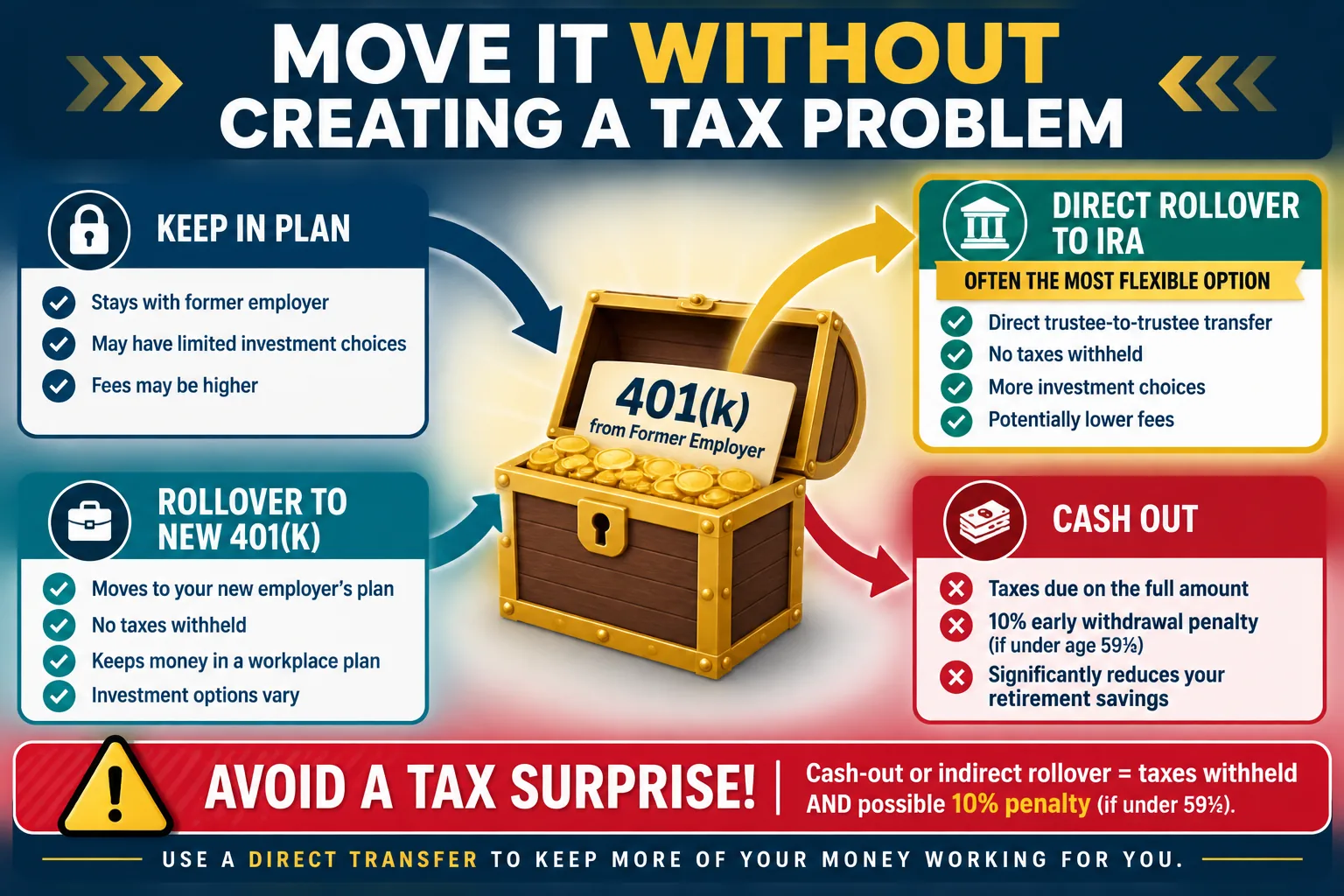
Options may include leaving money in the former plan, rolling it to a new employer plan that accepts rollovers, or rolling it to an IRA. Compare investment choices, fees, advice, creditor protections, withdrawal rules, loan availability, required distributions and whether after-tax or Roth money is present.
A direct trustee-to-trustee transfer generally avoids the withholding and deadline complications of receiving the check personally. Cashing out can create ordinary income tax and a possible additional early-distribution tax, and permanently removes money from retirement compounding.
A realistic search from pay stub to account
Suppose a worker left a regional manufacturer in 2012 and remembers a 401(k) deduction but no provider. An old W-2 reveals the employer’s legal name; a DOL database result points to the plan, while later Form 5500 filings show that a successor corporation became sponsor and changed recordkeepers.
The worker calls the successor through its official website, verifies identity, and receives a statement showing a $28,000 pre-tax balance in an automatic rollover IRA. Before moving it, the worker compares the IRA’s fees with a current employer plan and confirms that the new plan accepts pre-tax rollovers.
The safe instruction is a direct transfer made payable to the receiving custodian for the worker’s benefit, not a personal wire requested by a caller. The worker then confirms both the outgoing zero balance and the receiving deposit, saving statements for tax records.
Follow this recovery checklist
Gather employment records; search the DOL Lost and Found; contact the former employer; trace Form 5500 filings; check abandoned-plan and PBGC resources when applicable; verify the custodian independently; and request a written benefit statement.
Before transferring, inventory every money type—pre-tax, Roth, after-tax and rollover assets—confirm the receiving account accepts it, request a direct transfer, save confirmations and verify the full amount arrived. Consult a qualified tax professional when company stock, outstanding loans, required distributions or inherited benefits are involved.
Important: This guide provides general educational information. Property, travel, retirement, insurance and tenant rules can vary by location, plan, policy and individual facts; verify current official instructions before acting.
- DOL Retirement Savings Lost and Found
- DOL Form 5500 search and public disclosure
- DOL abandoned retirement plans
Reviewed August 18, 2026.