


Home Depot, Target, Lowe’s and Walmart report earnings in a tightly packed sequence this week, giving investors something government data cannot: a category-by-category look inside the American household budget. Home Depot is scheduled for Tuesday, August 18; Target and Lowe’s for Wednesday; and Walmart for Thursday.
This is not simply a contest over which retailer beats Wall Street’s earnings estimate. It is a stress test of whether consumers are still spending freely, trading down to essentials, postponing expensive projects, or quietly relying on smaller baskets and promotions.
Why this earnings week matters
Official July retail sales fell 0.6%, while inflation remained uncomfortable enough to keep pressure on food, housing and everyday services. The Federal Reserve also held its policy rate at 3.50% to 3.75% in late July, so borrowing costs remain a meaningful restraint on credit-card balances, home purchases and renovation financing.
Those facts describe the broad weather; retailer earnings show who is getting wet. Management commentary can reveal whether shoppers are visiting less often, buying fewer items, switching to store brands, waiting for discounts or abandoning big projects altogether.
One caution matters: retail sales and company revenue are measured in dollars, not units. If prices rise 3% and a retailer’s comparable sales rise 2%, the result may still imply fewer physical goods moving through the checkout line.
Four retailers, four household decisions
Home Depot and Lowe’s are the clearest tests of housing-related confidence. Watch transactions and average ticket separately, then listen for differences between professional contractors and do-it-yourself customers; a resilient repair business can coexist with weak demand for kitchens, flooring and other deferrable projects.
Target is a sharper window into discretionary spending because apparel, home décor and seasonal merchandise compete directly with rent, groceries and insurance. Traffic supported by heavy promotions is less encouraging than traffic accompanied by stable margins and clean inventory.
Walmart is the essential-spending benchmark, with groceries and household consumables drawing frequent visits. Strength there can reflect market-share gains and execution, but it can also signal that middle- and higher-income customers are trading down from more expensive stores.
The six numbers beyond headline sales
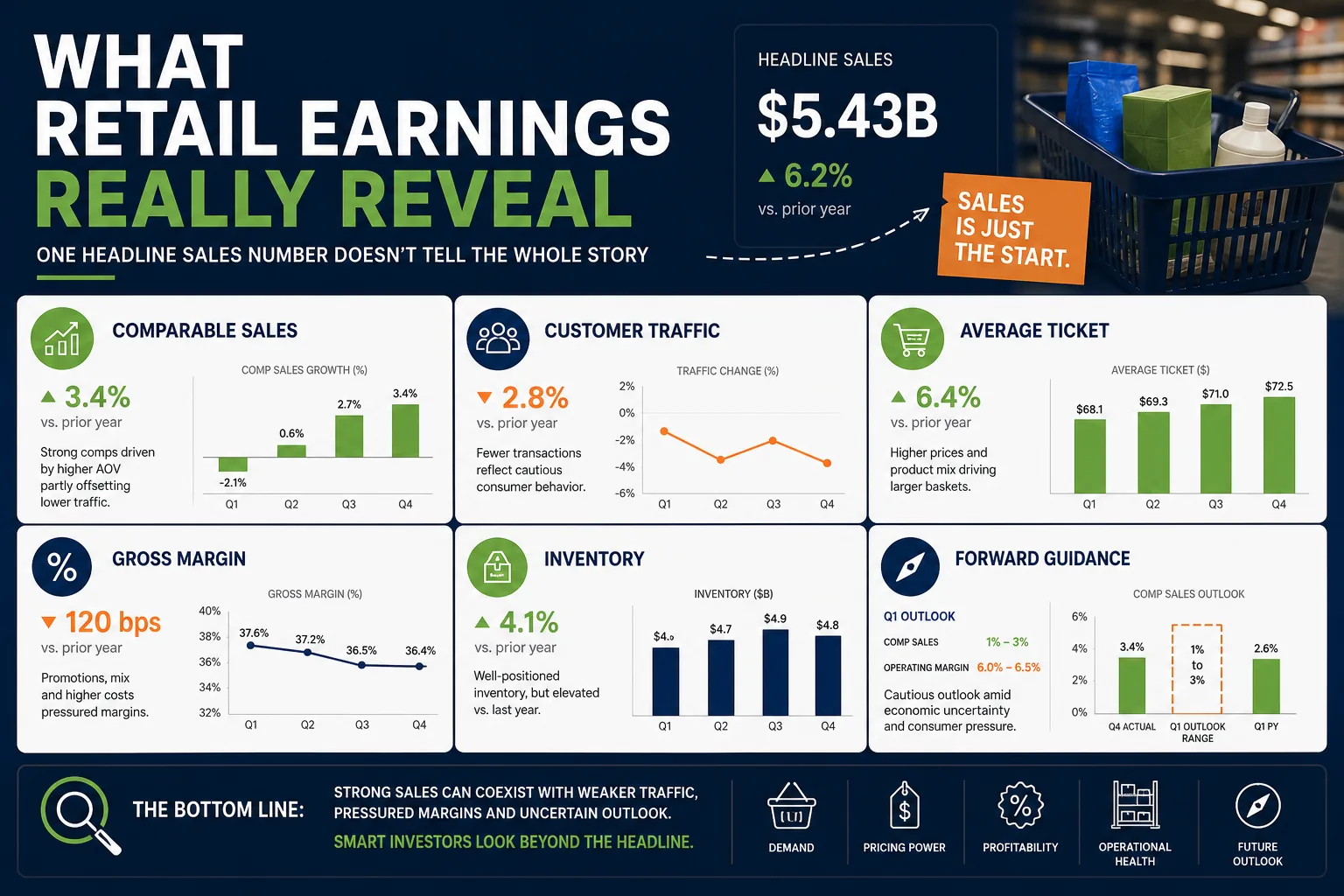
Measures established stores and channels, but should be judged against inflation and prior-year comparisons.
Shows whether more shoppers appeared. Rising sales with falling traffic can mean price increases or larger baskets, not broader demand.
Reveals basket size. A lower ticket with stable traffic can indicate smaller quantities, cheaper brands or fewer big-ticket items.
Tests pricing power. Sales bought through markdowns may protect revenue while damaging profit quality.
Too much stock raises future discount risk; too little can cost sales. Compare inventory growth with sales growth.
Management’s full-year outlook often matters more than a backward-looking quarterly beat.
Also separate merchandise margin from fast-growing side businesses. Walmart’s advertising, membership and e-commerce economics can improve company profit even when the physical shopping basket remains price-sensitive, so investors should not treat every margin improvement as proof of stronger household finances.
How to read the result combinations
Walmart strong; Target and home improvement weak: This is the classic trade-down signal. Consumers are spending, but the mix has shifted toward necessities and value, which is defensively positive for Walmart and less reassuring for the broader economy.
All four show healthy traffic and stable margins: That would be the cleanest bullish outcome. It suggests demand is broad enough that retailers do not need aggressive discounting to move merchandise.
Sales beat, traffic falls, average ticket rises: Treat the headline carefully. Higher prices, product mix or a small number of large purchases may be doing the work while the customer base narrows.
Sales miss, inventories remain high, guidance falls: This is the most concerning combination because it can lead to another round of promotions. Lower prices may help shoppers later, but they also squeeze retailer margins and supplier orders.
A real-world household example
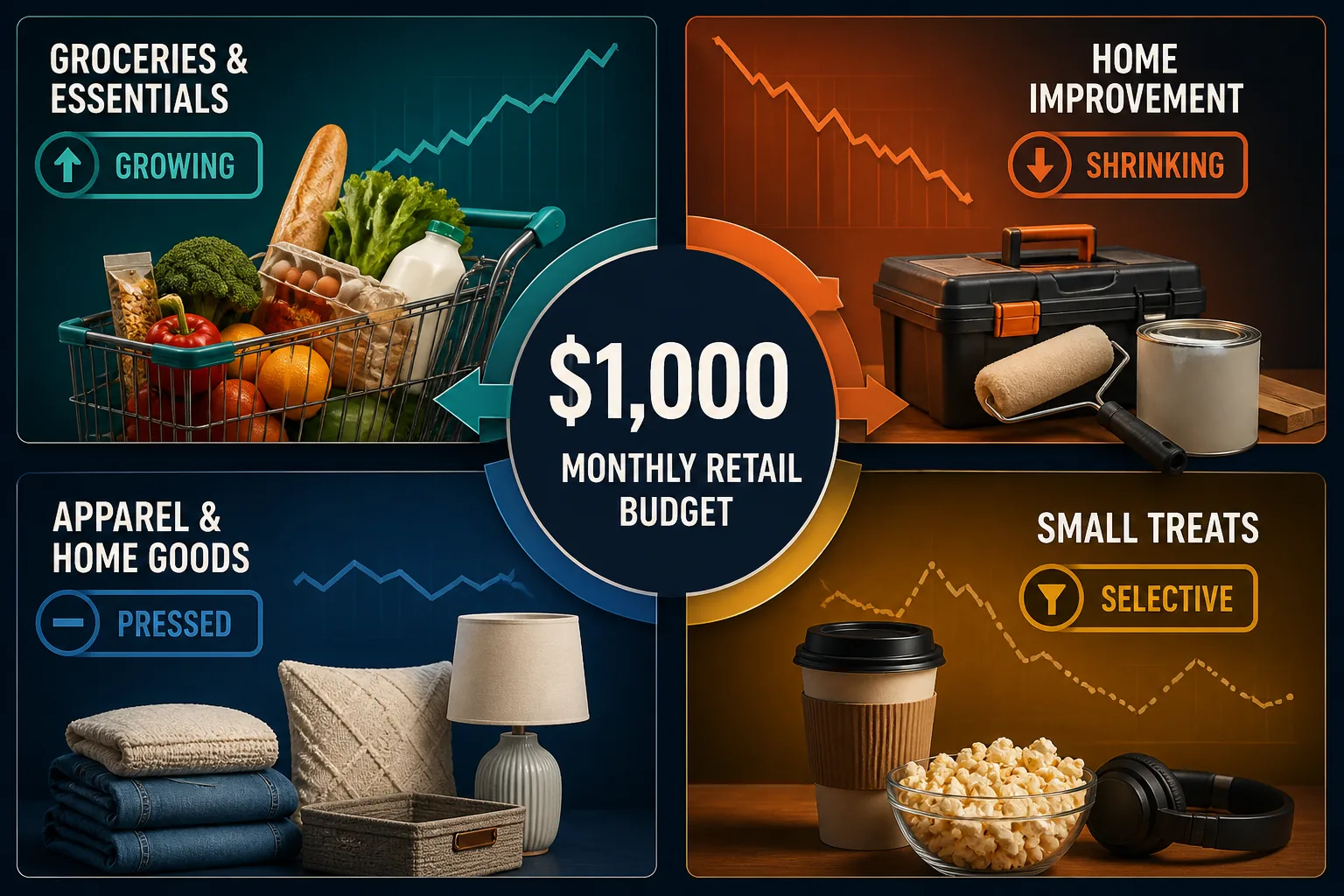
Imagine a family that keeps its monthly retail budget near $1,000. A year ago it spent $550 on groceries and essentials, $200 on clothing and home goods, $200 on a small renovation, and $50 on treats; now food inflation and insurance costs force it to spend $650 on essentials.
The family may cut the renovation to $100 and home goods to $150 while preserving the occasional $50 treat. Total retail spending is still $1,000, yet the household is clearly under more pressure—and Walmart may report a better trend while Target and the home-improvement chains feel the cutbacks.
This is why aggregate spending can look stable even when consumer confidence feels poor. The mix, frequency and profitability of purchases tell the deeper story.
What investors and families should do
For investors
Read the earnings release before reacting to adjusted earnings per share. Record comparable sales, traffic, ticket, gross margin, inventory growth and guidance in one table, then compare management’s explanation across all four companies.
Avoid turning one quarter into a permanent thesis. Weather, calendar shifts and promotions can distort a single period, while category differences mean that Walmart strength does not automatically predict Target or Home Depot strength.
For households
Use the retailer commentary as a map of coming discounts rather than a reason to speculate in stocks. Rising discretionary inventory may create better apparel or home-goods promotions, while weak big-project demand can improve consumers’ negotiating leverage with contractors and suppliers.
Do not let a sale manufacture a need. Compare the final price, financing cost and useful life of the purchase; a discounted renovation charged to a high-rate credit card can still be an expensive decision.
The bottom line
My view is that the most important signal this week will be the gap between essential and optional spending, not the loudest earnings beat. If Walmart gains while Target’s discretionary categories and the home-improvement chains remain soft, Wall Street should call it consumer adaptation—not consumer strength.
The healthier outcome would be broad traffic, disciplined inventories and stable margins across categories. Until then, the American consumer may be resilient in the literal sense: still standing, still shopping, but making increasingly deliberate choices about what can wait.