


For older workers, 2026 creates three different contribution lanes—not one catch-up rule. The difference between being 59, 60 or 64 can change the amount available, while a separate wage test can change whether catch-up dollars must be Roth.
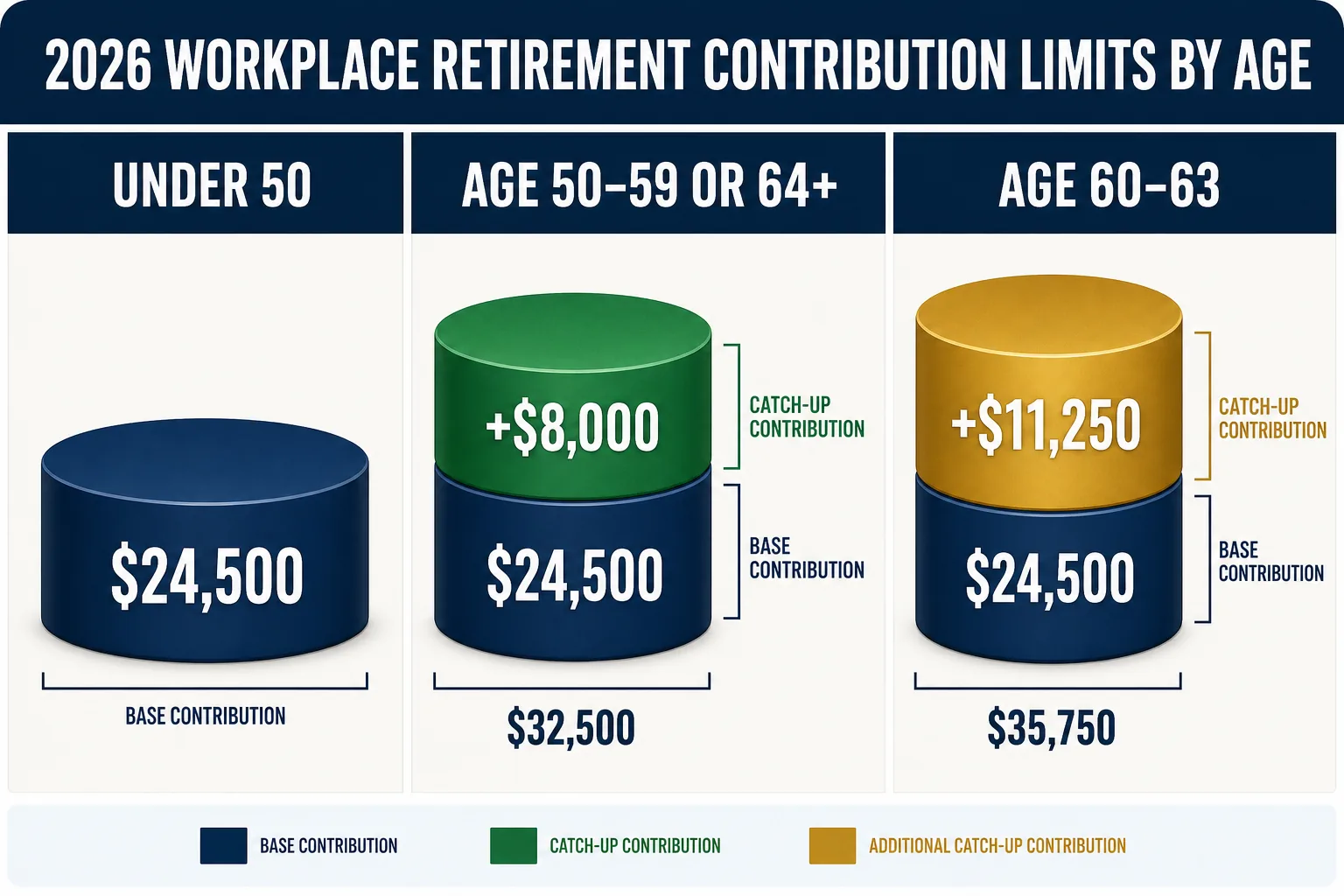
- The 2026 employee deferral limit for most 401(k), 403(b) and governmental 457(b) plans is $24,500.
- The general age-50 catch-up is $8,000; participants turning 60–63 can have an $11,250 catch-up if their plan permits it.
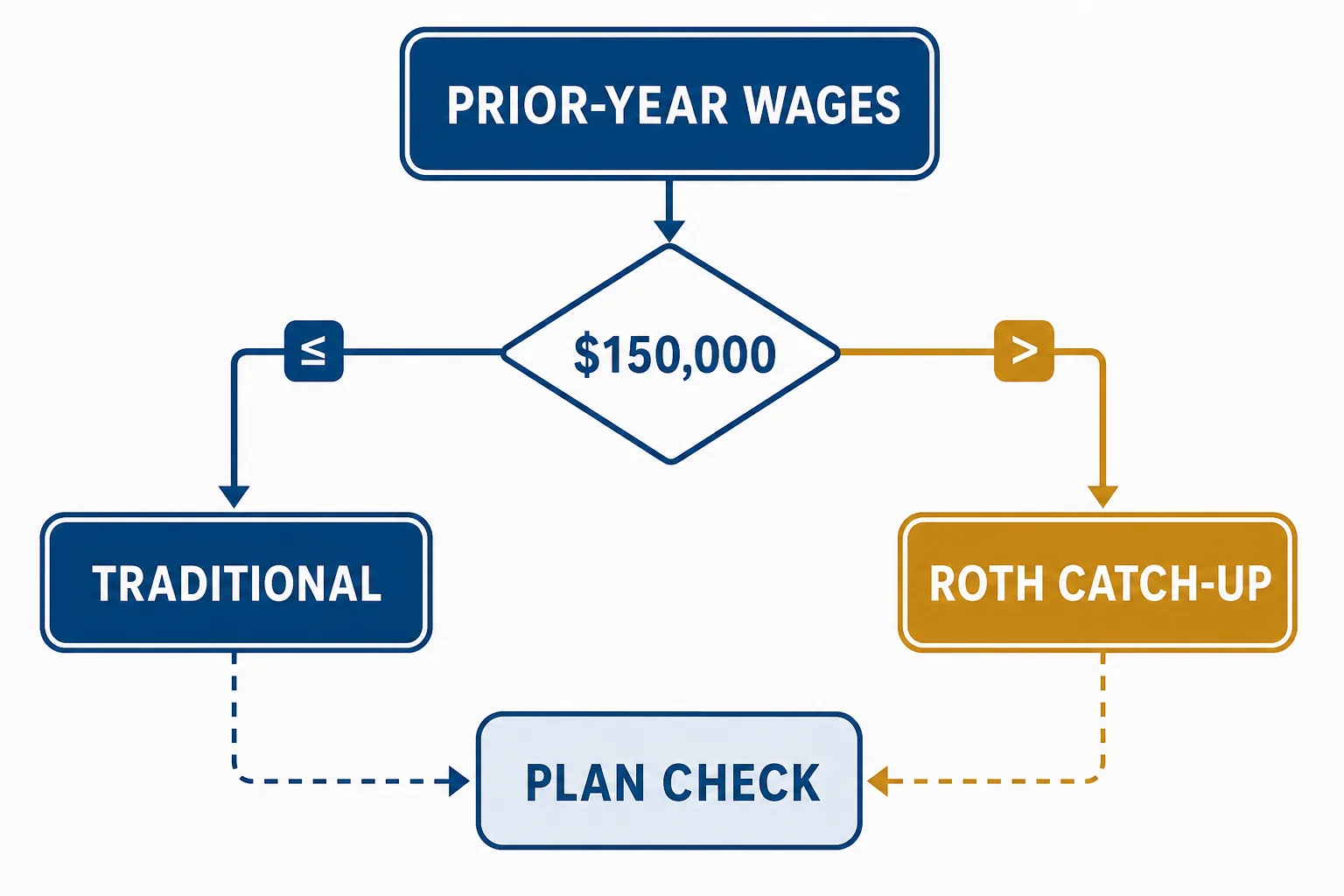
- The IRS says certain participants with more than $150,000 of prior-year wages from the plan sponsor must make catch-up contributions as Roth in 2026.
Start with your age at year-end
Catch-up eligibility generally follows the age you attain during the calendar year. A worker who turns 50 by December 31 can be eligible for the age-50 catch-up. The larger SECURE 2.0 catch-up applies only in the calendar years a participant turns 60, 61, 62 or 63. At 64, the limit returns to the regular age-50 amount. Your employer plan must allow catch-ups; the tax code permits them but does not force every plan to offer every feature.
The maximum is not automatically your target
A 60-year-old in an eligible plan could defer $35,750 in 2026: $24,500 plus $11,250. That does not mean everyone should. First capture the full employer match, preserve an emergency reserve, and avoid expensive revolving debt. Then compare traditional and Roth treatment using today’s marginal tax rate, expected retirement income, required distributions and state taxes.
The Roth catch-up rule is narrower than headlines suggest
The $150,000 test concerns prior-year FICA wages from the employer sponsoring the plan, not household adjusted gross income. It applies to catch-up contributions, not necessarily the entire employee deferral. Compensation from another employer and self-employment income require careful treatment. Plan design and transition rules can matter, so ask the administrator how payroll will classify contributions before the final pay periods.
Avoid the December payroll surprise
Catch-ups are payroll deferrals, so a worker cannot usually wait until tax filing season to fund a workplace-plan catch-up. Review remaining paychecks, maximum contribution percentages and match true-up provisions. Front-loading too aggressively can reduce a per-paycheck match if the plan has no year-end true-up. Bonuses can also push payroll withholding in unexpected ways.
Do not confuse workplace and IRA limits
An IRA has a separate 2026 catch-up of $1,100 for eligible people age 50 or older, subject to IRA contribution and Roth-income rules. A workplace contribution does not automatically eliminate IRA eligibility, but deductibility can be limited when the worker or spouse is covered by a retirement plan. SIMPLE plans use different base and catch-up limits.
A practical five-step plan
Confirm your plan type and whether it allows catch-ups. Identify the age you reach in 2026. Pull 2025 W-2 wages from the current plan sponsor. Ask payroll whether the Roth catch-up rule applies and whether the plan has a Roth source. Finally, set a per-paycheck percentage that reaches the chosen goal without missing a match or draining cash reserves.
Bottom line
The valuable move is to verify the effective date, account type, plan document and current-year limits before moving money or filing an application. A correct rule applied to the wrong account or month can still produce an expensive result.
Important: This article provides general educational information, not individualized tax, legal, investment, Medicare or Social Security advice. Rules and individual facts can change the result.
Official resources
Reviewed August 17, 2026.