


When an airline cancels a trip, the fastest button in the app is not always the best financial choice. Accepting a rebooked itinerary, voucher or miles can change what happens next, so travelers should decide whether the priority is reaching the destination or recovering the ticket price before tapping anything.
- For covered U.S. itineraries, a refund is generally owed when the airline cancels or significantly changes the flight and you reject alternatives.
- A ticket refund does not automatically pay for meals, hotels or a replacement ticket on another airline.
- Save notices, screenshots and receipts before negotiating or filing a complaint.
Make the first decision: travel or refund
If the trip still matters—an event, cruise, surgery or international connection—ask for the earliest workable rebooking before canceling the reservation yourself. Search the airline’s own app for available seats while waiting, then offer the agent specific flight numbers.
If the trip no longer works, do not accept a voucher merely because it appears first. Under current U.S. Department of Transportation guidance, passengers are entitled to an automatic refund when the airline cancels or significantly delays or changes a covered flight and the passenger rejects the changed flight, rebooking, credit, voucher or other compensation.
Know what counts as a significant change
DOT’s published standards include a domestic departure three or more hours earlier or arrival three or more hours later, and six or more hours for an international flight. Changing the origin or destination airport, increasing connections, downgrading cabin class, or creating certain disability-related accessibility problems can also qualify.
A 2026 enforcement notice temporarily addresses flight-number changes that technically look like cancellations when passengers are successfully rebooked without a significant change. That nuance is why travelers should use DOT’s current refund page rather than relying on an old social-media graphic.
Understand the refund—and what it does not cover
The refund should return the ticket price and owed ancillary fees to the original form of payment, generally within seven business days for credit-card purchases or 20 calendar days for other payments under the final rule. A voucher is not the same thing: it may expire, restrict users or routes, and expose you to a future fare increase.
Refund rights do not automatically require an airline to reimburse every consequential expense. Meals, hotels and ground transportation depend on the cause, airline commitments, contract of carriage, travel insurance, credit-card benefits and sometimes other law.
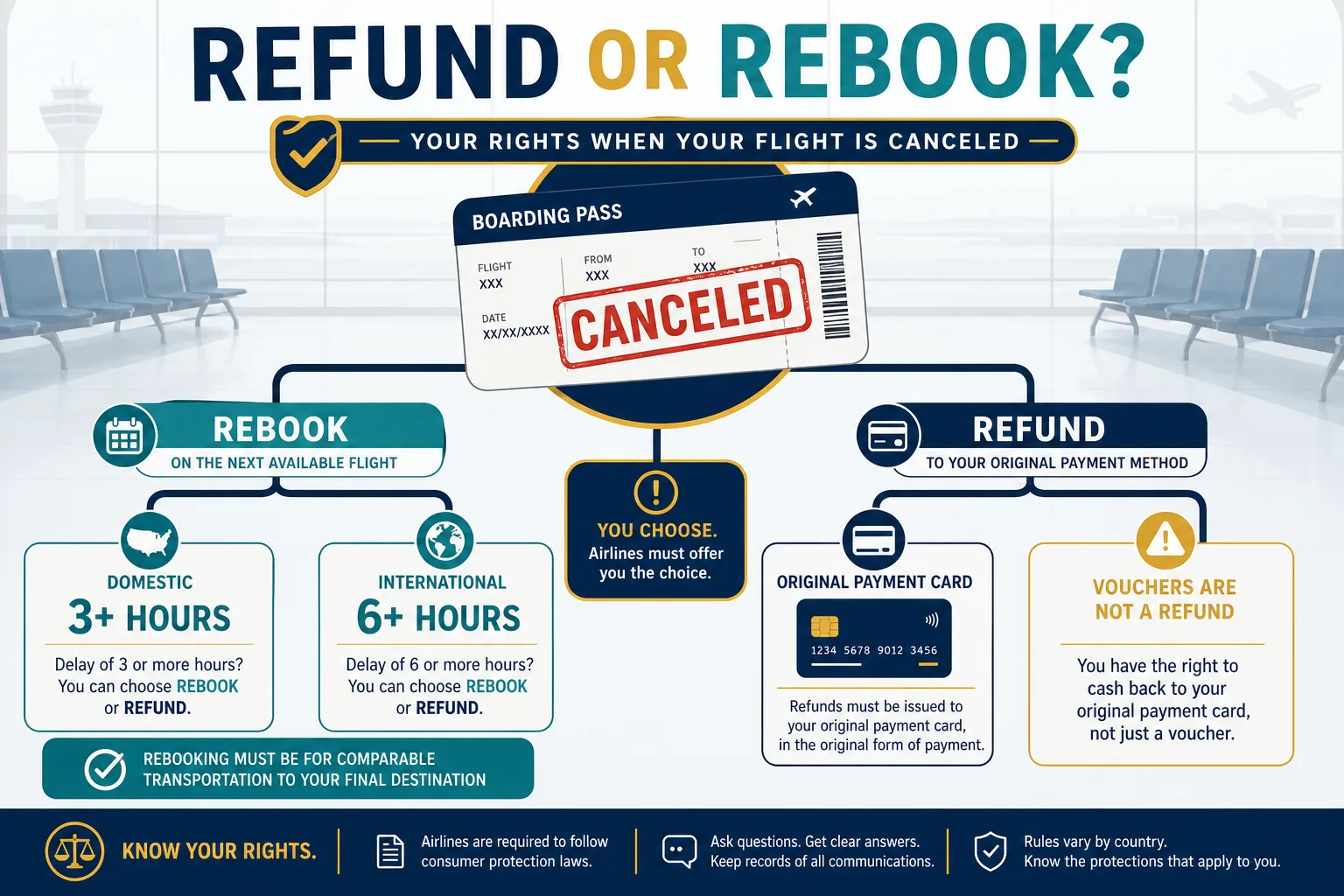
Compare rebooking like a risk manager
A free rebooking is often best when replacement fares are high and the airline can get you there soon. Check arrival time—not merely departure—plus connections, airport changes, cabin, seat assignments, baggage transfer and whether a separate reservation such as a cruise will be missed.
Before accepting, ask whether choosing the itinerary waives the ticket refund and whether later disruptions preserve new options. Record the agent’s name, time and confirmation number.
Create a disruption evidence file
Screenshot the original itinerary, every schedule-change notice, the cancellation reason shown in the app and the alternatives offered. Keep boarding passes, baggage tags, payment records, chat transcripts and itemized receipts.
For delayed checked baggage, file a mishandled-baggage report before leaving the airport and keep its number. DOT rules may require a bag-fee refund after specified delays, while reimbursement for replacement necessities follows separate limits and claim procedures.
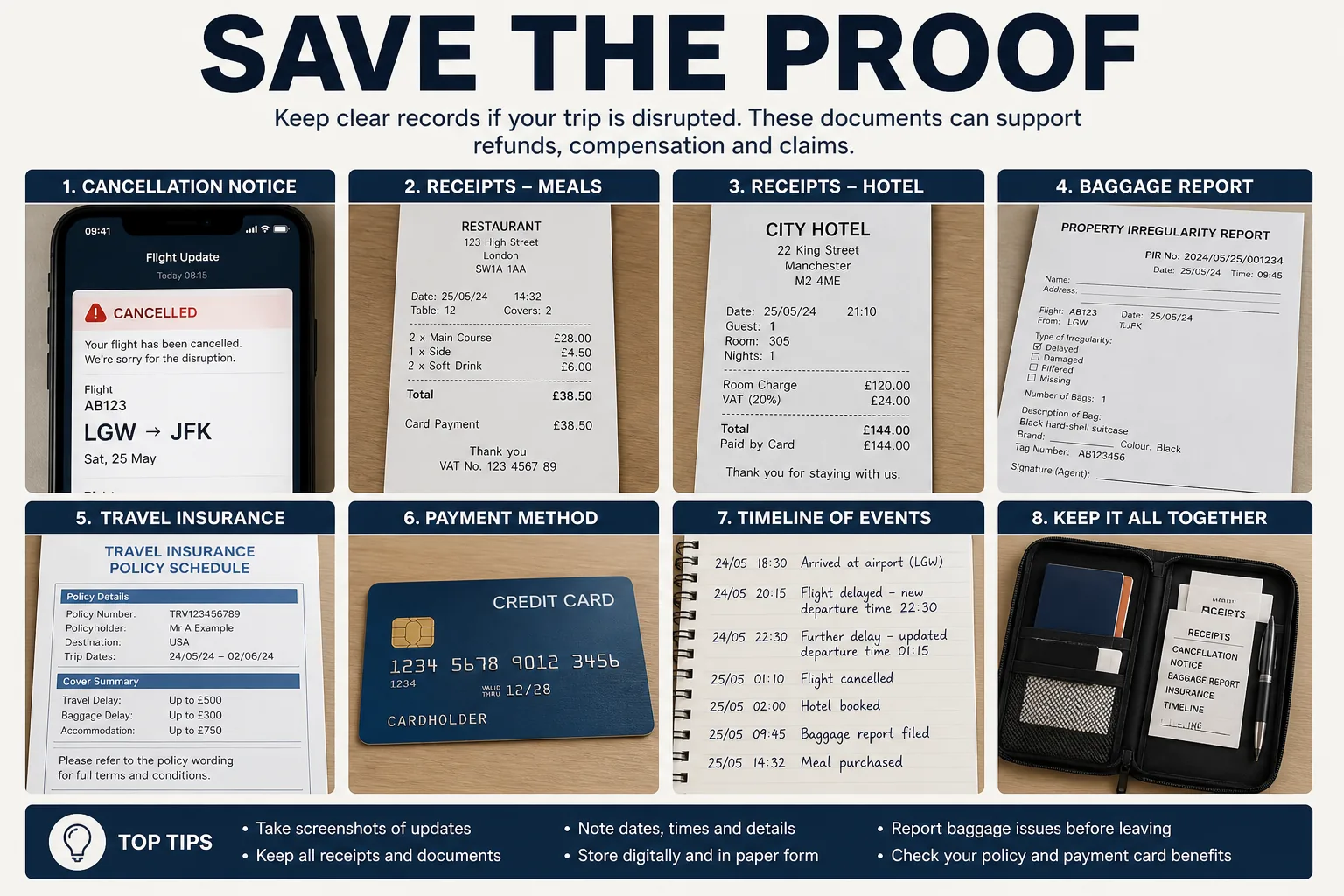
Escalate in the right order
Start with the airline or ticket agent that took payment and make a concise written request identifying the flight, disruption, rejected alternative and requested refund. If it fails, file a DOT aviation-consumer complaint and consider a credit-card billing dispute within the issuer’s deadline; describe facts accurately and do not pursue duplicate recovery.
Third-party bookings can add friction because the airline and agent may each control part of the transaction. Preserve proof of who charged the card and direct the refund request to the responsible seller while copying the other party if necessary.
A family-trip example shows the trade-off
Imagine four travelers whose evening flight to a cruise port is canceled. The airline offers a free flight arriving after the ship departs, a $1,200 credit, or a ticket refund; another airline has four seats that night for $2,000.
Taking the refund restores the original ticket price but does not automatically pay the $800 difference for replacement tickets. Accepting the late rebooking protects the original airfare but may destroy the cruise plan, while the voucher commits the family to future restrictions.
The family should first ask whether the original carrier can rebook them on the other airline, then check travel-insurance and card benefits before buying. They should preserve the cancellation reason, alternative offers, new fare and cruise deadline. The correct choice depends on the trip’s value and available coverage—not on which app button is brightest.
Use this airport checklist
While safe, first protect the trip: confirm whether the flight is canceled, delayed or merely renumbered; decide travel versus refund; search alternatives; ask about airline-paid meals or lodging; and notify hotels, cruises or rental cars.
Then protect the money: reject unwanted vouchers clearly, save every offer, request the refund to the original payment method, keep reasonable receipts, submit baggage reports promptly and calendar the expected refund date. Travel insurance and card benefits may require notice within a short period.
Important: This guide provides general educational information. Property, travel, retirement, insurance and tenant rules can vary by location, plan, policy and individual facts; verify current official instructions before acting.
- U.S. DOT airline refund guidance
- DOT automatic-refund rule explainer
- DOT ticket-refund rules and 2026 notices
Reviewed August 18, 2026.