


The Rule of 55 can be a valuable bridge for someone who leaves a job before age 59½, but it is easy to destroy the opportunity with an automatic IRA rollover. The exception is tied to the separation date and the employer plan holding the money.
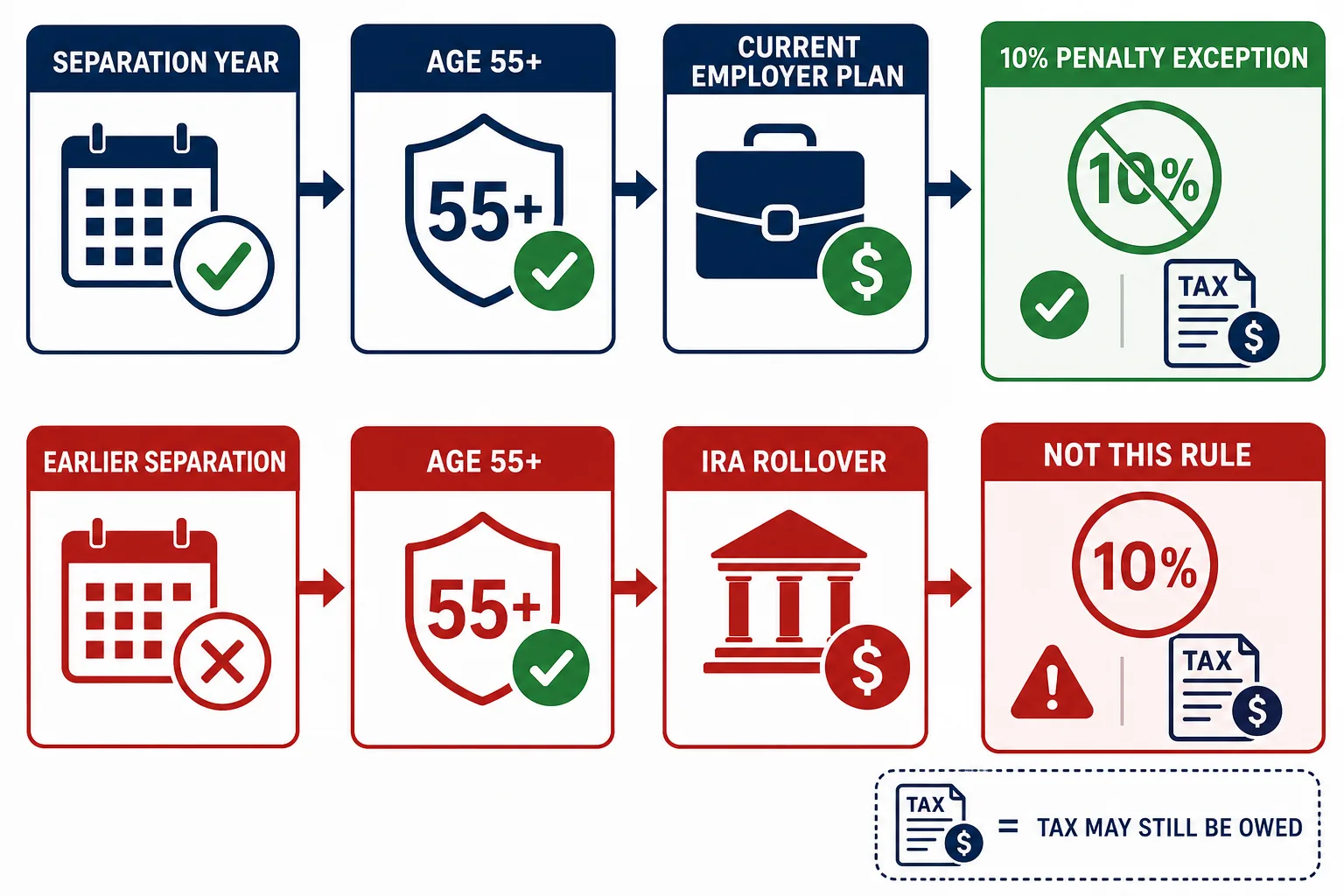
- IRS Publication 575 describes an exception to the 10% additional tax for distributions after separation in or after the calendar year the worker reaches 55.
- The rule generally applies to the qualified plan of the employer from which the worker separated—not automatically to IRAs or plans from older employers.
- Ordinary income tax and plan withholding may still apply even when the additional 10% tax does not.
The calendar-year rule is the key
You do not necessarily have to be 55 on your last workday. The IRS wording focuses on separation in or after the calendar year in which you reach 55. But leaving at 54 in an earlier calendar year and waiting until 55 to withdraw does not fix it. Qualified public-safety employees and certain firefighters can have a separate age-50 or service-based exception.
The money must be in the right account
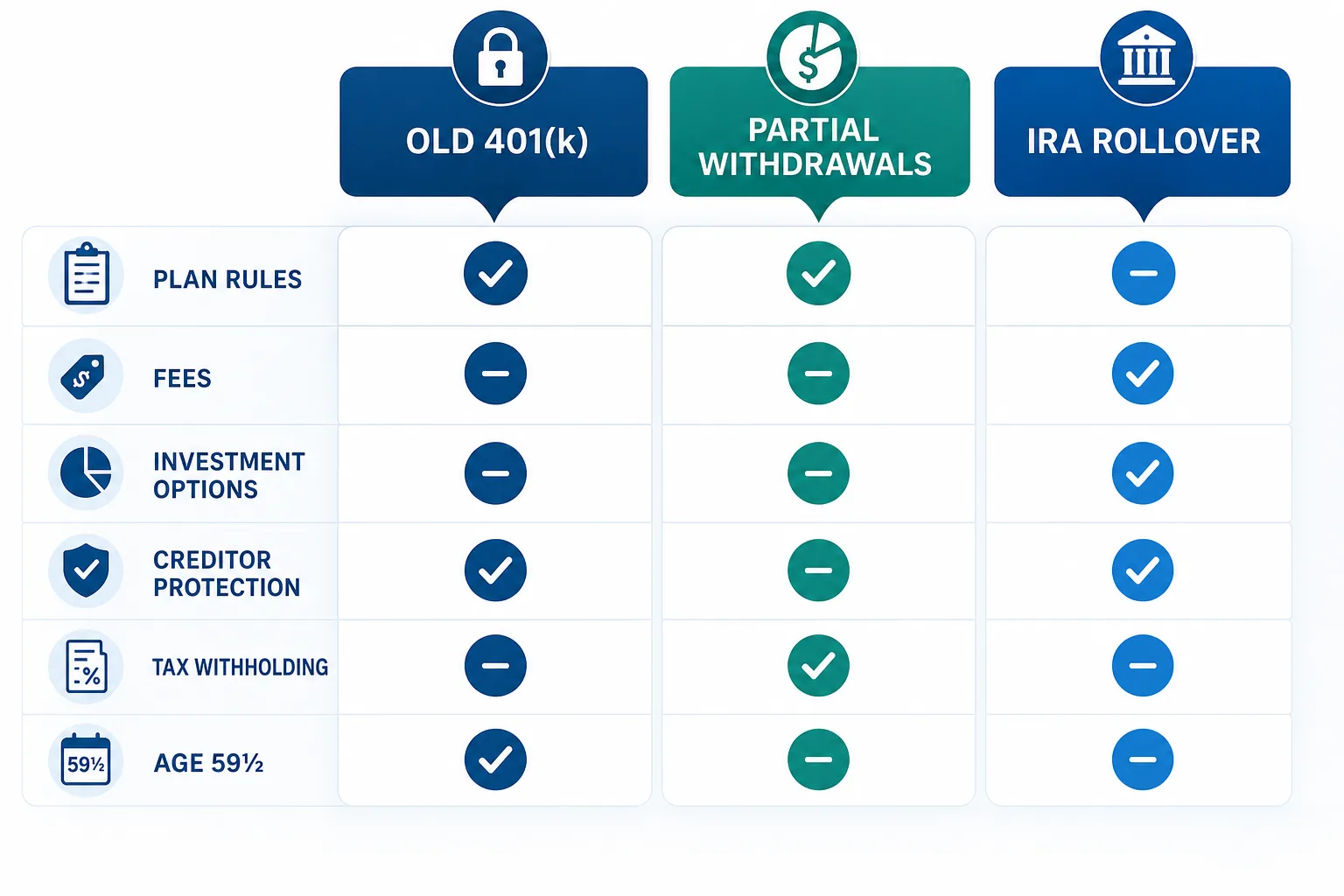
The exception generally concerns the qualified workplace plan connected to the separation. An IRA is not covered by this specific rule. Before rolling the account to an IRA, determine whether penalty-free access between separation and age 59½ matters. Some plans allow flexible partial withdrawals; others restrict frequency or require a lump sum. The tax rule cannot force a plan to offer a convenient distribution option.
Tax-free and penalty-free are not the same
A qualifying distribution can avoid the 10% additional early-distribution tax yet remain taxable income. A large withdrawal may raise the marginal tax bracket, increase ACA Marketplace income, reduce premium tax credits and affect state taxes. Mandatory withholding may not equal the final liability. Build a full-year tax projection before selecting a gross withdrawal.
How to use it as a bridge—not a spending license
Calculate essential spending until age 59½, subtract severance, unemployment compensation, cash and other reliable income, then withdraw only the gap plus taxes. Consider whether several smaller calendar-year distributions manage brackets better than one large withdrawal. Preserve enough invested assets for a retirement that may last decades.
Compare alternatives before acting
COBRA, ACA premiums, a spouse’s coverage and emergency cash can change the ideal withdrawal. Substantially equal periodic payments under section 72(t) are another possible exception but impose a rigid schedule and should not be started casually. A new employer plan might accept rollovers, but moving funds can change which plan and separation event controls later access.
The pre-rollover checklist
Obtain the summary plan description and distribution form. Confirm the separation date, age during that calendar year and account sources. Ask whether partial payments are allowed, what tax code will appear on Form 1099-R, and what withholding applies. Keep written documentation and have a tax adviser verify the intended exception before the plan releases money.
Bottom line
The valuable move is to verify the effective date, account type, plan document and current-year limits before moving money or filing an application. A correct rule applied to the wrong account or month can still produce an expensive result.
Important: This article provides general educational information, not individualized tax, legal, investment, Medicare or Social Security advice. Rules and individual facts can change the result.
Official resources
Reviewed August 17, 2026.