


Social Security’s retirement earnings test is often described as a tax or permanent loss. It is neither. It can temporarily withhold checks before full retirement age, and the agency later adjusts the benefit to account for months withheld—but the cash-flow disruption today can still be severe.
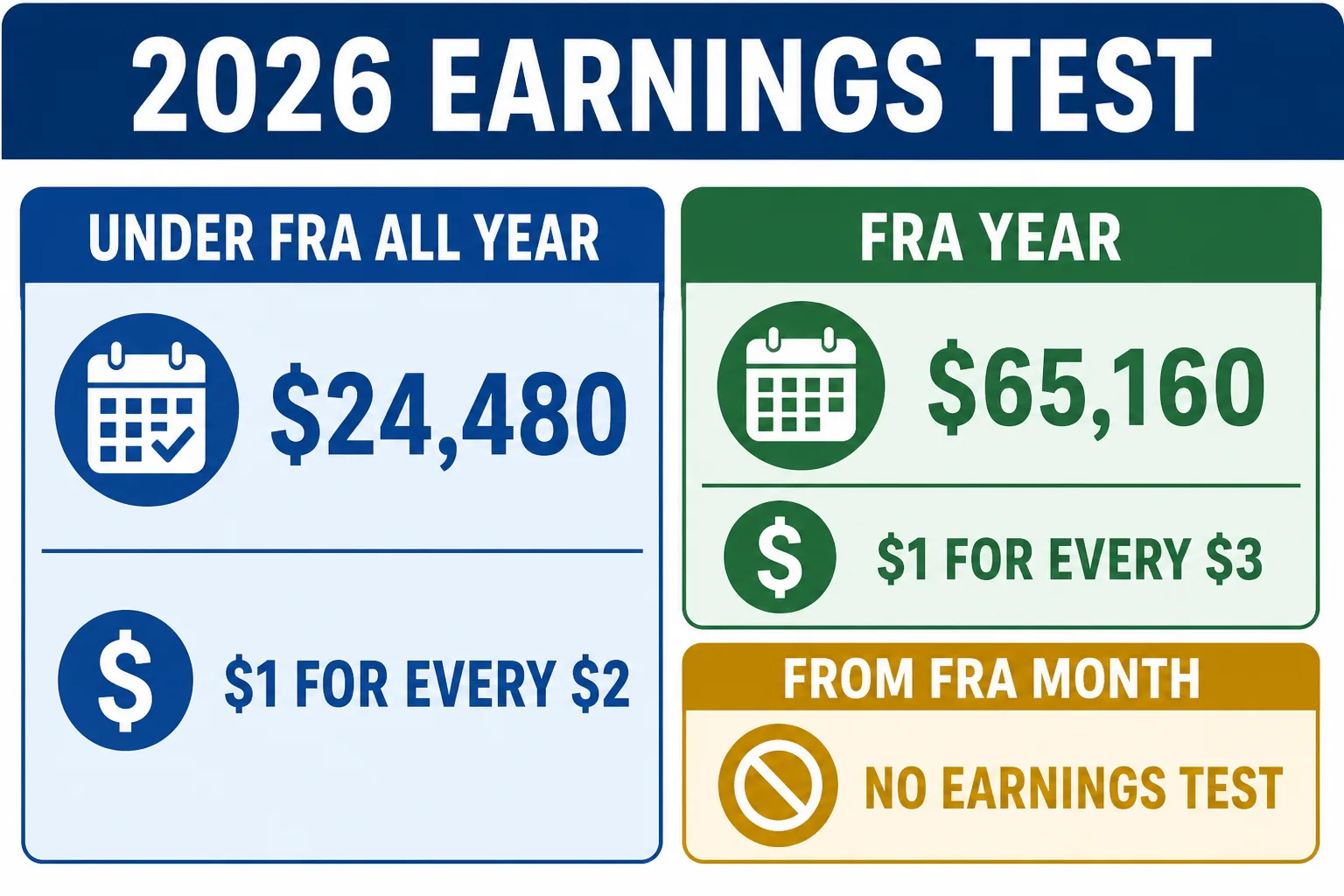
- If under full retirement age for all of 2026, the exempt amount is $24,480 and SSA withholds $1 for every $2 earned above it.
- For someone reaching full retirement age in 2026, the higher limit is $65,160 for earnings before the FRA month, with $1 withheld per $3 above.
- Beginning with the full-retirement-age month, the retirement earnings test no longer applies.
Example: under full retirement age all year
Suppose estimated 2026 wages are $40,480. That is $16,000 above the $24,480 limit. The formula indicates $8,000 of benefits may be withheld. SSA generally withholds whole monthly payments until the required amount is satisfied, so the timing may feel uneven. This calculation concerns earnings, not the total amount of every dollar entering a bank account.
Which income counts?
The retirement earnings test generally focuses on wages from employment and net earnings from self-employment. Pensions, annuities, investment income, interest and capital gains generally do not count for this test. Self-employed people can face additional questions about substantial services. Income can still affect taxation of Social Security or Medicare premiums under separate rules, so “not counted for the earnings test” does not mean financially irrelevant.
The special rule in the year FRA is reached
Only earnings before the month of full retirement age count against the higher $65,160 limit in 2026. The withholding rate is $1 for every $3 above that amount. Starting with the FRA month, wages no longer trigger this test. This makes the exact birthday month and earnings allocation important rather than merely the annual total.
Withheld does not mean a lump-sum refund
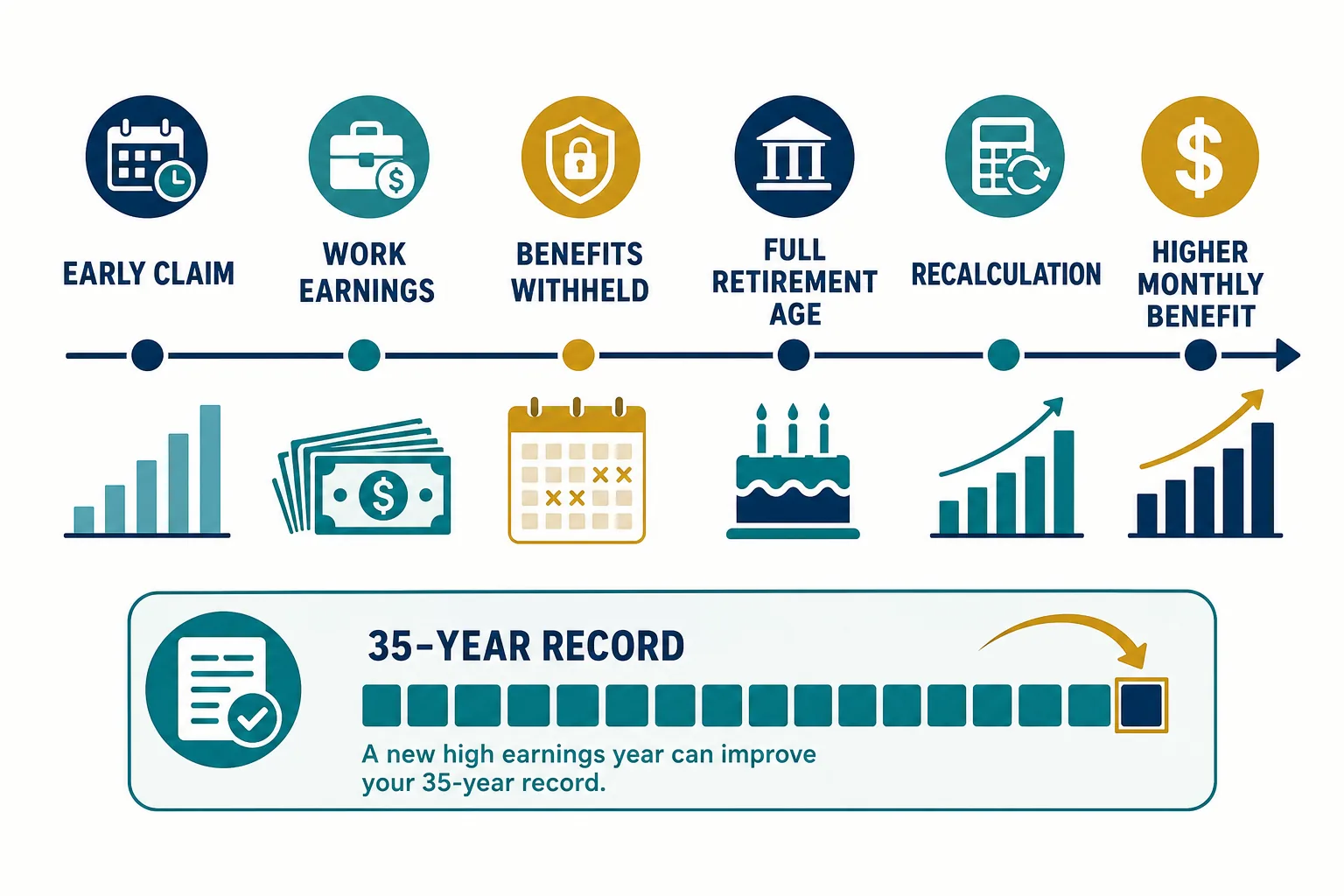
At full retirement age, SSA recalculates the reduction originally applied for early claiming to reflect months for which an entire check was withheld. The result can be a permanently higher monthly benefit going forward. It is not generally a check returning every withheld dollar at once. The break-even period depends on longevity and the number of withheld months.
Working can improve the underlying benefit too
Retirement benefits use the highest 35 years of indexed earnings. If a new year of work replaces a low or zero year in that record, SSA can recompute the primary benefit. This is separate from the earnings-test adjustment. Check the earnings history in a my Social Security account; missing wages can reduce benefits unless corrected.
Avoid an unexpected zero-check month
Report expected earnings when applying and update SSA promptly if hours, bonuses or self-employment income change. Ask how many full checks will be withheld and in which months. Build a cash reserve for those months. If this is the first year of retirement, investigate the special monthly rule, which may help when a person retires midyear after earning above the annual limit.
Bottom line
The valuable move is to verify the effective date, account type, plan document and current-year limits before moving money or filing an application. A correct rule applied to the wrong account or month can still produce an expensive result.
Important: This article provides general educational information, not individualized tax, legal, investment, Medicare or Social Security advice. Rules and individual facts can change the result.
Official resources
Reviewed August 17, 2026.